South African food is a story of layers. Zulu, Xhosa, Sotho and Khoi-San cooking supplied the maize, grilled meat and fermented milk. Dutch settlers added sausages, dried meat and slow stews. Enslaved and exiled people from Indonesia, Malaysia and India brought the spices behind Cape Malay and Durban cooking. British colonists left behind puddings and tea. What you eat in a day here can run from a township kota at lunch to a wood-fired braai at dusk.
This page is the “what” guide: the dishes, where they come from and how to order them. For the “where”, each dish below points to our city food guides: Cape Town, Durban, Johannesburg, Pretoria and Port Elizabeth. Prices below are approximate as of 2026 and move with the rand.
Where to Eat It: Choose Your City
| Dish | Origin | Best city to try it |
|---|---|---|
| Braai with boerewors and pap | Nationwide, Zulu, Xhosa, Sotho and Dutch settler roots | Johannesburg, or any guesthouse |
| Bobotie | Cape Malay | Cape Town |
| Bunny chow | Durban’s Indian community, 1940s | Durban |
| Biltong and droëwors | Dutch settler | Anywhere |
| Potjiekos | 19th-century trekkers | Winelands and farm settings |
| Umngqusho, umphokoqo, morogo | Xhosa, Zulu | Township restaurants and Soweto |
| Malva pudding | Dutch and British settler | Any restaurant or lodge |
- Cape Town: Cape Malay food, bobotie, snoek, seafood. See the Cape Town food guide.
- Durban: bunny chow, Indian curries, Zulu dishes. See the Durban food guide.
- Johannesburg: braai restaurants, township food, markets. See the Johannesburg food guide.
- Pretoria and Port Elizabeth: see the Pretoria and Port Elizabeth food guides.
- Vegetarian and vegan: see our vegan and vegetarian guide.
Braai: The Heart of South African Food
The braai is the closest thing the country has to a shared national ritual. It is a fire of wood or charcoal, never gas, lit well before eating so the coals burn down to an even glow. Everyone gathers around it, drinks in hand, and the cooking can take two hours. Typical fare is boerewors, lamb chops, chicken pieces, sosaties (marinated skewers) and, on the coast, snoek brushed with apricot jam.
Visitors can join a braai at most guesthouses and self-catering stays, at township restaurants and on many safari lodge evenings (the boma dinner is a braai in a fenced enclosure). Heritage Day on 24 September is unofficially National Braai Day, when almost every household is outdoors with a fire. Where to eat a restaurant braai is covered in the Johannesburg food guide.
Boerewors
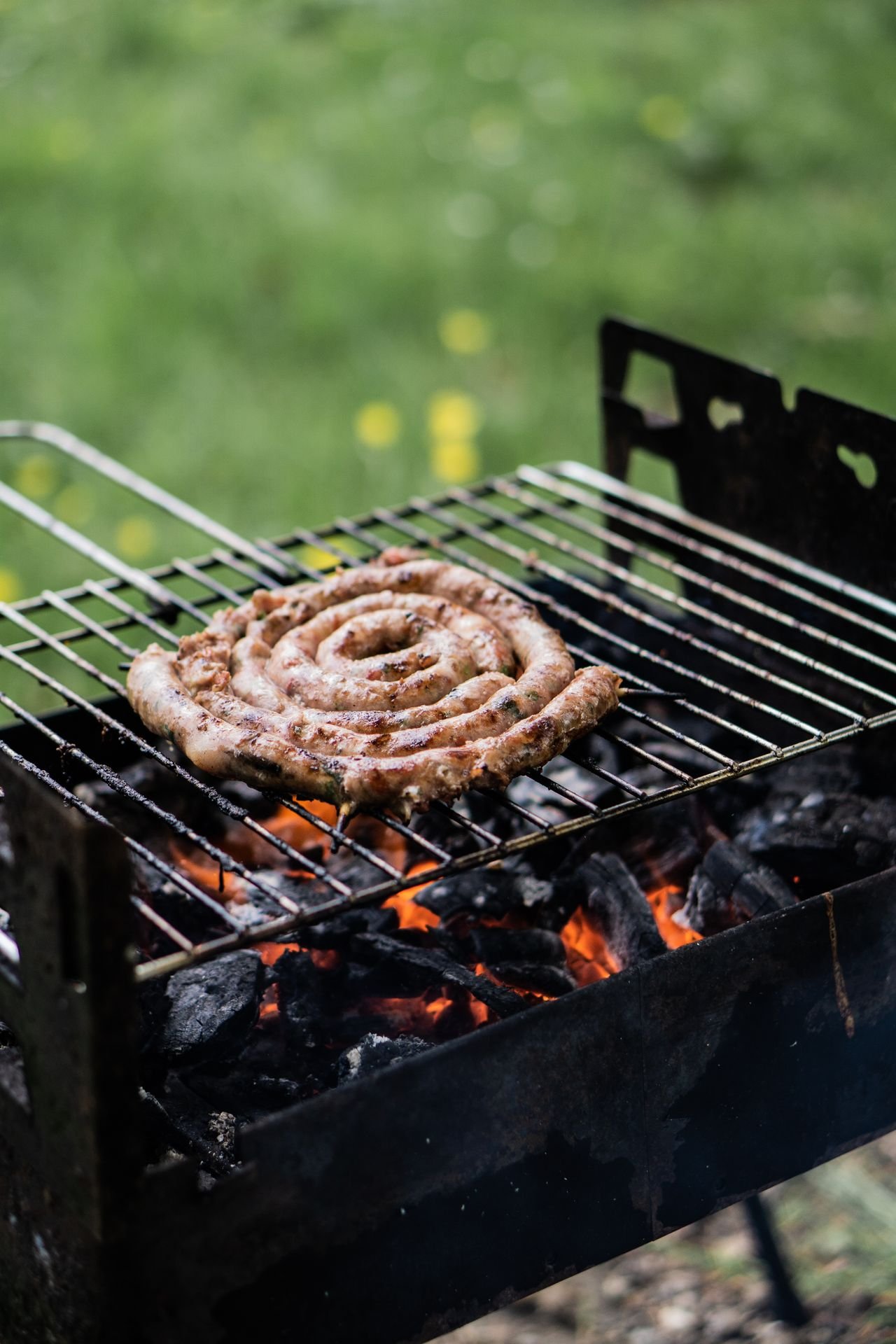
Boerewors, “farmer’s sausage”, is a coarse, spiced beef (often mixed with pork or lamb) sausage sold in a long coil. Coriander, clove, nutmeg and vinegar give it the flavour. South African regulations require at least 90 percent meat content, which is why a good one is juicy and not filler-heavy. It is cooked slowly over coals, not pricked, and served in a roll as a “boerie roll” at rugby matches, markets and petrol-station kiosks. A roll typically costs R40 to R70 as of 2026.
Pap and Chakalaka
Pap is stiff maize porridge, the staple of Zulu, Xhosa, Sotho and Tswana households alike. It comes in three styles: stiff pap (firm enough to scoop with your fingers), soft or “slap” pap, and crumbly “krummelpap”. At a braai it sits next to the meat with chakalaka, a mildly spicy relish of tomato, carrot, onion, pepper and beans. In Zulu, pap mixed with sour milk is called umphokoqo; Basotho cooking has a sour sorghum porridge called ting.
If one dish tells you what South Africans actually eat, this is it. It is cheap, filling and almost always on a menu at a township restaurant, where a plate with meat runs R70 to R130.
Bobotie
Bobotie is a baked dish of spiced minced meat, usually beef or lamb, with dried fruit, almonds and curry spices, set under a savoury egg custard. It arrived with the Cape Malay community and is served with yellow rice, sambals and chutney. It is the dish most often called the national dish, and a good version is gently sweet and fragrant, not hot. The Cape Town food guide and the dish-by-dish Cape Town food to try page explain where to find it in the Bo-Kaap.
Cape Malay Cooking
Cape Malay food comes from the Cape’s Muslim community, descended from people brought from Indonesia, Malaysia, India and East Africa from the 1600s. The cooking uses cinnamon, turmeric, cardamom, dried apricot and tamarind, with a long, slow approach to curries, breyani (spiced rice and meat) and denningvleis (a sweet-sour lamb stew). Look for samoosas, dhaltjies (chilli bites), and koesisters, a spiced, coconut-dusted, syrup-soaked dumpling that is a Sunday morning Bo-Kaap tradition. The Afrikaans koeksister is a different pastry, a plaited, crisp, syrupy twist.
Cape Malay food is the most distinctive regional cuisine in the country, and the Bo-Kaap is the best place to try it. A food-focused Cape Town tour can combine cooking and tasting with the history.
Bunny Chow
Bunny chow is a hollowed-out quarter, half or full loaf of white bread filled with curry, most often mutton, chicken or butter beans. It was created in Durban’s Indian community in the 1940s as a portable meal, and it is eaten with the hands, using the bread you scooped out to mop the sauce. It is not spicy-for-show, but Durban curry has real heat.
Order it in Durban if you can. Details on the Grey Street takeaways and what a quarter loaf costs are in the Durban food guide. A Durban food tour is a good way to taste several in a morning.
Biltong and Droëwors
Biltong is air-dried, spiced, cured meat, traditionally beef, game or ostrich, sliced thin or thick. It is not jerky: it is cured with vinegar, salt and coriander rather than smoked or cooked, and it is dried in a ventilated cabinet for days. Droëwors is the dried sausage version. Both are sold everywhere, from supermarkets to dedicated “biltong shops”, at roughly R350 to R600 a kilo as of 2026 depending on the cut and meat.
Quality varies enormously, so ask for a taste. If you plan to take some home, check your own country’s import rules first, because many countries restrict meat products.
Potjiekos
Potjiekos (“small pot food”) is a stew cooked slowly in a round, three-legged cast-iron pot over coals, with layers of meat and vegetables added without stirring. The pot descends from the cooking vessels of the 19th-century trekkers, and a Sunday potjie, often with lamb shank, oxtail or chicken, is a weekend fixture in farm and winelands settings. It is mostly home cooking, so the easiest way to taste one is at a guesthouse, farm stall, or a lodge with a bush dinner.
Traditional Zulu, Xhosa and Basotho Dishes
These cuisines are built on maize, sorghum, beans, greens and slow-cooked meat, and are best found in township restaurants, on Soweto tours and at home-hosted meals.
- Umngqusho: samp (crushed dried maize) and sugar beans, slow-cooked until creamy. It is a Xhosa staple and was a favourite of Nelson Mandela.
- Umphokoqo: crumbly pap with amasi (soured milk), eaten cold or warm.
- Ujeqe: Xhosa steamed bread, soft and slightly sweet.
- Mogodu and tripe: stewed tripe, usually with pap, widely loved in Gauteng and the Eastern Cape.
- Morogo: wild or cultivated leafy greens, cooked with onion and tomato; one of the best vegetarian options.
- Walkie talkies: grilled chicken heads and feet, sold at street stalls. An acquired taste, and an honest one.
- Mopane worms: dried or stewed caterpillars from Limpopo, a protein source with a nutty, earthy flavour.
- Ting and papa (Basotho): sour sorghum porridge and stiff maize pap, served with moroho (greens) or stewed meat.
For where to eat these, the Durban food guide covers Zulu traditional food and the Johannesburg food guide covers Soweto. Also see our Soweto guide.
Street Food and Fast Food Classics
- Kota (also spatlo or bunny in some areas): a township sandwich, a quarter loaf hollowed and stuffed with chips, polony, egg, cheese and atchar (pickled mango). Soweto’s classic.
- Gatsby: a Cape Town foot-long roll stuffed with chips and steak, masala or polony, made to share.
- Vetkoek: deep-fried dough balls, filled with mince or jam and cheese.
- Samoosas: triangular pastries sold by the dozen in Durban and Cape Town.
- Melktert: a Dutch-origin milk tart, a bakery staple dusted with cinnamon.
Desserts: Malva Pudding and More
Malva pudding is a sticky, spongy baked pudding made with apricot jam, soaked in a hot cream sauce and served warm with custard or ice cream. It is on almost every restaurant menu and nearly every lodge dinner. Alongside it, look for melktert, koeksisters, hertzoggies (jam-filled coconut tarts), and Amarula cream-based desserts. Rusks (hard, twice-baked biscuits) are dipped in tea or coffee at breakfast and sold in every supermarket.
Drinks to Try With the Food
Rooibos is a caffeine-free red tea grown only in the Cederberg, served with milk or plain. South African wine is world-class and is a major reason to visit the Cape, and Cape Winelands tours from Cape Town are an easy way to match wine with food. Local beer, ciders, Amarula (a cream liqueur from the marula fruit) and the sweet fizzy Appletiser round out a table.
Tips for Eating Your Way Through South Africa
- Tipping: 10 to 15 percent is standard in restaurants; see the tipping guide.
- Etiquette: if you are invited to a home braai, bring meat or drinks and expect to stay for hours. More in the etiquette guide.
- Halal and kosher: both are widely available in Cape Town, Durban and Johannesburg.
- Water and food safety: tap water is safe in most cities, and street food is generally fine if it is hot and busy.
- Planning: South African Tourism has trip-planning information and regional food and culture pages.
Ready to taste it? Browse South Africa tours for food and culture experiences, or start with a Cape Town food tour.