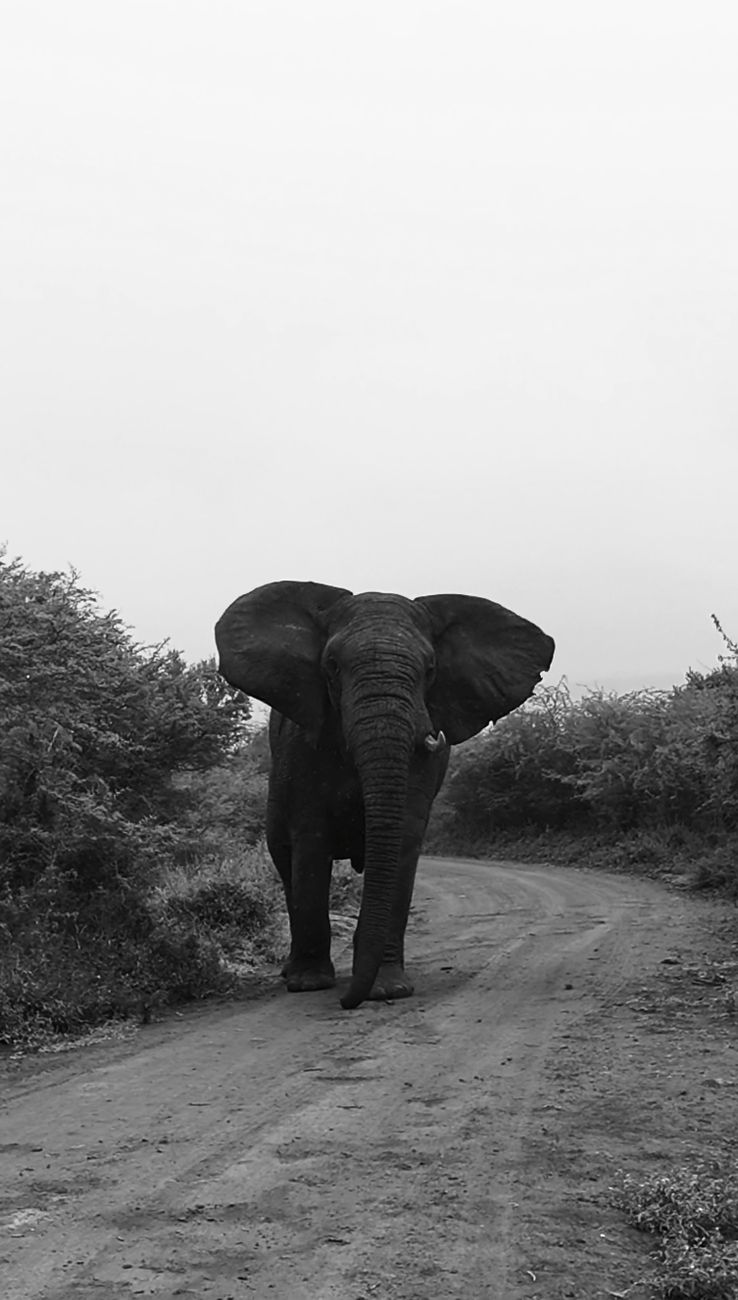
Hluhluwe-iMfolozi is one of Africa’s oldest proclaimed game reserves — established in 1895, decades before Kruger. It covers 960 km² of acacia woodland, grassland, and riverine bush in northern KwaZulu-Natal, and carries the distinction of saving the white rhino from extinction. Today both white and black rhinos are present in numbers rarely matched elsewhere on the continent. The park is a legitimate big-five destination, and its proximity to Durban (around 2.5 hours) makes it the most accessible full wilderness experience from any major South African city.
Why Hluhluwe-iMfolozi over Kruger?
Kruger is larger and better known, but Hluhluwe-iMfolozi has real advantages for day visitors. The park is smaller and the animal density is high — particularly for rhinos. You are far less likely to queue at a popular sighting, and the landscape is more varied than Kruger’s flat bushveld. KZN Wildlife manages the park to a high standard, and the road network is good enough for a self-drive but compact enough that a guided vehicle covers the key areas thoroughly in a single day.
Note: Malaria is present in northern KwaZulu-Natal, including Hluhluwe-iMfolozi. If you are visiting between October and May (the higher-risk months), consult a doctor about antimalarials at least a week before travel.
What the tours cover
Most organised day tours from Durban follow a roughly standard structure: an early morning departure (typically 05:00–06:00), arrival in the park by 08:30, a full morning game drive of 3–4 hours, a midday break at Hilltop Camp or Mpila Camp, an afternoon drive of 2–3 hours, and return to Durban by early evening.
The animal list is strong. White rhino, elephant, buffalo, lion, leopard, spotted hyena, giraffe, zebra, wildebeest, impala, and nyala (a handsome antelope endemic to KZN) are all regularly seen. Black rhino is harder — they are more cryptic and fewer in number — but sightings happen.
Guided walks (also called wilderness trails) go deeper. The iMfolozi section has a genuine wilderness area where no vehicles are permitted — walks here are led by armed field rangers and run for 3–4 days (overnight trails). Day walks on foot in the broader park are offered from Hilltop Camp. These are not casual strolls — you can encounter rhino at very close range on foot. They are, frankly, one of the most intense wildlife experiences available in South Africa.
Operators and prices (2026)
Isibindi Africa / Rhino Ridge Safari Lodge runs guided day packages into the park. Prices for a full-day guided safari from Durban typically run from approximately R2,500–R3,500 per person, including pick-up, transport, park fees, and lunch. Rhino Ridge also offers lodge-based overnight stays with morning and afternoon drives included — from approximately R4,500–R6,500 per person sharing for a one-night package.
Wild Eye Safari and Siyabona Africa also run day safaris from Durban. Prices are broadly similar. All operators include the SANParks conservation fee (2025/26 international rate: approximately R480 per adult per day) in the tour price — confirm this when booking.
Self-drive rates at the gate: R480 per adult (international), R160 children 2–11, plus R200 vehicle entry fee (2025/26). SANParks Wild Card holders enter free. Vehicles must be out of the park by 18:30 (check the seasonal gate times on the SANParks website as they vary).
For independent bookings and a wider selection of tour operators, browse safari tours at Hluhluwe-iMfolozi on GetYourGuide.
Hilltop Camp (the main rest camp)
Hilltop sits at 600 m on the Hluhluwe section’s highest ridge — the views across the bush are excellent and on a clear day you can see into Mozambique. The camp has a restaurant (order the local warthog and game stews), a shop, and fuel. Chalets and bungalows are available to book via SANParks — from approximately R900–R1,400 per night depending on the unit. Hilltop is useful as a midday base on a day trip, and the viewpoint from the camp perimeter is worth 15 minutes.
Mpila Camp in the iMfolozi section is the southern rest camp — quieter, more rugged, and with better rhino concentrations immediately around it.
Getting there from Durban
Hluhluwe-iMfolozi is 280 km from Durban city — approximately 2 hours 45 minutes on the N2 north. The main gate (Memorial Gate) is 14 km off the N2 via the R618. A second entrance, Nyalazi Gate, is on the eastern boundary and is the closer access point for those staying at Hilltop.
From Johannesburg, the drive is approximately 4.5–5 hours. Most visitors from Johannesburg combine Hluhluwe-iMfolozi with a night in the iSimangaliso Wetland Park area.
By road from Durban Airport: Take the N2 north and follow signs. No public transport serves the park directly — a hire car or organised tour are the practical options.
Best time to go
May to September (dry season) is the prime game-viewing period. Vegetation is thinner, water sources concentrate animals, and cooler temperatures mean more activity during the day. Rhinos are easier to locate at waterholes.
October to April (wet season) brings green landscapes, excellent bird diversity, and calving season for many species — which means predator activity is often higher. The downside is dense foliage reducing visibility, higher humidity, and peak malaria risk.
Early morning drives are almost always better than afternoon drives in terms of sighting density and animal activity — if you are doing a day tour, the quality of the morning drive matters most.
Practical notes
- Closed vehicles required — no open game drives in your own vehicle. Guided vehicles and camp vehicles are exempt.
- Binoculars: Essential. The reserve is large and many sightings start at distance.
- No cash: Bring a card — SANParks gates and camps are largely cashless.
- Speed limit inside the park: 40 km/h on dirt roads, 50 km/h on tar. Strictly enforced — you can be fined.
- Fuel: Available at Hilltop and Mpila camps. Do not assume availability at peak times — fill up in Richards Bay or Hluhluwe town before entering.
Hluhluwe-iMfolozi is not a backup for Kruger. It is a different and in some respects more rewarding park — particularly for anyone with a specific interest in rhinos, wilderness walking, or KwaZulu-Natal’s distinctive landscape. The combination of accessibility from Durban and genuine big-five density makes it one of the most efficient safari options in South Africa.