Search hotels in Cape Town on Booking.com
South Africa holds a singular position on the African continent: the only country that has constitutionally enshrined equality for LGBTQ+ people and legalised same-sex marriage. The Constitution’s equality clause explicitly prohibits discrimination on the basis of sexual orientation - a protection that was written in 1996 and has withstood legal challenges since. South Africa legalised same-sex marriage in 2006, nine years before the United States.
That legal reality coexists with a more complex social landscape - South Africa is not uniformly progressive, and LGBTQ+ travellers need to understand both the genuine freedoms and the genuine risks. Cape Town sits at one end of the spectrum, with an openly gay scene that rivals European cities. Rural areas and informal settlements sit at the other. This guide gives you an honest picture of both.
Cape Town: Africa’s Gay Capital
Cape Town has earned its reputation as the most LGBTQ+-friendly city in Africa through decades of community building, political engagement, and the simple commercial logic of an active tourist economy. The city draws LGBTQ+ visitors from across South Africa, the African continent, and internationally - particularly from Europe during the Northern Hemisphere winter, when Cape Town’s summer runs from November to February.
The concentration of LGBTQ+ venues, events, and hospitality is centred in two overlapping areas: De Waterkant (the original gay village) and Green Point (the adjacent neighbourhood that has expanded the scene considerably). Both are within walking distance of the V&A Waterfront and approximately 10 minutes by taxi from the City Bowl.
De Waterkant and Green Point
De Waterkant
De Waterkant is a compact neighbourhood of Victorian and Georgian terraced houses, now converted into apartments, guesthouses, boutiques, and restaurants. It has been the centre of Cape Town’s gay scene since the early 1990s and remains the most recognisable address for LGBTQ+ visitors.
Café Manhattan on Waterkant Street is the oldest and most established gay bar in Cape Town - it opened in the early 1990s and has remained a reliable landmark through multiple changes in the city’s entertainment scene. It operates as a relaxed café-bar by day and busier bar by evening. Cocktails R110–R160.
The Bearded Lady is a more recent addition, skewing younger in clientele and running regular drag nights, quiz evenings, and DJ sets. A strong showing of the local gay and lesbian community rather than primarily tourist-facing. Drinks R65–R120.
The Crew Bar (Green Point) sits at the junction of De Waterkant and the Green Point strip. It runs themed nights across the week and is consistently one of the busier venues on a Thursday through Saturday evening.
Green Point Strip
The Main Road through Green Point has broadened Cape Town’s LGBTQ+ entertainment options significantly. The Bronx Action Bar is the city’s longest-running club-bar, with a dance floor and late-night trading on weekends. The Green Point precinct also has several restaurants that are gay-owned or gay-frequented without being exclusively so - the area has reached a point of integration where the distinction matters less than it once did.
Pride Events and Key Dates
Cape Town Pride (February/March)
Cape Town Pride is the largest Pride celebration in Africa. The main parade runs through the city centre and De Waterkant, and a programme of events - film screenings, talks, parties, club nights - extends across a week or more around the central parade day. The event draws international visitors; accommodation near De Waterkant books up quickly if you’re planning to attend. Check current dates at the Cape Town Pride website - the precise timing shifts year to year.
MCQP - Mother City Queer Project (December)
MCQP is arguably Cape Town’s most famous LGBTQ+ event internationally. It runs as a themed costume party and dance event, typically in December, at a large Cape Town venue (which changes annually). MCQP tickets sell out months in advance. The theme is announced each year and the costumes are taken seriously - this is not a casual night out. Tickets from approximately R350–R600 as of 2026 depending on the price tier.
Johannesburg Pride (October)
For travellers spending time in Gauteng, Johannesburg Pride runs in October and has been one of Africa’s largest Pride events since the late 1980s. It takes place in Sandton and draws a large crowd. The Joburg scene centres on neighbourhoods like Melville and Greenside rather than a dedicated gay village.
Safety: What You Need to Know
In Cape Town
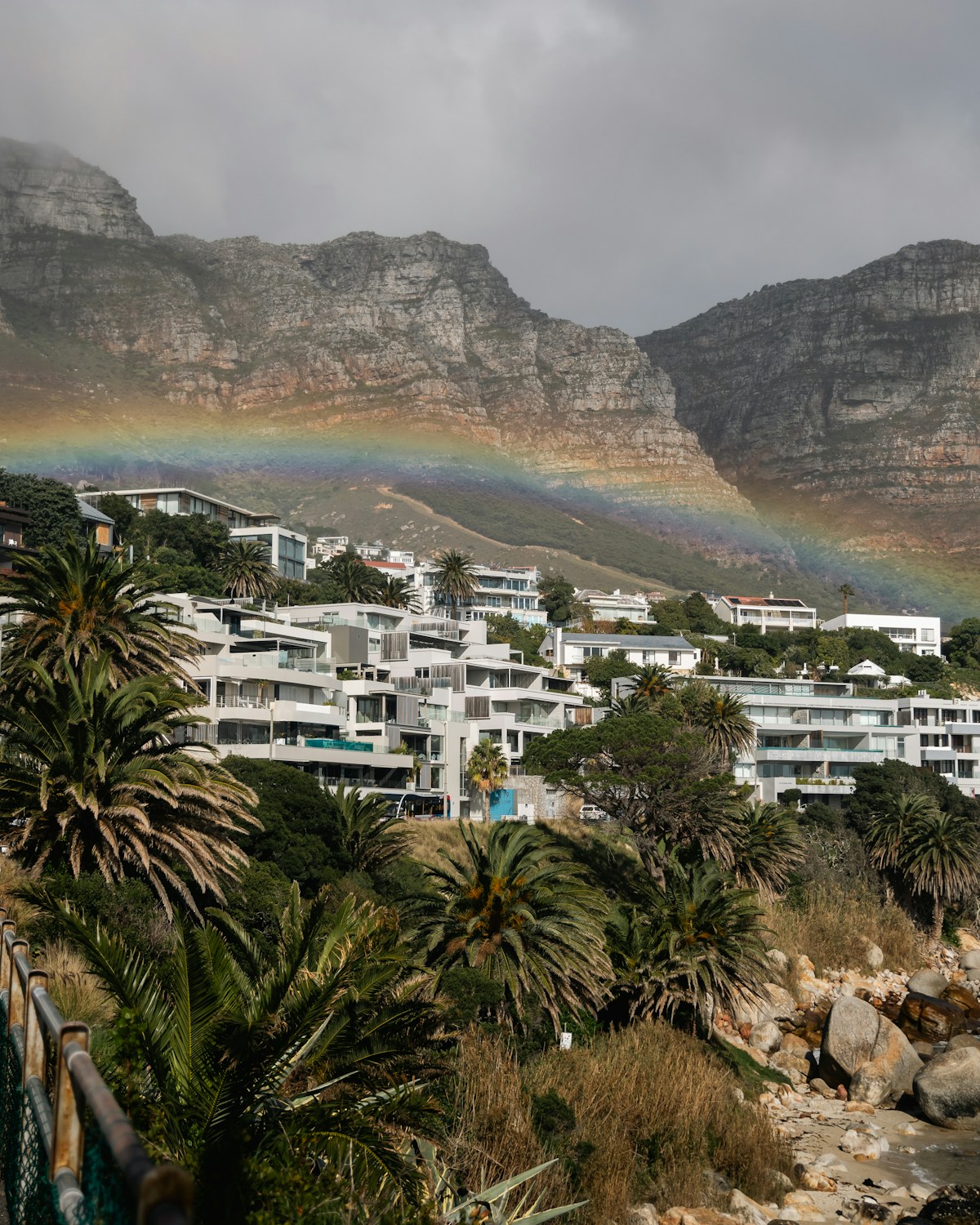
Cape Town’s De Waterkant and Green Point are genuinely safe for LGBTQ+ visitors by any comparable global standard. Publicly visible gay and lesbian couples are unremarkable in these neighbourhoods and in Camps Bay, Sea Point, and the City Bowl. The tourist-facing areas of the city operate in a context of both legal protection and social acceptance built over 30 years.
Outside LGBTQ+ Spaces
Outside established LGBTQ+ venues and liberal urban areas, the situation is more complex. South Africa has a significant rate of anti-gay violence, particularly against lesbian and gender non-conforming women, and particularly in townships and rural areas. This is not a hypothetical risk. Travel to township areas should be done with a reputable guide regardless of identity, and public displays of affection in unfamiliar urban areas are best assessed case by case.
At Hotels
South Africa’s accommodation sector in tourist areas is overwhelmingly accepting - it would be unusual to encounter discrimination at any mid-range or above hotel in Cape Town, Johannesburg, or the Garden Route. LGBTQ+ couples booking double rooms should not expect problems at any established property. Smaller, family-run guesthouses outside tourist areas can occasionally present a different dynamic.
Practical Notes
- Police: South Africa’s SAPS (South African Police Service) has a mixed record on LGBTQ+ issues. In an emergency in Cape Town, the SAPS generally respond to crimes against LGBTQ+ people, but there have been documented instances of officers being unhelpful or hostile. The Triangle Project (an LGBTQ+ support and legal aid organisation based in Cape Town) maintains a helpline.
- Medical: South Africa has excellent private hospitals and significant public health infrastructure around HIV/AIDS - PrEP is available through private pharmacies and some public facilities.
- Travel insurance: Standard travel insurance covers LGBTQ+ travellers on the same basis as all other travellers in South Africa. Make sure your insurer covers medical evacuation if needed.
LGBTQ+-Friendly Accommodation
De Waterkant Village Suites (De Waterkant)
A well-established guesthouse in the heart of De Waterkant, with rooms in a cluster of Cape Victorian townhouses. One of the original gay-oriented properties in the area. Rates from approximately R1,400–R2,200 per night as of 2026.
Waterkant House (De Waterkant)
Boutique guesthouse with seven rooms, rooftop terrace, and a central location within walking distance of every De Waterkant venue. Gay-owned and operated. From R1,800–R2,800 per night.
Cape Royale Hotel (Green Point)
A four-star hotel on the Green Point Main Road, not exclusively LGBTQ+-focused but consistently rated as highly welcoming and well-positioned for the gay strip. Rates from R2,000–R3,500 per night.
The Kensington Place (Higgovale)
A boutique luxury guesthouse on the slopes below Table Mountain - nine rooms, pool, and outstanding views. Not gay-specific but widely recommended in LGBTQ+ travel media for its discretion and welcome. Rates from R3,500–R5,000 per night.
Beyond Cape Town
Garden Route: Knysna and Plettenberg Bay are relaxed and visitor-friendly. Knysna has hosted a small Pink Loerie Mardi Gras festival (typically in April/May) that draws LGBTQ+ visitors specifically. The town’s accommodation sector is accepting at all levels.
Johannesburg: The Melville and Greenside neighbourhoods are the most reliably LGBTQ+-friendly areas. Joburg Pride in October is worth attending if you’re in Gauteng. The city’s gay scene is less concentrated than Cape Town’s but active.
Durban: Durban has a small LGBTQ+ bar scene centred on the beachfront and Berea. It is less visible and less established than Cape Town or Johannesburg.
Summary
South Africa offers the most legally secure environment for LGBTQ+ travel in Africa, and Cape Town offers one of the most active gay scenes in the Southern Hemisphere. The nuance is in reading context - the legal framework is real, the social acceptance in tourist-facing urban areas is real, and the risks in less urban environments are also real. Travel with accurate information rather than either naivety or excessive caution, and Cape Town in particular will reward you.
Ready to plan your trip? Tours & Activities in Cape Town or Travel Insurance for South Africa.
Plan Your Trip
✈️ Book your flights to South Africa 🛡️ Get travel insurance 📱 Stay connected with an eSIM 🚗 Rent a car