Durban Travel Guide: Beaches, Curry & the Indian Ocean
Durban city guide: how the Golden Mile, Umhlanga, Indian Quarter and Florida Road fit together, plus curry culture and when to go.
Guides for Durban
Durban is South Africa’s third-largest city and its busiest port. It faces the warm Indian Ocean rather than the cold Atlantic - which means genuinely swimmable water (22–28°C year-round) and a subtropical climate that keeps temperatures in the 20s even in winter. The city has a distinctive character built from Zulu, Indian, British colonial, and Afrikaner influences - visible in the food, the architecture, and the texture of daily life.
It’s often overlooked in favour of Cape Town and Kruger, which creates opportunity for visitors who give it time. Durban itself rewards 2–3 days; adding the Drakensberg or the Midlands adds another 2–4.
For regional context, see the KwaZulu-Natal region guide. If you’re planning a fuller South Africa trip, the 14-day itinerary shows how Durban connects with Cape Town and Kruger.
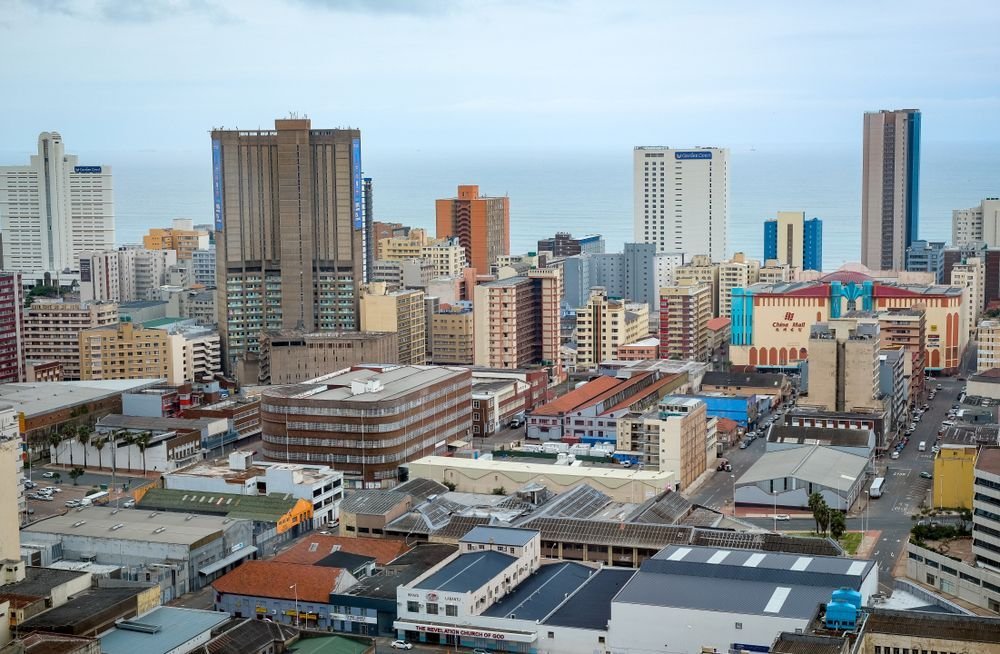 Durban’s high-rise skyline sits right against the Indian Ocean.
Key Areas
| Area | Character | Best for |
|---|---|---|
| Golden Mile | Beachfront strip, well-used promenade | Beach swimming, sunset walks |
| uShaka / The Point | Marine park anchor, southern beach end | Families, aquarium, beach club |
| Indian Quarter / Grey Street | Working bazaar, mosque, spice vendors | Food, markets, authentic city life |
| Florida Road / Morningside | Tree-lined restaurant and bar strip | Dinner, nightlife, guesthouses |
| Umhlanga | Polished beachside suburb, 15 km north | Upmarket hotels, quieter beaches, malls |
| Berea / Musgrave | Residential, mid-range hotels | Practical base, away from tourist strip |
The Golden Mile is the beachfront strip running north from the Point area. The beaches face due east into warm, shark-netted water. The promenade runs the length of the strip - well-used, generally safe in daylight, and the backdrop of older hotels and the Moses Mabhida Stadium makes it visually distinctive.
The Indian Quarter - Victoria Street Market, the Grey Street Mosque (the largest mosque in the southern hemisphere), the surrounding streets - is one of the most interesting areas in any South African city. The market is a genuine working bazaar: spice vendors, fabric stalls, phone repair shops, curry houses. Don’t go expecting tourist polish; this is commerce.
Florida Road in the Morningside suburb is Durban’s main nightlife and restaurant strip - a tree-lined road with bars, restaurants ranging from curry houses to upmarket dining, and the most animated evenings in the city.
Umhlanga is 15 km north of central Durban - a polished beachside suburb with the Gateway Theatre of Shopping (one of the largest malls in Africa), upmarket hotels, and a good beach. More expensive, more sanitised, less interesting than central Durban, but a reliable option if that’s what you want.
Things to Do
Beach Swimming
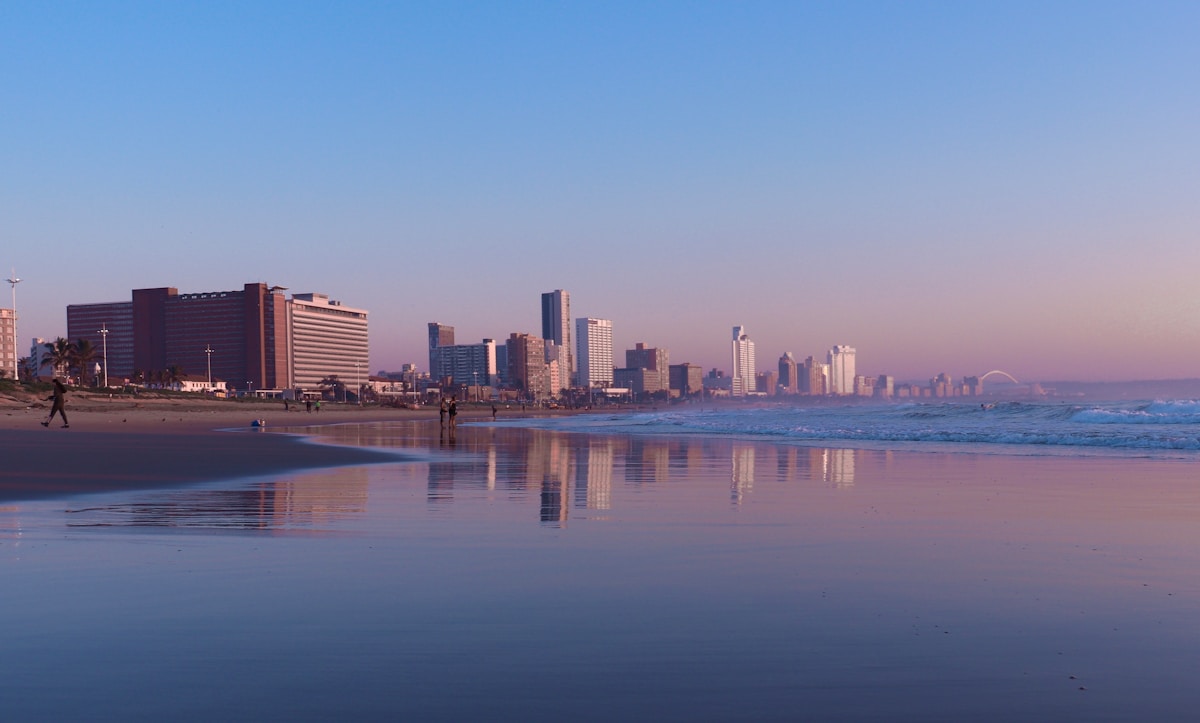
 Sunrise on the Golden Mile, when locals walk, run and surf along the beachfront.
The Golden Mile beaches - North Beach, Bay of Plenty, Dairy Beach - are protected by shark nets and lifeguarded year-round. The Indian Ocean here averages 22–24°C in winter and 26–28°C in summer: you can swim every day, no wetsuit needed. This alone distinguishes Durban from Cape Town, where the Atlantic rarely exceeds 16°C and is not comfortable without a wetsuit. See best time to visit South Africa for month-by-month conditions.
uShaka Marine World
R220 adult for general access (additional for dive/snorkelling experiences). One of the better marine parks in Africa - the aquarium houses the largest collection of sharks in the southern hemisphere. Nine habitats connected by a shipwreck theme, with a full water park, beach club, and restaurants. Shark encounters (R400) let you snorkel or dive with the sharks under supervision. Open daily from 09:00.
Victoria Street Market
The historic market has been rebuilt since a fire but retains its character. Spices, fabrics, crafts, Zulu beadwork, and some of the cheapest curry you’ll find anywhere in Durban. Look for the bunny chow - a Durban invention: a hollowed-out loaf of white bread filled with curry. Eat standing up, use your hands, and don’t order a ‘full’ unless you’re very hungry.
Moses Mabhida Stadium
Built for the 2010 FIFA World Cup, the stadium is now a visitor attraction. The Big Swing (R1,000, bungee-style) launches from the arch. A 550-step climb to the top (R190 adult) gives views over the city and ocean. The SkyCar gondola (R120) covers the same route with less effort. Worth a visit if you’re already on the Golden Mile.
The Bluff
The elevated wooded peninsula that protects the harbour mouth on its south side. Good cycling and hiking trails, a whale-watching point (humpbacks migrate past June–November), and views into one of the world’s busiest ports. Less visited than the Golden Mile - better for it.
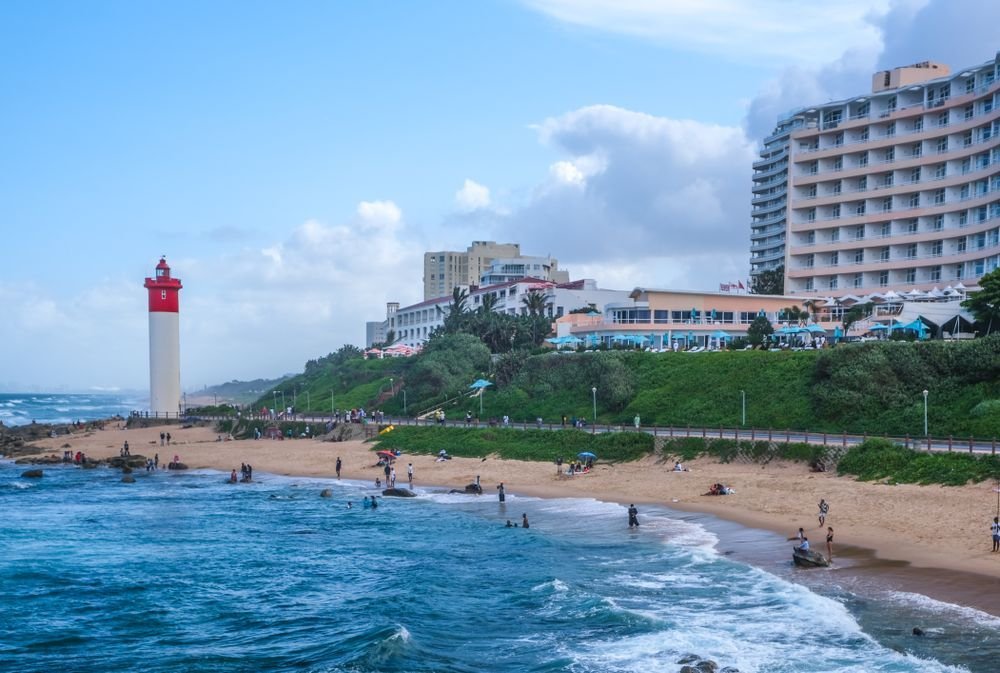 The Umhlanga lighthouse, a short drive north of central Durban.
Drakensberg Day Trip
3–4 hours drive west. The Royal Natal National Park section - Cathedral Peak, the Amphitheatre, Tugela Falls - is close enough for a day trip but deserves at least one night in the berg. See the KwaZulu-Natal guide for full detail on the Drakensberg options. If you’re going for the day, leave Durban before 07:00.
The Curry Culture
Durban’s Indian community, descended from indentured labourers brought by the British in the 1860s, created one of the world’s great curry traditions. Durban curries are distinct from Indian subcontinental curries - hotter, with a different spice balance, and served in ways unique to this city.
Where to eat:
| Restaurant | Type | Area |
|---|---|---|
| Victory Lounge (187 Grey Street) | Long-standing bunny chow stop | Indian Quarter |
| Patel’s Vegetarian | Legendary vegetarian | Grey Street |
Bunny chow: The defining Durban dish. A quarter, half, or full loaf of white bread, hollowed out and filled with bean, chicken, mutton, or prawn curry. Order a bean quarter for the most traditional version. Victory Lounge and Patel’s are the institutions.
Where to Stay in Durban
Durban’s stay options fall into three areas. The Golden Mile beachfront has the big towers and the easiest beach access, good for families. Umhlanga, about 15 km north, is the upmarket resort strip with the best sea views and the highest prices. Morningside and Berea suit travellers who want restaurants, Florida Road nightlife and guesthouses over beach frontage. Mid-range hotels generally start from about R1,200 per night as of 2026.
For named hotels by tier, neighbourhood comparisons and booking tips, see the Durban where to stay guide and the best hotels in Durban. To check current availability, search Durban hotels on Booking.com.
Day Trips from Durban
Drakensberg (3–4 hours)
The great escarpment forming the KZN–Lesotho border. The Royal Natal National Park section - Cathedral Peak, the Amphitheatre, Tugela Falls (second-tallest waterfall in the world at 948 m) - is the most dramatic. Entry R204 per adult per day (SANParks 2025/26 international rate). Stay 1–2 nights if possible; the drives are long and the landscape deserves more than a car windscreen view. Full detail in the KwaZulu-Natal guide.
Hluhluwe–iMfolozi Game Reserve (2.5 hours north)
The oldest game reserve in Africa. White rhino were brought back from near-extinction here in the 1950s. Big Five including large rhino and elephant populations, lion, leopard, and buffalo. Malaria risk - take prophylaxis. Entry R204 per adult per day (international, 2025/26). Don’t visit without booking accommodation inside the reserve or in the nearby town of Hluhluwe.
Valley of a Thousand Hills (45 minutes inland)
Deep river valley with excellent craft centres and rural Zulu villages. Phezulu Safari Park (R160 adult) runs cultural shows and game drives. Less wild than a real reserve but accessible for a half-day.
Durban Guides
- Things to Do in Durban
- Where to Stay in Durban
- Durban Hotels Guide - full accommodation breakdown by area and budget
- Day Trips from Durban - Drakensberg, Hluhluwe, and Valley of 1000 Hills
- Best Hotels in Durban
- Best Restaurants in Durban
- Durban Food Guide
- Durban Beaches
Getting to Durban
King Shaka International Airport is 35 km north of the city centre (near Umhlanga). Uber into central Durban costs R300–400. There’s a metered taxi rank but Uber is more reliable. No rail connection. Fares and timings for each option are in our King Shaka airport transfer guide.
From Johannesburg: 1 hour by air (multiple daily flights from OR Tambo) or 6 hours by car on the N3.
From Cape Town: 2 hours by air; driving is very long (1,700 km).
For detailed logistics including flight options, airport transfers, and intercity coaches, see Getting to Durban. Also see getting around South Africa for car hire and domestic flight costs.
Practical Notes
| Best months | May–September (dry, mild) |
| Avoid | December–January (hot, humid, school holiday crowds) |
| Ocean temperature | 22–24°C winter, 26–28°C summer |
| Malaria | Durban city: none. Hluhluwe (2.5 hrs north): yes - take prophylaxis |
| Safety | Golden Mile safe in daylight. Uber everywhere. Don’t walk with phone out. |
| Currency | ZAR. R18–19 per US dollar (2026). See budget guide |
Ready to plan your trip? Tours & Activities in Durban, Travel Insurance for South Africa, or eSIM for South Africa.
See Also
- KwaZulu-Natal region guide - Durban in the context of the full province
- Hluhluwe–iMfolozi safari guide - Africa’s oldest game reserve, 2.5 hours north of Durban
- Drakensberg hiking guide - the Amphitheatre and Tugela Falls, 3–4 hours west of Durban
- Durban vs Cape Town comparison - which city to visit first on a South Africa trip
- Best time to visit South Africa - Durban weather year-round and when to go
- 14-day South Africa itinerary - how Durban fits into the classic South Africa circuit
Official sources include eThekwini Municipality and South African Tourism.
Book an experience
Top experiences in Durban
Best price guaranteed · Instant confirmation · Free cancellation on most bookings
Looking for a place to stay? Browse hotels in Durban , free cancellation on most bookings.
Upcoming Events in Durban
Eid al-Fitr 2027 South Africa: Dates, Events & Where to Celebrate
Eid al-Fitr 2027 in South Africa falls on 9 March. Bo-Kaap feasts, Durban prayers and Fordsburg celebrations: dates, events and where to join in.