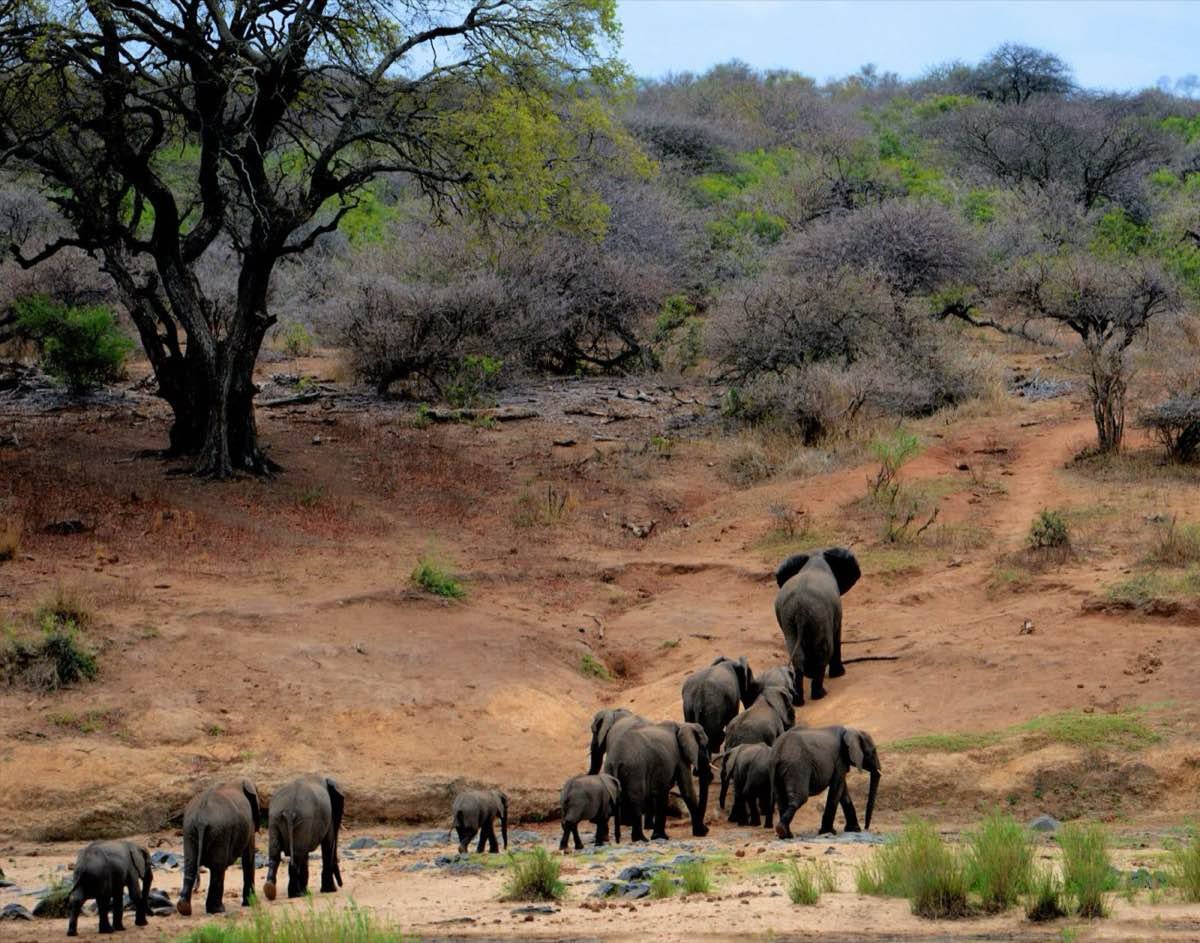
Phalaborwa is a working mining town, and that is part of its appeal: it sits directly against the fence of Kruger National Park, so the bush starts at the end of the main street. This page covers what to do with two or three days here, from the gate itself to the lookout over one of the largest open-pit copper mines in Africa.
Malaria warning: Phalaborwa lies inside the Limpopo malaria zone, with the highest risk from October to April and a lower but real risk in winter. Visit a travel clinic well before you fly, ask about prophylaxis, wear long sleeves and repellent from dusk, and choose screened or air-conditioned rooms. By contrast, Cape Town, the Garden Route, Addo and the Drakensberg are malaria-free, so do not assume the rest of your trip carries the same advice.
| Activity | Time needed | Best for |
|---|---|---|
| Phalaborwa Gate day drive | Full day | Elephants, river views, self-drivers |
| Letaba camp day trip | 6 to 9 hours | Elephants, birds, a restaurant lunch |
| Hans Merensky Estate | Half day | Walks, birds, game on the doorstep |
| River outings near the Olifants | 2 to 3 hours | Hippo, crocodile, waterbirds |
| Mine lookout | 1 hour | Industrial scale, photographs |
Phalaborwa Gate and the northern roads
The gate opens into the central-northern part of Kruger, a quieter section than the busy south. Gate times shift by season, roughly 05:30 to 17:30 in winter and later in summer, so check the current times on the SANParks website{target=“_blank”} and plan your return so you are out before closing. Entry is the international conservation fee, which rises each 1 November; budget about ZAR 500 per adult per day at current rates and confirm before you go (as of 2026). Our Kruger things to do guide covers game-drive etiquette and what to bring.
Start early. Elephant and buffalo gather along the Letaba and Olifants rivers in the dry months (May to September), and lions often rest on the tar in the cool of the morning. Pack water, snacks and a printed map, since mobile coverage is patchy.
Letaba camp day trips
Letaba is the obvious destination from the gate, around 50 km away. The camp has a restaurant, shop, fuel and an elephant hall that displays the tusks of the park’s great tuskers, which is worth an hour on its own. From the camp terrace you look over the Letaba riverbed, where herds come down to drink. Take the river loops on the way, drive slowly, and keep to the speed limit. If you would rather have a ranger find the animals, compare guided Kruger and Phalaborwa safaris.
Hans Merensky Estate and the bush around town
The Hans Merensky Estate on the edge of town combines a golf course with a fenced nature area where antelope, zebra and giraffe can be seen on foot or from a vehicle at a gentle pace. It suits visitors who want a bush walk without a full park day, and birders will pick up plenty of species around the water. Access rules and fees vary, so ask your lodge to confirm what is open that week.
River outings on the Olifants
Several lodges and operators around Phalaborwa run sunset or morning outings on the Olifants River and nearby dams, with hippo, crocodile and waterbirds the main draw. Operators change and not every one is currently running, so book through your accommodation, ask about group size, and expect to pay a few hundred rand per person.
The open-pit mine lookout
Phalaborwa exists because of copper, phosphate and magnetite. The Palabora open pit is a vast hole on the edge of town, and a viewpoint gives a sense of its scale. Access to the site is controlled for safety, so do not turn up uninvited. Combine it with Masorini, the Iron Age archaeological site we describe on the Phalaborwa hub page, to see how metalworking shaped this area for centuries.
Where to stay and plan your time
Lodges and guesthouses sit between the town and the gate, and most offer early breakfast boxes and bush dinners. Rates for mid-range rooms run from approximately ZAR 1,200 to 2,500 per night as of 2026. Compare Phalaborwa hotels and lodges before the school holidays, when the best rooms go early.
A simple two-day plan: day one, a full Kruger day through the gate to Letaba and back; day two, a slow morning at Hans Merensky, lunch in town and a sunset river outing. Add a third day for Masorini and the mine lookout if you are not heading on. Phalaborwa is also a practical stop on the way to the Panorama Route, and Hoedspruit airport, about 65 km south, is the nearest airport with regular flights from Johannesburg.