Kruger National Park Travel Guide: Big 5 & Self-Drive
Plan your Kruger safari: Big 5, best camps (Skukuza, Satara), self-drive vs guided, entry fees, and the dry months that deliver the best sightings.
Guides for Kruger National Park
Kruger National Park is one of Africa’s largest game reserves - 19,485 square kilometres of savanna, rivers, and bushveld straddling South Africa’s northeastern border with Mozambique. It is home to the Big 5 (lion, leopard, elephant, rhino, and buffalo), wild dog, cheetah, and more than 500 bird species. For most visitors to South Africa, Kruger is the centrepiece of any wildlife itinerary.
Access is straightforward. The park has nine main entrance gates, and the internal road network of more than 2,800 km means you can cover significant ground in a standard hire car. Most visitors fly into Kruger Mpumalanga International Airport (MQP, near Nelspruit/Mbombela) or Hoedspruit Airport and drive in directly - both are within an hour of the nearest park gates. From Johannesburg, the drive to Malelane Gate (southern entry) is approximately 4.5 hours on the N4.
Planning Your Safari
Self-Drive vs Guided Safaris
Self-drive is Kruger’s defining experience for independent travellers. You set your own pace, stop when you choose, and spend as long as you like watching a lion pride or a herd of elephants crossing the road. The roads are tarred (main routes) and gravel (side loops), suitable for a standard sedan - no 4x4 required on most routes.
Guided safaris offer expert eyes and access to private concessions inside the park where off-road driving is permitted, dramatically improving the chance of tracking predators. Operators including Wilderness Safaris, &Beyond, and Singita run high-end lodges with twice-daily guided drives included.
The practical middle ground: hire a car, stay in SANParks camps for 3 nights (self-drive during the day), and book one guided morning or evening drive through your camp’s reception. Skukuza and Satara both offer guided drives for around R550–800 per person.
Key self-drive rules:
- Stay on designated roads - leaving your vehicle is prohibited except at designated picnic spots
- Speed limit is 50 km/h on tar, 40 km/h on gravel
- Camps close their gates at sunset - be back before gate closing time or face a fine
- No driving between 18:00 and 05:30 outside camp (unless on an official night drive)
Entry Fees (2025/26 SANParks Rates)
| Visitor type | Daily conservation fee |
|---|---|
| International adult | R491 per person |
| International child (under 12) | R246 per person |
| South African resident adult | R228 per person |
| South African resident child | R114 per person |
Fees are charged per person per day (not per vehicle). Pay by card at the gate - no cash accepted. Keep your receipt, as it is checked inside the park.
Book accommodation and gates via SANParks.org - the system opens bookings 11 months ahead. Camps fill quickly during South African school holidays (June–July and December–January). International visitors should book 3–6 months ahead for peak season (July–August).
Best Time to Visit Kruger
| Season | Months | Game viewing | Conditions |
|---|---|---|---|
| Peak dry season | June–September | Excellent - best overall | Cool to warm, 15–28°C, low vegetation |
| Shoulder | May, October | Very good | Transitional, comfortable |
| Summer (wet) | November–April | Good for birds, harder for mammals | Hot (35°C+), lush vegetation, higher malaria risk |
July and August are the prime months. Temperatures are comfortable (15–25°C), waterholes concentrate game from vast distances, and predator sightings peak. This is also when Southern Hemisphere visitors take winter school holidays - book early.
Green season (November–February) has its own appeal: newborn impala and wildebeest attract predators, birding is exceptional (migratory species arrive from the north), and lodges offer significant discounts. But game is harder to find in dense vegetation, and the heat can be oppressive.
Main Camps and Where to Stay
Kruger’s camps range from basic camping to comfortable en-suite chalets. All main camps have a fuel station, shop, restaurant (most), and swimming pool (most). Book through SANParks.org.
Skukuza
The largest and best-resourced camp, near the Sabie River in the southern section. Facilities include a supermarket, restaurant, car hire (Avis), a doctor, and ATM. Game viewing in the southern Kruger is excellent - lions and leopards are frequently seen along the Sabie River road (H1-2 and S114 are productive loops). Chalets from approximately R1,600/night.
Best for: First-time visitors, families, anyone who wants maximum facilities and reliable game.
Satara
The second-largest camp, set in the central section’s open knob-thorn savanna - Kruger’s lion and cheetah heartland. The H7 and surrounding loops are consistently among the best game drives in Africa. Satara is less frenetic than Skukuza and has a strong sense of bush atmosphere. Chalets from approximately R1,500/night.
Best for: Predator-focused visitors, anyone prioritising lion and cheetah sightings.
Berg-en-Dal
In the southwestern corner near Malelane Gate, this camp is surrounded by rocky koppies (granite outcrops) rather than the flat savanna of central Kruger. Good for rhino and the S110 Matjulu Loop is productive for leopard. Mountain pool and strong birding. Chalets from approximately R1,400/night.
Best for: Rhino sightings, birdwatchers, quieter atmosphere.
Olifants
Perched on a cliff above the Olifants River in the central section - arguably the most dramatic setting of any camp in Kruger. The river view from the camp restaurant is extraordinary. Chalets from approximately R1,400/night.
Best for: Scenery, birdlife, elephant and hippo on the river.
Letaba
Northern Kruger, near the Letaba River - elephant country. The camp has a small elephant museum (Hall of Tuskers) documenting Kruger’s historical tuskers. Less visited than the southern camps, so feels more remote. Chalets from approximately R1,300/night.
Best for: Elephant viewing, quieter experience, northern Kruger exploration.
Private Concessions and Luxury Lodges
Seven private concessions border or lie within the park, operating at a price point significantly above SANParks camps but offering off-road driving, night drives, and exclusivity. Rates typically include all meals, twice-daily drives, and drinks.
| Lodge | Concession | Rate (approx, per person sharing) |
|---|---|---|
| Singita Ebony | Sabi Sand | R40,000–60,000/night |
| &Beyond Kirkman’s Kamp | Sabi Sand | R20,000–30,000/night |
| Lion Sands Ivory Lodge | Sabi Sand | R25,000–40,000/night |
| Thornybush Game Lodge | Thornybush | R12,000–18,000/night |
Sabi Sand Wildtuin (bordering Kruger’s southwestern boundary) has unfenced boundaries with Kruger itself - animals move freely between the reserves. Leopard sightings are almost guaranteed, and lion encounters are daily. Access is through the Sabi Sand gate south of the Paul Kruger Gate. See the Kruger where to stay guide for a full comparison of private camps versus SANParks options at every price point.
What to See: The Big 5 and Beyond
Lion: Most common in central Kruger (Satara area) and the southern section (Skukuza, Lower Sabie). The H4-2 road between Lower Sabie and Crocodile Bridge is one of the best lion roads in Africa.
Leopard: Notoriously difficult to find in Kruger itself - far easier in the private concessions (Sabi Sand). In the park, try the S114 along the Sabie River and the early morning S100 Skukuza loop.
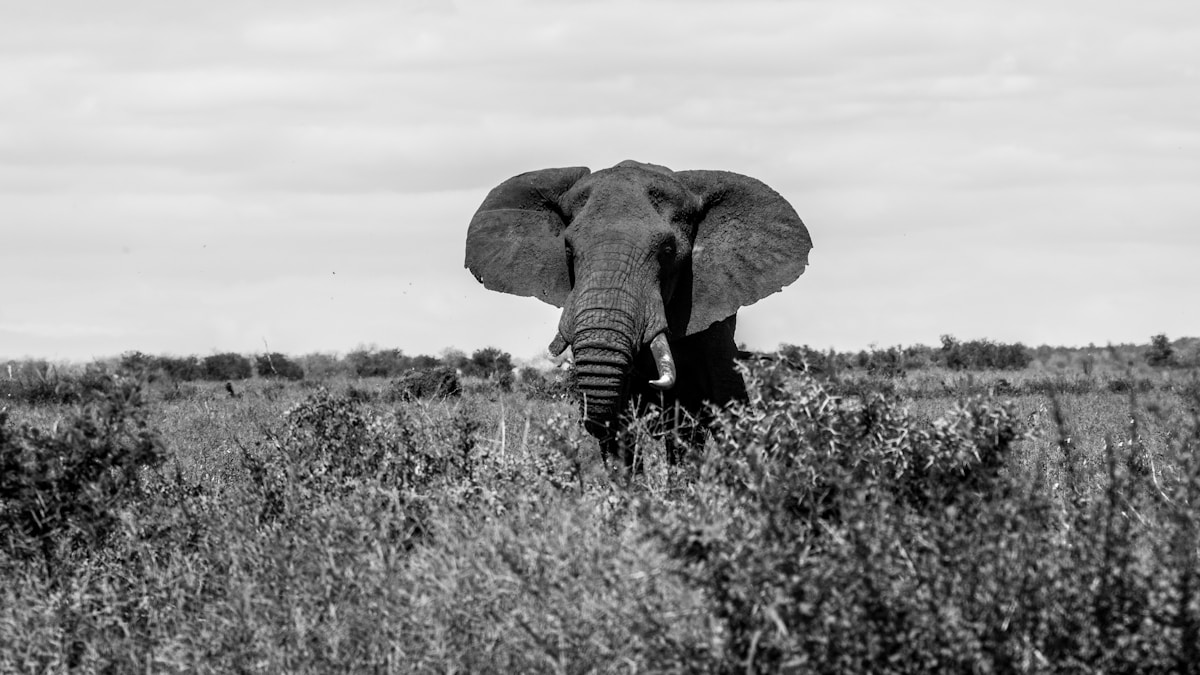
Elephant: Abundant throughout the park - Kruger has around 20,000–24,000 elephants. Waterholes near camps in dry season provide daily sightings.
Rhino: Both white and black rhino. White rhino are more common and frequently seen grazing near Berg-en-Dal, Lower Sabie, and Crocodile Bridge. Black rhino are solitary and harder to find.
Buffalo: Usually in herds of hundreds - waterholes and river crossings. Common throughout.
Wild Dog: The rarest large carnivore. Kruger has the world’s second-largest population (around 400–500). Satara, Shingwedzi, and Punda Maria areas have the most sightings. Their hunting is extraordinary to watch but entirely chance-dependent.
Cheetah: Open grasslands of central Kruger (Satara, Orpen). Early morning is best.
Getting to Kruger
| Route | Details |
|---|---|
| From Johannesburg | 4.5 hours to Malelane Gate via N4. Car hire at OR Tambo International. |
| Fly to Kruger Mpumalanga (MQP) | Airlink flights from Johannesburg (~1 hour). Car hire at KMIA (Nelspruit) - Avis, Hertz, Budget. Gate within 45 min. |
| Fly to Hoedspruit (HDS) | Airlink flights from Johannesburg. Closest to Orpen Gate (central) and Phalaborwa Gate (north). Car hire at Hoedspruit Airport. |
| Guided tour from Joburg | 2–3 day packages include transport; see GYG Kruger tours. |
A car is essential once in Kruger - there is no public transport inside the park. Hire cars are available at Kruger Mpumalanga Airport (Avis, Hertz, Budget) and inside Skukuza camp (Avis only). Book in advance.
Combining Kruger with Other Destinations
Most itineraries pair Kruger with at least one other region. Common combinations:
| Route | Days needed | Logic |
|---|---|---|
| Joburg → Kruger → Cape Town | 10–14 days | Classic South Africa loop; fly Nelspruit to Cape Town |
| Kruger + Panorama Route | 2 extra days | Blyde River Canyon, God’s Window, Bourke’s Luck Potholes |
| Kruger + Swaziland/Eswatini | 2 extra days | Border-to-border, cultural contrast |
| Kruger + Mozambique coast | 3–4 extra days | Overland to Tofo or Vilanculos for Indian Ocean reefs |
The Panorama Route - technically the Mpumalanga escarpment - lies 2 hours west of Skukuza. The Blyde River Canyon viewpoints (Three Rondavels, God’s Window, Bourke’s Luck Potholes) can be covered in a full day as an add-on before or after your Kruger stay.
Practical Notes
| Malaria | Yes - Kruger is a malaria area. Consult a doctor about prophylaxis, use DEET, and sleep under nets in camp |
| Weather (peak season) | May–September: 15–28°C days, cold nights (5–10°C). Bring warm layers for dawn drives |
| Weather (summer) | October–April: 30–40°C days, humid, afternoon thunderstorms |
| Camp curfews | Gates close at sunset (varies by month). Check your specific camp’s gate times |
| Fuel | Available at Skukuza, Satara, Letaba, Shingwedzi, and Punda Maria. Fill up regularly |
| Mobile signal | Vodacom coverage is best inside the park; MTN is unreliable in remote areas |
| Cash vs card | SANParks accepts cards for gate fees and accommodation. Shops in camp are card-friendly. Carry some cash |
| Children | Kruger is suitable for families. Children must remain in vehicles. Night drives are suitable for children 6+ |
Search lodges near Kruger on Booking.com
For a full comparison of accommodation options - SANParks rest camps, private concessions, and lodges outside the park - see the Kruger where to stay guide. For self-drive game drive tactics and the best routes, see the Kruger safari guide.
Book an experience
Top experiences in Kruger National Park
Best price guaranteed · Instant confirmation · Free cancellation on most bookings
Looking for a place to stay? Browse hotels in Kruger National Park , free cancellation on most bookings.