Search hotels in Cape Town on Booking.com
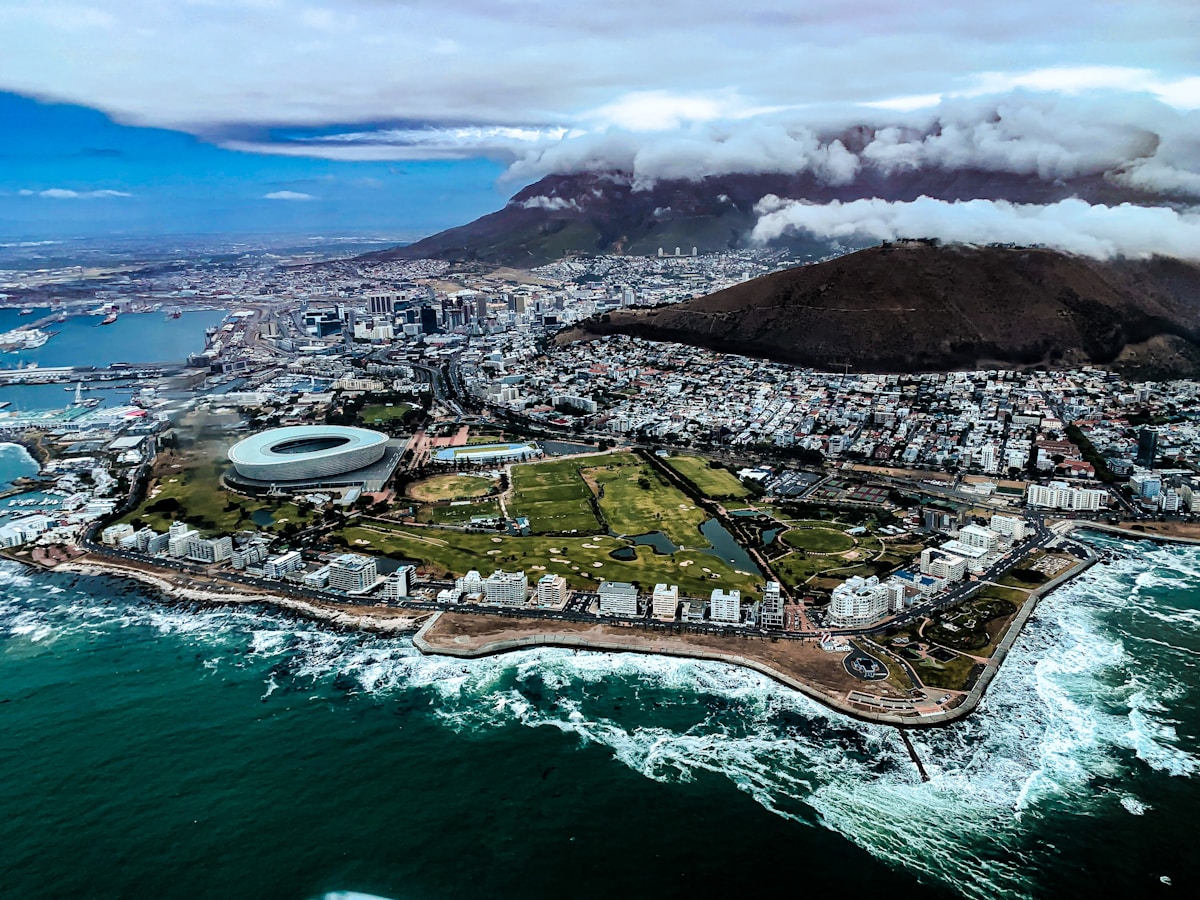
South Africa’s two dominant cities could barely be more different. Cape Town sits at the tip of a peninsula, boxed in by mountains and ocean, its energy shaped by wind, wine, and the proximity of the sea. Johannesburg occupies a flat highveld plateau 1,750 m above sea level, a city built on gold, defined by commerce, and expanding in every direction. Choosing between them depends on what kind of trip you’re planning - and the honest answer is that both cities deserve to be on the itinerary if you have the time.
Vibe and Personality
Cape Town feels like a Mediterranean city that ended up in Africa - which in some respects it is. The mountain forces the city into a compact footprint, the summer is warm and dry (December to February), and the pace reflects the outdoor lifestyle the geography encourages. There’s a strong café culture, an arts and design scene concentrated around Woodstock and the City Bowl, and a food culture that punches well above its weight. It’s also a profoundly divided city: the wealth concentrated on the Atlantic Seaboard sits in sharp contrast to the townships on the Cape Flats, and that tension is never far from the surface for anyone paying attention.
Johannesburg is relentless in comparison. It’s Africa’s wealthiest city and has the energy to match - entrepreneurial, cosmopolitan, and moving fast. The CBD and inner city have been gradually reclaimed over the past decade (Maboneng was the early proof, Braamfontein followed), while the northern suburbs - Sandton, Rosebank, Melrose Arch - operate in a bubble of glass towers and boutique hotels. The history sits heavier here: apartheid was administered from this city, and Soweto, the Apartheid Museum, and Constitution Hill make that history visceral in a way that no other city in the country can match.
If you want nature and scenery as the centrepiece of your trip, Cape Town wins. If you want to understand how South Africa works - economically, historically, socially - Johannesburg gives you more.
Cost Comparison
Costs are broadly similar, with a few consistent differences.
| Category | Cape Town | Johannesburg |
|---|---|---|
| Budget hostel | R450–R600/night | R350–R500/night |
| Mid-range hotel | R1,400–R2,600/night | R1,200–R2,200/night |
| Upmarket hotel | R3,500–R8,000+/night | R3,000–R7,000+/night |
| Street food / takeaway | R50–R120 | R50–R120 |
| Mid-range restaurant (per person) | R250–R450 | R250–R450 |
| Fine dining (per person) | R600–R1,200 | R600–R1,200 |
| Uber across the city | R80–R150 | R80–R150 |
| Car hire per day | R400–R700 | R400–R700 |
Where Cape Town costs more: The V&A Waterfront restaurants and Camps Bay sunset bars operate at near-European prices. Accommodation runs 10–15% higher on average for comparable central properties. Johannesburg has equivalent high-end options spread across a wider geography — they exist but feel less concentrated around a single tourist circuit.
Weather by Season
| Season | Cape Town | Johannesburg |
|---|---|---|
| Summer (Dec–Feb) | Hot, dry, 25–33°C, SE wind (“Cape Doctor”) | Hot, 26–32°C, afternoon thunderstorms daily |
| Autumn (Mar–May) | Mild, 18–26°C, settling into rain | Warm transitioning to cool, 18–28°C, storms ending |
| Winter (Jun–Aug) | Cool and wet, 10–18°C, Atlantic fronts | Cool, dry, clear. 5–18°C, near-zero nights |
| Spring (Sep–Nov) | Warming, wildflowers, 15–24°C | Warming, 15–28°C, storm season starting |
The key difference: Cape Town’s winter (June–August) is rainy and grey. Johannesburg’s winter is cold at night but almost always sunny - it sits at altitude and the highveld winter is very dry. If you’re visiting in the South African winter and want reliable sunshine, Johannesburg wins. If you’re visiting in summer, Cape Town is more comfortable - the SE wind keeps it cooler than the muggy Joburg humidity.
Things to Do
Cape Town
Cape Town’s appeal is fundamentally scenic and outdoor. Table Mountain is the headline - the aerial cableway runs approximately R390 return for international visitors (as of 2026), and a clear-day summit is one of the best urban views anywhere. The Cape Peninsula day circuit (Boulders Beach, Cape Point, Chapman’s Peak) takes a full day by car and covers extraordinary coastal scenery. The Winelands - Stellenbosch, Franschhoek, Paarl - are 45 minutes from the CBD and provide a day that is equally about landscape and eating and drinking.
Cultural experiences include the Bo-Kaap (Cape Malay quarter, guided walks approximately R250), Robben Island (approximately R800 including the ferry, book well ahead), and District Six Museum (approximately R80). The V&A Waterfront handles a lot of foot traffic but has good food and the Zeitz MOCAA contemporary African art museum (approximately R200).
Johannesburg
The Apartheid Museum near Gold Reef City is Johannesburg’s unmissable experience - allow three hours minimum (approximately R200). Soweto is best visited with a local guide rather than independently: a half-day tour (approximately R600–R900 from operators including Lebo’s Soweto Backpackers and Jimmy’s Face to Face) covers the Hector Pieterson Memorial, Vilakazi Street (the only street in the world to have housed two Nobel Peace Prize winners - Mandela and Tutu), and a proper township lunch.
Constitution Hill in Braamfontein combines the old Fort prison with the Constitutional Court (free entry during business hours) and is one of the most moving sites in the country. Maboneng Precinct in the inner city is the best area for contemporary art galleries, independent markets (Neighbourgoods on Saturdays), and good coffee. The Cradle of Humankind UNESCO site is about 50 km northwest - worth a half-day for anyone interested in palaeontology (Maropeng Visitor Centre, approximately R220).
Safety - An Honest Assessment
Both cities require the same fundamental approach: be streetwise, don’t display expensive kit, use Uber rather than hailing cabs on the street, and take local advice seriously about which areas to avoid at which times.
Johannesburg CBD is genuinely high-risk for walking alone after dark and requires caution even during the day outside the main business corridors. The northern suburbs - Sandton, Rosebank, Melrose Arch, Parkhurst - are considerably safer and where most travellers base themselves. These function like any affluent suburb in any major city.
Cape Town has its own specific risks that catch visitors off guard. Smash-and-grab thefts from cars at scenic viewpoints (Signal Hill, Chapman’s Peak laybyss, even Table Mountain lower cable station parking) are well-documented - don’t leave anything visible. Walking alone on the slopes of Table Mountain after dusk also carries risk. The City Bowl, Green Point, and Sea Point are generally safe for walking by day; after dark, stick to populated streets or Uber.
The township areas of both cities (Cape Flats, Khayelitsha in Cape Town; Alexandra in Johannesburg) are not tourist territory unless you’re on a properly organised township tour with a local guide and local contacts.
Food and Dining
Cape Town has arguably the best restaurant scene in the country. Bree Street and Kloof Street are the focus of the serious independent dining scene - Pot Luck Club, The Test Kitchen (book weeks ahead), and the cluster of wine-bars-cum-restaurants around Bree Street all operate at a high level. The Cape Malay food culture is distinctive to Cape Town: bobotie, bredie, sosaties, koeksister - try it at the Bo-Kaap Kombuis (approx R150–R220 for a main). The V&A Waterfront has good seafood options; the Neighbourgoods Market in Woodstock (Saturdays) covers everything from craft beer to artisan cheese.
Johannesburg’s food scene is more geographically scattered but deeper in cultural variety. Fordsburg (the “Little India” of Joburg) has some of the best Indian and halal food in the southern hemisphere - Spice Route or any of the curry houses along Main Road run enormous, excellent meals for approximately R100–R180 per person. Braamfontein/Maboneng has Mozambican, Ethiopian, and contemporary South African food. Parkhurst has a good strip of pavement restaurants popular with Joburg’s northern suburbs residents. Braai culture runs deeper here than in Cape Town - if you get an invitation to a Sunday braai, accept it.
Nightlife
Johannesburg edges ahead on nightlife diversity. The Rosebank nightclub strip, Sandton’s rooftop bars, and Maboneng’s bar scene give the city more late-night energy than Cape Town outside of summer. DJ culture is serious here - Afro-house and amapiano have their commercial roots in Joburg.
Cape Town’s Long Street was the traditional nightlife centre and still operates, though it has calmed since the mid-2010s. Kloof Street and De Waterkant (Cape Town’s LGBTQ+ quarter) have a more sophisticated bar scene. Camps Bay’s strip of restaurants turns into a cocktail-and-sunset crowd at around 6pm and quietens relatively early. Summer is when Cape Town nightlife is at its best - when the city has energy until well after midnight.
Day Trips
From Cape Town
- Winelands (Stellenbosch / Franschhoek): 45–60 min drive, full-day wine tasting
- Hermanus: 2 hrs, South Africa’s best land-based whale watching (August–November)
- Cape Peninsula: full-day scenic circuit (Boulders, Cape Point, Chapman’s Peak)
- Cederberg: 3 hrs, rock art and hiking in dramatic sandstone mountains
From Johannesburg
- Pilanesberg National Park: 2 hrs, Big 5 game reserve in a malaria-free zone; day trips from approximately R1,200–R1,800 per person
- Kruger National Park: 4.5 hrs (accessible via Phalaborwa or Hazyview), the obvious overnight safari option
- Magaliesberg: 1.5 hrs, Hartbeespoort Dam, hot air ballooning, wine farms
- Soweto: 30–45 min from Sandton, best done as a guided half-day
Which City Is Right for You?
Choose Cape Town if:
- This is your first South Africa trip and you want the iconic scenery
- You’re combining a city stay with the Garden Route or Winelands
- You prefer outdoor activities, beaches, and hiking
- You have kids - the Cape Peninsula circuit is one of South Africa’s best family days out
- You’re travelling December to February (Cape Town summer is exceptional)
Choose Johannesburg if:
- You want to understand South Africa’s history and urban culture in depth
- Safari is a priority - Joburg is the gateway to Kruger and Pilanesberg
- You’re transiting in any case (most long-haul flights land at O.R. Tambo)
- You want to see contemporary African art, music, and food culture in its most concentrated form
- You’re visiting June to August - Joburg’s winter sunshine is far more reliable than Cape Town’s rain
Choose both if:
- You have 10 or more days
- You want to understand how different two cities in the same country can be
The open-jaw approach works well: fly into Johannesburg, spend 2–3 days, take a domestic flight to Cape Town (under 2 hours, approximately R900–R1,800 booked in advance), and fly home from there. You see more of the country and skip the 1,400 km road drive between them.
Practical Notes
- Domestic flights: Kulula, FlySafair, and Airlink connect Cape Town International (CPT) and O.R. Tambo (JNB) frequently throughout the day. Book direct on their sites rather than through aggregators for the best prices.
- Currency: ZAR. Approximately R18–19 to USD 1, R23–24 to GBP 1 as of 2026.
- Both cities have reliable Uber service - use it. Metered taxis are rarely worth the negotiation.
- Cape Town car hire: the mountain and coastal roads reward having your own wheels. Johannesburg is harder to navigate without local knowledge - stick to Uber for urban exploration and hire a car only for specific day trips.
Ready to plan your trip? Tours & Activities in Cape Town, Car Hire in Cape Town, or Travel Insurance for South Africa.
Plan Your Trip
- Cape Town city guide - in-depth guide to South Africa’s most scenic city
- Johannesburg city guide - the country’s economic and cultural capital
- 3-day Cape Town itinerary - how to use a short Cape Town visit
- Soweto destination guide - the essential Johannesburg township experience
- Durban vs Cape Town comparison - if you’re considering a three-city trip
- Cape Winelands vs Stellenbosch - deciding how much wine country to include on your Cape Town stay
- Garden Route vs Wild Coast - the coastal drive comparison for the trip beyond Cape Town
- Kruger vs Pilanesberg - the key safari decision from Johannesburg
- 10-day South Africa itinerary - how to combine both cities in one trip
- 14-day South Africa itinerary - the classic circuit that includes both cities