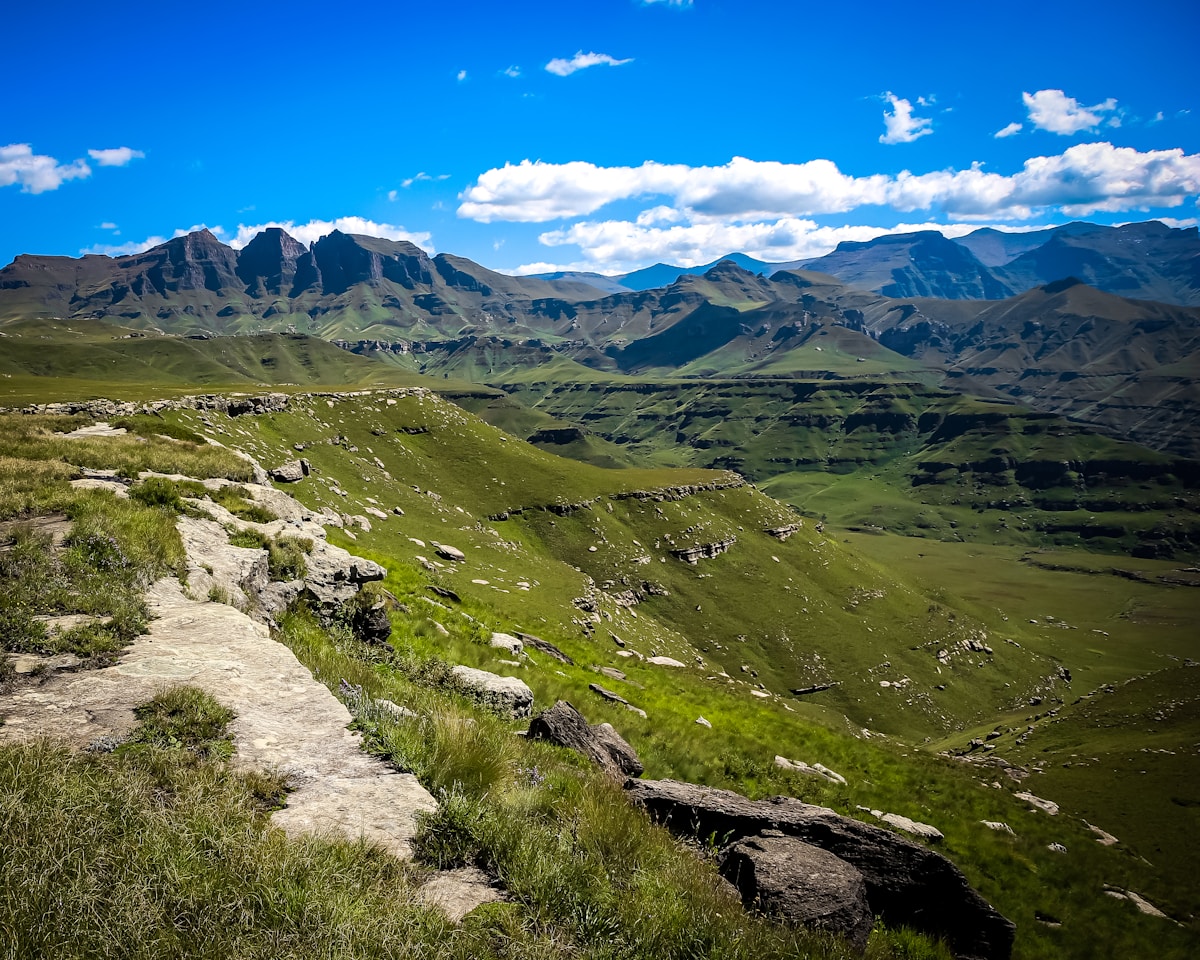
The Drakensberg - uKhahlamba, “the Barrier of Spears” in Zulu - is the highest mountain range in southern Africa, a 200 km wall of basalt cliffs rising to over 3,400 m along the border between KwaZulu-Natal and Lesotho. The uKhahlamba-Drakensberg Park is a UNESCO World Heritage Site, listed both for the landscape and for the thousands of San rock art paintings sheltered in its caves.
It is also one of the easiest mountain destinations in South Africa to get wrong, because “the Drakensberg” is not one place. The park stretches across half a dozen separate access points, none connected to each other by mountain roads. Pick your area first, then book accommodation - driving between Royal Natal and Sani Pass takes over three hours.
The range sits within KwaZulu-Natal, and most visitors combine it with Durban and the KZN coast. If hiking is the main reason you’re coming, our dedicated Drakensberg hiking guide covers trails, permits, and difficulty in detail - this page covers where to base yourself and how to plan the trip.
The Four Key Areas
Royal Natal National Park (Northern Drakensberg)
The headline area. The Amphitheatre - a 5 km basalt wall rising 1,200 m sheer from the valley - is the single most photographed view in the range, and Tugela Falls (948 m, among the world’s tallest) drops off its rim. The Tugela Gorge walk (14 km return, manageable for most fitness levels) gets you to the base; the chain-ladder summit route starts from the separate Sentinel car park near Witsieshoek.
Entry costs approximately R220 per international adult per day as of 2026, paid at the Ezemvelo KZN Wildlife gate. Best for: first-timers, classic views, the widest spread of accommodation.
Cathedral Peak (Central Drakensberg)
A single winding road dead-ends at the Cathedral Peak Hotel, surrounded on three sides by peaks - Cathedral Peak itself (3,004 m) is one of the few major summits a fit, guided hiker can do in a long day. The Didima valley below holds one of the best San rock art interpretation centres in the country (Didima Rock Art Centre, approximately R55). Entry approximately R220 per adult as of 2026. Best for: a comfortable one-base trip with everything organised from the hotel.
Giant’s Castle (Southern-Central Drakensberg)
Quieter and wilder. The drawcard is the Main Caves San rock art site (guided visits on the hour, approximately R100 per adult) and the Lammergeier Hide, where photographers bait bearded vultures in winter - book the hide months ahead through Ezemvelo (approximately R600 per person). Entry approximately R220 per adult as of 2026. Best for: rock art, birding, escaping crowds.
Sani Pass (Southern Drakensberg)
Not a park but a road - the famous 4x4 mountain pass climbing from Underberg to the Lesotho border at 2,876 m, topped by the “highest pub in Africa” at Sani Mountain Lodge. You cannot drive it in a normal hire car: the SA border post enforces 4x4-only. Guided day tours from Underberg/Himeville run approximately R950–R1,400 per person including the Lesotho border crossing - bring your passport. Best for: the road-trip experience, a toe into Lesotho, winter snow.
Where to Stay
Royal Natal / Northern Berg:
- Thendele Camp (Ezemvelo, inside the park) - self-catering chalets facing the Amphitheatre, approximately R1,600–R2,800 per chalet per night. The best view-to-price ratio in the range; book months ahead.
- Witsieshoek Mountain Lodge - at 2,438 m near the Sentinel car park, approximately R1,800–R2,900 per double half-board. The base for the chain-ladder summit hike.
- Montusi Mountain Lodge - upmarket farm-style lodge with Amphitheatre views, approximately R3,500–R5,000 per double half-board.
Cathedral Peak:
- Cathedral Peak Hotel - resort hotel at the road’s end, approximately R2,800–R4,500 per double full-board with daily guided walks included.
- Didima Resort (Ezemvelo) - self-catering chalets near the rock art centre, approximately R1,400–R2,200 per chalet.
Giant’s Castle:
- Giant’s Castle Camp (Ezemvelo) - the only option inside the reserve, self-catering chalets with mountain views and a restaurant, approximately R1,500–R2,400 per chalet.
Sani Pass / Southern Berg:
- Sani Mountain Lodge - at the top of the pass in Lesotho, dorms from approximately R450 and rondavels approximately R1,800 per double.
- Premier Resort Sani Pass - family resort at the foot of the pass, approximately R2,000–R3,200 per double.
Ezemvelo KZN Wildlife camps are booked at kznwildlife.com - December–January and Easter sell out far in advance.
For a full comparison of lodges, guesthouses, and budget options at each area, see our Drakensberg accommodation guide.
Getting There
There is no useful public transport into the mountains - you need a hire car or a transfer. See our getting around guide for hire-car context. Compare car hire rates for Durban and Johannesburg before you travel.
From Durban: Royal Natal is around 280 km / 3.5 hours via the N3 and R74; Cathedral Peak around 240 km / 3 hours; Underberg (for Sani Pass) around 150 km / 2 hours. Hire cars from King Shaka Airport run approximately R350–R500 per day for a compact.
From Johannesburg: Royal Natal is the closest area - around 330 km / 4 hours via the N3 and Harrismith. Cathedral Peak around 380 km / 4.5 hours. Fuel for the round trip runs approximately R1,200–R1,600.
Without a car: the Baz Bus and private shuttles serve the Northern Berg backpacker lodges (Amphitheatre Backpackers near Bergville, dorms from approximately R350), which run popular day tours to the Amphitheatre hike and Royal Natal. You can also book Drakensberg tours and hiking trips online with reviews and instant confirmation.
When to Go
May–September (autumn/winter) is the prime season: clear, stable skies, sharp visibility, mild days of 15–20°C - but nights below freezing and occasional snow above 2,500 m. November–March (summer) is lush and green with dramatic light, but afternoon thunderstorms are near-daily, rivers flood quickly, and lightning above the escarpment is genuinely dangerous - hike early. April and October are the swing months and often the best compromise.
The Drakensberg is entirely malaria-free, making it an easy pairing with Cape Town and the Garden Route - or a cool-air contrast after a Kruger safari.
Practical Notes
- Entry fees quoted are 2026 Ezemvelo KZN Wildlife international rates - verify at kznwildlife.com before travel, as they adjust annually.
- Mobile signal is patchy beyond the resorts; download offline maps.
- Carry your passport for any Sani Pass trip - it’s an international border.
- Weather changes fast at altitude in any season; pack a warm layer and rain shell even for short walks.
See Also
- Drakensberg hiking guide - trail-by-trail guide to the Amphitheatre, Cathedral Peak, and the chain ladders
- KwaZulu-Natal region guide - the Drakensberg in the broader KZN context
- Durban city guide - most visitors fly into King Shaka (Durban) before heading to the Berg
- Hluhluwe–iMfolozi safari guide - pairs well with the Drakensberg on a KZN circuit
- 14-day South Africa itinerary - the standard route that includes the Berg
- Best time to visit South Africa - Berg weather month by month