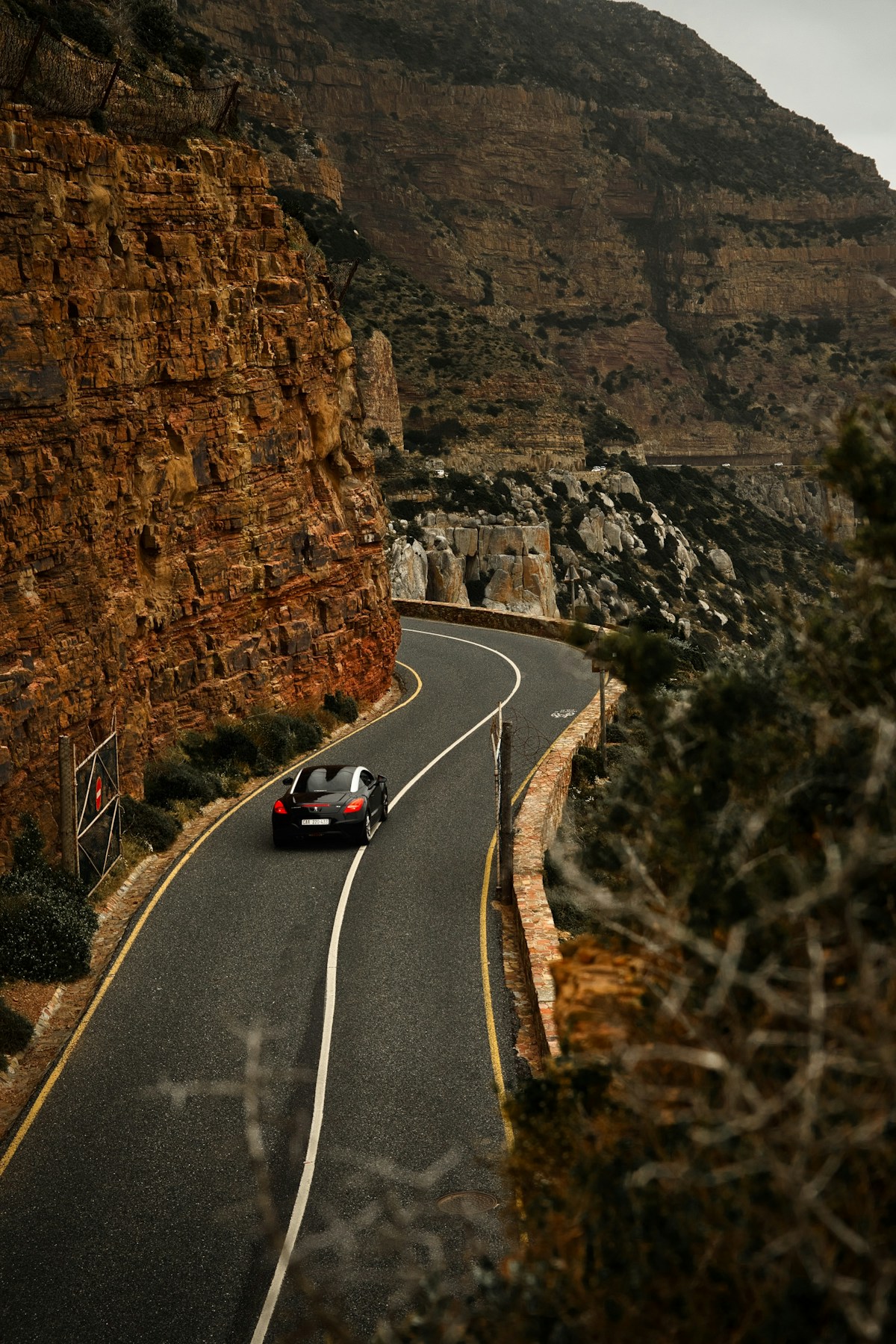
South Africa rewards drivers. The country has one of the best road networks on the African continent, the scenery is spectacular, and many of the most memorable experiences - Kruger self-drives, the Garden Route, the Panorama Route - are only truly accessible by car. With some preparation and awareness of local conditions, a self-drive trip here is very manageable.
Which Side of the Road
South Africa drives on the left. Steering wheels are on the right. If you’re arriving from the US, Europe (outside the UK), or mainland Asia this requires active adjustment, especially at unfamiliar intersections and roundabouts. Take it slowly for the first hour out of the airport. Most hire car handovers include a brief reminder - listen to it.
Driving Licence Requirements
A valid driving licence from your home country is accepted in South Africa, provided it’s in English or accompanied by a certified translation. If your licence uses non-Roman script (Arabic, Chinese, Thai, Russian, etc.) you must carry an International Driving Permit (IDP) alongside the original.
IDPs must be obtained in your home country before you travel - you cannot get one in South Africa. They’re issued by national motoring associations (AAA in the US, AA in the UK, ADAC in Germany) and typically cost the equivalent of R200–400.
Your licence must be current - expired licences are not accepted, and police roadblocks are common.
Car Hire Companies and 2026 Rates
South Africa has a mature car hire market. The major international agencies operate at all three main airports (Cape Town, Johannesburg OR Tambo, Durban King Shaka) plus most regional airports (George, Port Elizabeth/Gqeberha, Nelspruit/Kruger Mpumalanga).
Major agencies (as of 2026 - rates vary by season and booking lead time):
| Agency | Compact (approx/day) | SUV (approx/day) | Notes |
|---|---|---|---|
| Avis | R550–700 | R950–1,400 | Widest national network |
| Budget | R480–650 | R850–1,200 | Strong airport presence |
| Europcar | R500–680 | R900–1,300 | Good CDW options |
| Hertz | R520–700 | R900–1,350 | US loyalty members get discounts |
| First Car Rental | R420–580 | R780–1,100 | Local agency, good value |
| Tempest | R400–550 | R750–1,050 | Budget option, check fleet age |
Book at least two weeks ahead in December/January (peak season) when airport availability is tight. Always opt for Collision Damage Waiver (CDW) and theft cover - South Africa’s roads and occasional urban risks make full cover worth the extra R150–250 per day.
Check GetRentacar to compare live rates across agencies for your travel dates. For a full breakdown of insurance types, excess waivers, cross-border permits, and fuel logistics, see our car rental in South Africa guide.
Fuel type: Most hire cars run on unleaded petrol (95 or 93 octane) or diesel. Fuel is sold by the litre - as of mid-2026, petrol costs approximately R23–26 per litre (prices fluctuate monthly). Fuel attendants fill your tank for you at most stations; a R5–10 tip is customary.
Road Conditions by Region
Garden Route (N2, George to Storms River): Excellent tar road, well-signposted, smooth driving. This is South Africa’s showcase route and easily handled in a compact car. Watch for baboons on the road near Nature’s Valley.
Cape Winelands (R44, R310, backroads): Mostly good tar. Some farm roads are gravel - fine in a compact, but check conditions after heavy rain in winter (June–August).
Panorama Route (R532, R36, Blyde River Canyon area): Good tar on main roads, some gravel sections to viewpoints like God’s Window. An SUV isn’t necessary but adds comfort on the rougher detours.
Kruger National Park: The main roads (H-numbered) inside Kruger are tar or well-maintained gravel. A standard sedan handles them fine. Avoid speeding - animals appear suddenly, and hitting a warthog at 50 km/h causes serious damage.
Rural KwaZulu-Natal (beyond Durban): Roads to Hluhluwe-iMfolozi, iSimangaliso, and the Drakensberg are generally good, but secondary roads degrade quickly. Potholes are a real hazard in some areas - drive at 80 km/h rather than the limit on unfamiliar rural roads.
Limpopo and Northern Kruger: Long, straight tar roads with periodic potholes. Distances between fuel stations can be 80–120 km in remote areas - fill up whenever you’re below half a tank. Roads to private reserves off the N1 are often gravel; confirm with your accommodation.
Eastern Cape backroads: The Wild Coast region has some of the roughest roads in the country. A 4WD or high-clearance vehicle is strongly recommended for rural areas beyond Mthatha.
Toll Roads
South Africa has an extensive tolled national road network. Pay attention to these:
Gauteng e-tolls (Johannesburg/Pretoria): The Gauteng freeway system (N1, N3, N12, N14 within Gauteng) runs an electronic e-toll system using gantries. The system requires an e-tag for automatic billing. Hire cars typically have e-tags installed - confirm with your agency and check whether toll costs are billed to you separately. Gantry rates are low (R0.52–R0.72 per km) but compound over a week in Joburg.
National toll plazas (N1, N3, N4): Traditional toll booths operate on intercity routes. The N1 Cape Town–Johannesburg has multiple booths; the N3 Joburg–Durban passes through several. Rates are fixed per vehicle class - a car typically pays R35–R80 per plaza. Cash is accepted; some booths also take card. Budget approximately R400–600 in tolls for a Cape Town to Johannesburg drive.
N4 Maputo Corridor: If you’re heading to Kruger via the Mozambique border, the N4 has toll plazas. Keep cash (ZAR) handy.
Speed Limits
| Zone | Limit |
|---|---|
| Urban/residential | 60 km/h |
| Open road / rural | 100 km/h |
| Freeway | 120 km/h |
Speed cameras are widespread, particularly on the N1 and N3. Traffic police conduct roadblocks - they have the authority to issue fines on the spot (carry cash). Fines for exceeding the limit by 30+ km/h are steep and can result in licence confiscation.
Rules You Must Know
No turning on red. Unlike the US, you cannot turn left on a red light in South Africa. Wait for green.
Four-way stops. Extremely common at intersections. The rule is straightforward: first to stop = first to go. If two cars arrive simultaneously, the one on the right has priority. Locals navigate these efficiently - follow the flow.
Minibus taxi etiquette. Minibus taxis are the primary public transport for millions of South Africans. They stop suddenly, pull out without signalling, and regard themselves as having perpetual right of way. Don’t challenge them - give way, be patient, and treat every taxi as an unpredictable element. This is not an exaggeration.
Hazard lights = thank you. When you let someone merge or pass, they’ll flash their hazards twice as a thank-you. Replicate the custom - it’s standard courtesy.
Livestock on roads. Common in rural KZN, Eastern Cape, and Limpopo. Cows and donkeys on the road at dawn and dusk are a genuine hazard. Slow down.
Safety: Hijacking Hotspots and Night Driving
Carjacking occurs in South Africa, concentrated in specific urban areas. The highest-risk zones are:
- Johannesburg CBD and surrounds (especially north of the city along the N1/N14)
- Parts of Durban (avoid the CBD after dark)
- Certain areas of the Cape Flats (not on tourist routes)
Practical precautions:
- At traffic lights at night, leave a car-length gap - enough to pull away if someone approaches
- Keep windows up and doors locked in urban areas after dark
- Don’t leave valuables visible on seats
- If you’re carjacked, do not resist - comply and let the car go
Night driving in rural areas: Avoid it entirely if possible. Livestock, pedestrians in dark clothing, and potholes are all serious hazards. Plan to arrive at your destination before sunset.
Breakdown procedure:
- Pull well off the road (tarmac shoulder) and activate hazard lights
- Place a red warning triangle 50–100 m behind the vehicle
- Call your hire company’s 24-hour breakdown number (it should be on your hire agreement)
- AA South Africa roadside assistance: 0861 000 234
- In remote areas, stay with the vehicle - don’t walk along major roads at night
Top Self-Drive Routes
Garden Route (7–10 days): George → Wilderness → Knysna → Plettenberg Bay → Tsitsikamma. South Africa’s most popular drive. Every stop is serviced, accommodation is excellent, and the coastal scenery is genuinely world-class. Extend east to Addo Elephant National Park if time allows.
Panorama Route (2–3 days from Johannesburg): Lydenburg → Sabie → Graskop → God’s Window → Bourke’s Luck Potholes → Three Rondavels viewpoint → Blyde River Canyon. Pairs naturally with Kruger - most visitors do Panorama on the way in or out.
Route 62 (2–3 days): The inland alternative to the Garden Route, running through the Klein Karoo. Worcester → Montagu → Barrydale → Calitzdorp → Oudtshoorn. Ostrich farms, cave tours (Cango Caves), excellent wine farms, and far fewer tourists than the N2 coast route.
Cape Winelands Loop (1–2 days from Cape Town): Stellenbosch → Franschhoek → Paarl → back via Wellington. Scenic mountain passes, world-class restaurants, and wine tastings every few kilometres. The R310 and R45 are particularly beautiful.
Kruger Self-Drive (3–5 days): Enter at Phalaborwa or Orpen gate. Drive the H-roads between camps (Satara, Skukuza, Lower Sabie). Dawn and dusk drives yield the best sightings. Book SANParks accommodation well in advance - Kruger fills up months ahead for peak dates.
Compare car hire rates for your trip at GetRentacar - it searches across all major agencies at South African airports. For airport transfers before you pick up your hire car, see our airport transfer options.
Plan Your Trip
✈️ Book your flights to South Africa 🛡️ Get travel insurance 📱 Stay connected with an eSIM 🚗 Rent a car