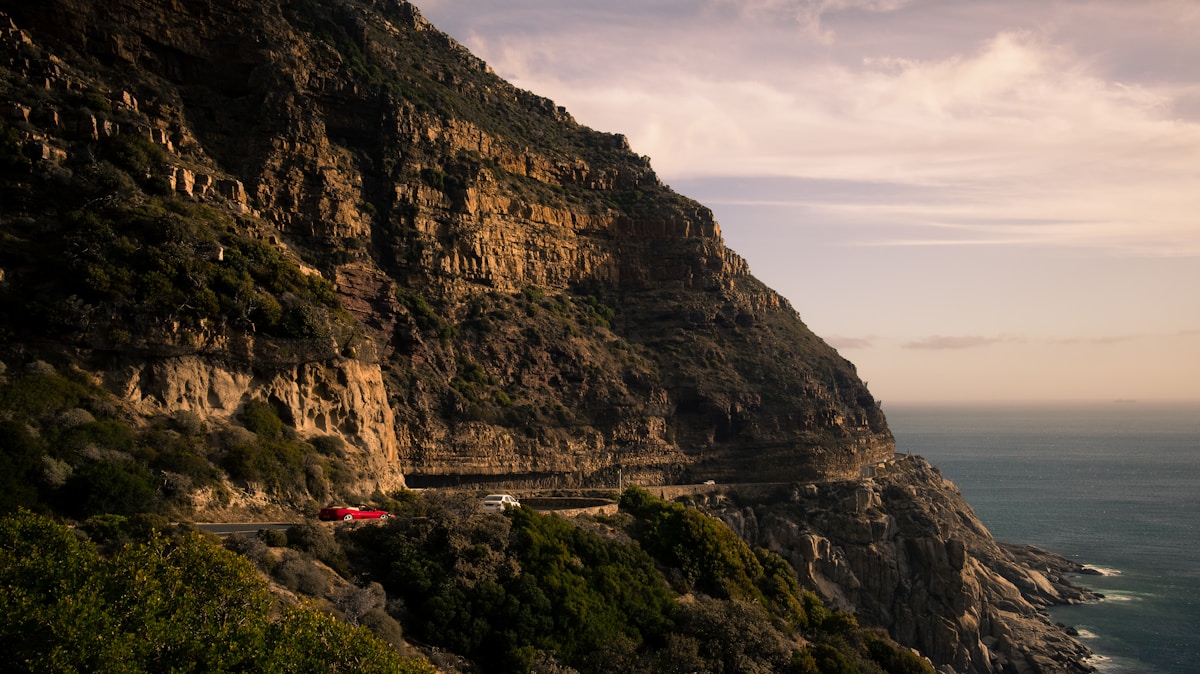
South Africa is overwhelmingly a self-drive destination. The Garden Route has no functional public transport. Kruger National Park requires your own vehicle for self-drive safaris. The Cape Peninsula’s highlights - Cape Point, Boulders Beach, Chapman’s Peak - are inaccessible without a car. Even within cities, a car gives you access to areas Uber won’t serve.
This guide covers the full rental process: how to pick an agency, what insurance to take, the road rules visitors consistently get wrong, toll systems, night driving, and cross-border logistics. For general transport options including domestic flights, Uber, and long-distance buses, see the getting around South Africa guide.
Choosing an Agency
Major international agencies (Avis, Budget, Europcar, Hertz) have desks at all major airports and provide the most reliable backup network if a breakdown occurs. They are not the cheapest, but having a 24-hour helpline and replacement vehicle guarantee matters on remote routes.
South African agencies (First Car Rental, Tempest, Bidvest) typically charge 15–25% less and are generally reliable in urban areas. Coverage on remote routes (Northern Cape, Eastern Cape rural) is thinner.
GetRentacar compares rates from major agencies at South African airports in one search - useful for finding the best price while staying with a reputable provider.
Comparison shopping tips:
- Book 3–4 weeks ahead for peak season (December–January, school holidays)
- Airport desks close late but not 24 hours - confirm pickup times
- Compare the total price including all mandatory fees, not just the daily rate
What Vehicle Do You Need?
| Itinerary | Recommended vehicle |
|---|---|
| Cape Town city + Cape Peninsula | Compact sedan (e.g. VW Polo) |
| Garden Route road trip | Compact sedan or estate - comfortable for 5+ days |
| Kruger National Park (tar roads only) | Standard sedan - no 4x4 needed |
| Kruger + Panorama Route | Standard sedan |
| Rural Eastern Cape or Namaqualand | Crossover SUV or medium 4x4 |
| Kgalagadi Transfrontier Park (red dune roads) | High-clearance 4x4, ideally with locking diff |
For the vast majority of South African visitor itineraries, a compact sedan handles everything. The Kruger Park’s main roads are tarred or maintained gravel - a standard hire car is fully adequate.
Insurance - The Critical Detail
South African car hire insurance is structured differently from Europe or the US. Read carefully before signing.
The default package offered by most agencies includes:
- Basic CDW (Collision Damage Waiver) with a very high excess - typically ZAR 30,000–50,000. This means if you have an accident, you pay the first ZAR 30,000–50,000 of damage from your own pocket.
- No theft protection by default, or theft protection with a similarly high excess.
What to do:
- Upgrade to Full CDW (also called Super CDW or Complete Cover) - this reduces the excess to zero or near-zero (ZAR 2,000–5,000 at most agencies). It typically costs ZAR 150–250 per day extra.
- Add Theft Protection (TP) if not included in the Full CDW package.
- Check whether tyre and windscreen damage is covered - it often isn’t and is a common cause of claims on South African roads.
Using your credit card’s insurance: Some credit cards provide CDW cover for international rentals. Check your card’s specific policy - South Africa’s roads and crime risk may exclude certain scenarios. Don’t rely on this without confirming.
Road Rules Visitors Get Wrong
For a full breakdown of road rules, route conditions, and safety by region, see our driving in South Africa guide.
Drive on the left. All traffic drives on the left side of the road. Roundabouts circulate clockwise. This is obvious but disorientation at unfamiliar junctions causes accidents.
Speed limits:
- Urban areas: 60 km/h
- Rural roads (outside towns): 100 km/h
- Freeways (N-roads): 120 km/h
- Kruger National Park: 50 km/h on tar, 40 km/h on gravel
Traffic cameras are frequent on N-roads. Electronic speed cameras are common on the N1, N2, and N3. Speeding fines follow you - the agency’s address is on file and fines will be forwarded to you after departure.
Four-way stops (all-way stops) are common at intersections, including in cities. The rule is first-come, first-served - wait your turn and proceed when the vehicle(s) before you have cleared. Yield at roundabouts to traffic already in the circle.
Robots is South African English for traffic lights. “Go through the robot” means drive through the traffic light intersection. Not particularly confusing but startling the first time you hear it.
Yield to pedestrians at marked crossings. In townships and rural areas, pedestrians frequently walk on road verges, including on N-roads.
Toll Roads
South Africa has an extensive network of tolled N-roads, primarily in Gauteng and on routes from Joburg to other provinces.
Gauteng e-Toll: Johannesburg has a system of electronic toll gantries on major urban freeways (the N1, N3, N12, N14 within Gauteng). Rental vehicles generally have an e-tag registered by the agency; tolls are automatically billed and added to your rental account on return. Confirm with your agency at pickup.
Manual toll plazas exist on routes including the N2 (Garden Route), N3 (Joburg–Durban), and others. These accept cash (ZAR) and credit cards. Keep small change available - some older plazas are cash-only. Typical toll: ZAR 20–80 depending on vehicle size and distance.
e-tags: If you’re spending significant time on Gauteng’s urban freeways, ask the rental agency about their e-tag system. Most agencies register their vehicles and manage this automatically - confirm the process at pickup rather than discovering a surprise charge at return.
Petrol
Petrol (gasoline) stations are full-service in South Africa - an attendant fills the tank, checks the oil, and cleans the windscreen. You do not pump your own fuel.
Cost (as of 2026): approximately ZAR 22–25 per litre for unleaded 95, the standard fuel type.
Fuel up before:
- Entering national parks (Kruger, Kgalagadi)
- Long stretches of the N1 through the Karoo
- Rural Eastern Cape roads
Fuel availability drops significantly outside towns on certain routes. Plan stops in advance.
Tip the attendant. Standard tip: ZAR 5–10 for a standard fill-up. It is expected and appreciated.
Night Driving
Avoid driving at night in rural areas and townships. This is the single most important safety rule.
The risks are concrete: poorly lit or unlit roads, pedestrians and livestock on the road (often invisible until dangerously close), potholes that cause tyre blowouts, and in some areas, criminal activity including roadblocks set up to stop vehicles. Urban areas are safer but require extra attention at traffic lights, where smash-and-grab thefts occur.
Johannesburg specific: Lock doors as soon as you get in. At traffic lights (robots), stay a car-length back from the vehicle ahead so you have room to move if approached. If threatened, drive through the red light - local practice when safety is compromised.
Inter-city night driving (e.g. Joburg to Cape Town overnight) is used by long-haul truckers and intercity buses but is not recommended for hire car visitors. Take the earlier flight.
Cross-Border Permits
Most South African rental agencies allow cross-border driving into neighbouring countries with advance permission and an additional cross-border permit (fee applies, typically ZAR 400–800).
Commonly permitted countries:
- Namibia ✓
- Botswana ✓
- Mozambique ✓
- Eswatini (Swaziland) ✓
- Lesotho ✓
- Zimbabwe ✓ (some agencies)
Not usually permitted:
- Zambia
- Tanzania
- Malawi
Arrange the permit before departure - not at the border. Attempting to cross without a permit risks vehicle confiscation and significant delays.
You’ll also need to declare your rental vehicle to South African Customs when exiting - since June 2026 this is enforced at all borders. See current entry/exit regulations for detail.
Cost Reference
| Vehicle type | Daily rate from (low season) |
|---|---|
| Economy (e.g. VW Polo) | ZAR 400–600 |
| Compact sedan | ZAR 550–800 |
| Estate/MPV | ZAR 700–1,100 |
| SUV/Crossover | ZAR 900–1,500 |
| 4x4 (e.g. Toyota Hilux) | ZAR 1,200–2,200 |
Rates increase 20–30% in December–January. Full CDW adds approximately ZAR 150–250/day. Budget ZAR 600–900/day for a compact with full cover in shoulder season.
GetRentacar compares agency rates at Cape Town, Johannesburg, Durban, George, and Kruger Mpumalanga airports.
Next
- Getting around South Africa - all transport options compared
- Garden Route guide - the most important self-drive route in South Africa
- Kruger self-drive safari guide - driving in the park
- South Africa budget and costs - what transport fits into various travel budgets
Plan Your Trip
✈️ Book your flights to South Africa 🛡️ Get travel insurance 📱 Stay connected with an eSIM 🚗 Rent a car