Search hotels in South Africa on Booking.com
South Africa is one of the highest-value long-haul destinations for budget travellers. The Rand (ZAR) is persistently weak against the British pound, US dollar, and Euro - approximately R18–19 to $1 USD and R23–24 to £1 GBP as of 2026. That exchange rate makes accommodation, food, local transport, and activities dramatically cheaper than equivalent destinations in Australia, southern Europe, or Southeast Asia once you factor in flight costs. For ATM fees, exchange tips, and the best cards for South Africa, see our money and cards guide.
The trick is knowing where the value sits - and avoiding the traps (private safari lodges and tourist-restaurant pricing can be just as expensive as anywhere in the world).
Where to Sleep Cheaply
Hostels
Cape Town has one of the best hostel scenes on the continent. Long Street in the City Bowl is the backpacker strip - properties like Ashanti Lodge (dorms from approximately R350–420/night), The Backpack on New Church Street (Cape Town’s oldest backpacker, dorms from R380), and Once in Cape Town in De Waterkant regularly come up as reliable options with free breakfast included.
In Johannesburg, the Ritz Hotel in Doornfontein has long been the budget traveller’s base - basic but central. Rosebank and Sandton have fewer true backpacker hostels but more mid-range guesthouses from R900–1,200 that suit pairs.
Durban’s beach strip (Point and Bluff areas) has budget accommodation but requires more care about neighbourhood - verify with your hostel whether walking distance applies before booking.
Expect to pay R350–550 for a dorm bed, R900–1,500 for a private room in a hostel or budget guesthouse.
SANParks Camping
For the national park circuit, camping at SANParks rest camps is the most affordable option inside park boundaries. Rates for international visitors (2025/26):
- Kruger: Camping from R353/site/night (2 people). Basic chalets with kitchen from R836/night.
- Addo Elephant Park: Camping from R277/site/night.
- Tsitsikamma: Camping in Storms River Mouth from R227/site/night.
Book via the SANParks website (sanparks.org) well in advance - popular camps like Satara and Berg-en-Dal in Kruger sell out 4–6 months ahead during school holidays.
Airbnb and Guesthouses
Self-catering Airbnb units in Cape Town’s Observatory, Salt River, and Woodstock suburbs typically run R800–1,400/night for a studio and are well-positioned for the city. These neighbourhoods are walkable in daytime and a short Uber to the V&A Waterfront or CBD. The Winelands towns (Stellenbosch, Paarl) also have affordable self-catering cottages from R700–1,000/night.
Free and Cheap Activities
Cape Town
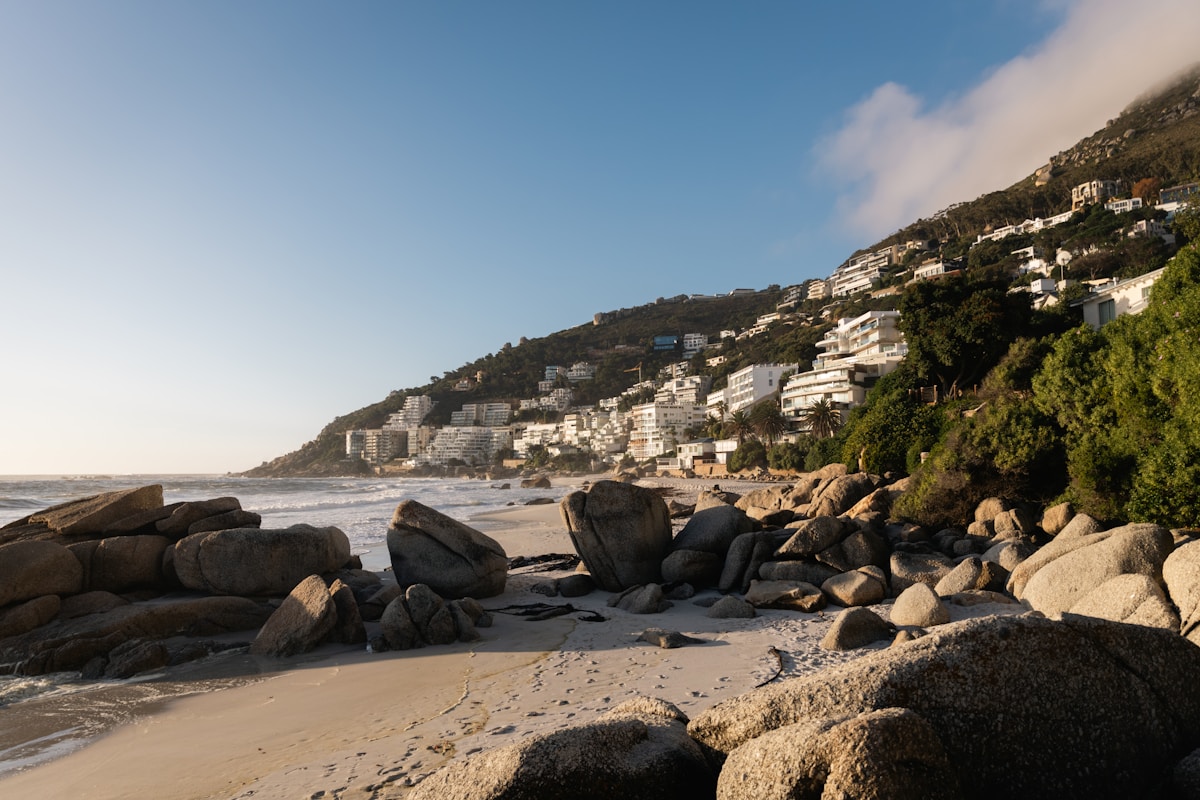
- Cape Town’s beaches - all free. Boulders Beach penguins are behind a fee gate (R220) but visible from the rocks to the north.
- Company’s Garden - free central park in the City Bowl, adjacent to the South African National Gallery (free entry).
- Bo-Kaap - the brightly painted Cape Malay neighbourhood is a free walking area.
- Cape Flats township tour - paid but often R250–500 with a community operator. Ask your hostel to recommend a reputable guide.
- Lion’s Head hike - free. One of the best hikes in Africa. 2–3 hours return from Signal Hill Road. No guide needed, well-marked trail.
- Signal Hill - free drive-up viewpoint with views over the city and Robben Island.
Table Mountain cableway costs R430 return (international), but the Platteklip Gorge hike reaches the same summit for free. About 2 hours up.
Johannesburg
- Constitutional Hill - entry approximately R120, covers the entire Constitutional Court complex and Awaiting Trial Block.
- Apartheid Museum - R230. One of the best museums in Africa; full day.
- Soweto self-guided walk - you can walk the public areas of Vilakazi Street (Mandela’s house and Tutu’s former home on the same street) without a guide. The Mandela House museum entry costs R120.
- Neighbourgoods Market, Braamfontein (Saturday mornings) - free entry, food from R60–120, good craft beer.
Garden Route
The Garden Route is largely a self-drive route and the scenery is free. Knysna Heads and Sedgefield Lagoon, Tsitsikamma forest hiking trails (outside the paid National Park section), and all beaches along the N2 are free or low-cost. Bungee jumping at Bloukrans (R1,095) and shark cage diving in Gansbaai (R2,500–3,200) are the big-ticket activities.
Cheap Food
South Africa has an excellent street food and fast food culture that most tourists miss.
Bunny chow - a Durban institution. A hollowed-out loaf of white bread filled with curry (lamb, chicken, or bean). From R55–80 at Durban’s Point Road vendors or Victory Lounge on Grey Street.
Prego rolls - a Portuguese-influenced toasted roll with steak, egg, or chicken. Standard café food across the country from R60–90.
Woolworths Food and Pick n Pay - supermarket chains with excellent prepared food sections. A hot meal from a supermarket costs R60–100. Woolworths has a notably good selection of salads and hot dishes. Most SANParks rest camps have a small Spar nearby.
Braai (barbecue) - if you’re in self-catering accommodation with a braai area, supermarket meat is cheap. A pack of boerewors sausage (500g) costs approximately R55–75. Chicken pieces, R50–80/kg.
Restaurants - avoid tourist-facing restaurants on the V&A Waterfront and near Table Mountain (R300–500 for a main). Head to Observatory, Gardens (Cape Town), or Melville (Joburg) where local restaurant mains run R120–200 and the food is better.
Budget Transport
Car Hire
A compact car (Toyota Yaris or VW Polo) costs R400–700/day from Budget, Europcar, or Avis booked in advance. Fuel runs R22–25/litre. Cape Town to Knysna (470km) costs roughly R500–600 in fuel. Dividing car hire costs among 2–4 passengers dramatically reduces the per-person cost.
For the Garden Route, a hire car from Cape Town to Knysna or Port Elizabeth is almost always cheaper than buses or shuttles when shared between two or more people.
Buses
Baz Bus (bazbus.com) operates hop-on, hop-off routes between Cape Town, Garden Route, and Johannesburg. A Cape Town–Johannesburg pass costs approximately R4,000–5,000 and includes unlimited stops. It’s the standard backpacker route. Slower than flying but significantly cheaper and stops at hostels directly.
Intercape and Translux run long-distance bus routes (Cape Town–Johannesburg, Cape Town–Port Elizabeth) from R400–900 one-way. Slower than flying but functional.
Domestic Flights
FlySafair and Airlink are the cheapest domestic airlines. Cape Town to Johannesburg return, booked 4–6 weeks ahead, can be found for R900–1,800 on each airline’s website. Don’t book through aggregators - the cheapest fares are always on the airline’s own site.
Uber
For city travel, Uber is both cheaper and safer than any street taxi alternative. A trip within central Cape Town costs R40–80. OR Tambo airport to Sandton (Johannesburg) runs R350–450.
Kruger on a Budget
Doing Kruger on a self-drive budget is absolutely feasible. The core costs for international visitors:
- Park entry: R440/day per person + R204/vehicle/day (2025/26 rates)
- Camping: from R353/site (2 people)
- Budget chalet: from R836/night (sleeps 2, with kitchenette)
- Petrol inside the park: available at main rest camps (Skukuza, Satara, Letaba, Punda Maria)
- Food: buy groceries in Hazyview or Phalaborwa before entering; cook in the rest camp
A 3-night Kruger self-drive for two travellers staying in a budget chalet, cooking most meals, and entering the park each day costs approximately R7,000–9,000 total (~R3,500–4,500/person). Compare that to private reserve all-inclusive rates of R8,000–30,000 per person per night.
The tradeoff: self-drive doesn’t include a guide, so you’re on your own for spotting animals. The Big Five are all present and regularly seen on self-drives. Early mornings (gate open at 5:30–6am depending on season) are when animals are most active - being on the road at first light gives you the best self-drive sightings.
See the full Kruger guide for which rest camps and roads to prioritise.
Budget by Destination
| Destination | Budget daily spend (per person) |
|---|---|
| Cape Town (hostel dorm + self-catering) | R700–900 |
| Cape Town (private room + restaurant dinners) | R1,800–2,500 |
| Garden Route (self-drive + camping/hostel) | R700–1,000 |
| Johannesburg (hostel + Uber) | R600–900 |
| Durban (hostel + street food) | R600–800 |
| Kruger (camping + self-drive) | R1,200–1,800 |
| Kruger (budget chalet + self-drive) | R1,800–2,500 |
Prices exclude international flights and once-off costs (car hire deposit, Kruger entry for days visited).
What to Skip If Budget Is Tight
- Private safari lodges - the experiences are extraordinary, but R8,000–30,000 per person per night is a different budget entirely
- Robben Island boat tour - R650, worthwhile if you care about the history; skip if not
- Table Mountain cableway - R430 return; the hike (free) gives the same views
- Shark cage diving - R2,500–3,200 and the great white situation off Gansbaai has changed significantly since 2017 (see our shark cage diving guide)
For a full itinerary using these budget principles, see the 14-day South Africa itinerary which includes budget tier breakdowns per stop. For first-time visitors planning costs from scratch, the visa requirements guide covers any visa fees that apply to your nationality.
Ready to plan your trip? Tours & Activities in Cape Town, Car Hire in South Africa, or Travel Insurance for South Africa.
See Also
- Budget and costs guide - full daily cost breakdown by tier
- South Africa safari cost guide - how to budget the safari section
- Getting around South Africa - cheapest transport options
- Cape Town city guide - the best free and cheap activities in Cape Town
- Kruger self-drive safari guide - the affordable way to self-drive Kruger
- 1-week South Africa itinerary - a compact trip that controls costs