Search hotels in Kruger National Park on Booking.com
Kruger National Park is one of Africa’s great wildlife destinations and one of the most accessible. You don’t need a guide, a specialist vehicle, or a luxury lodge - you can drive yourself through 20,000 km² of savanna in a standard hire car, staying in SANParks rest camps, and have one of the best wildlife experiences in the world.
The park sits in Mpumalanga province, accessed from Johannesburg (4–5 hours drive, or 1 hour by air). Most visitors combine Kruger with the Panorama Route - Blyde River Canyon and God’s Window. For malaria preparation, see the health and vaccinations guide. For what Kruger costs relative to the rest of the trip, see the budget guide.
Kruger at a Glance
| Park size | 19,485 km² (roughly the size of Wales) |
| Entry fee (international) | R440/person/day + R204/vehicle |
| Best time | May–September (dry season) |
| Malaria | Yes - take prescription prophylaxis |
| Road type | Tar between camps; gravel game loops. Standard car fine. |
| Accommodation inside | SANParks rest camps from R800/night |
| Private reserves (adjacent) | R8,000–30,000+/person/night all-inclusive |
| Guided safari day trips | Book through GetYourGuide |
| Nearest airport | Kruger Mpumalanga Intl (KMIA), 1 hour from Joburg |
Planning the Trip
Entry and Fees
International visitors (2025/26):
- Conservation fee: R440 per person per day
- Vehicle fee: R204 per vehicle per visit (not per day)
- Accommodation: separate, booked through SANParks
Buy your conservation card at any of the entrance gates. SANParks has a daily digital entry system - you’ll be issued a card at the gate. Keep it with you.
Getting There
By air: Fly Johannesburg (OR Tambo) to Kruger Mpumalanga International Airport (KMIA, near Nelspruit/White River). Airlink operates this route. About 1 hour. Hire a car at the airport - GetRentacar compares Avis, Budget, and Europcar rates at KMIA so you can book before you land.
By road: From Johannesburg to the Numbi or Paul Kruger Gate (via White River/Hazyview) is 4–5 hours on the N12/N4. From Pretoria: 4 hours.
Main Entrance Gates
Numbi Gate - southwestern entry, closest to White River. Leads into the Pretoriuskop area.
Paul Kruger Gate - entry to the Skukuza area (largest rest camp, most facilities). Most popular entrance.
Malelane Gate - southern entry, close to Berg-en-Dal camp.
Crocodile Bridge Gate - southernmost gate, excellent lion and buffalo country in the immediate area.
Orpen Gate - central western entry, useful for central Kruger and Satara camp.
Phalaborwa Gate - northern entry from Limpopo province.
Best Rest Camps
Skukuza - the largest camp, almost a small town within the park. Full facilities: restaurant, shop, filling station, ATM, swimming pool. Good base for the southern and central park. River chalets on the Sabie River with excellent birding. Doubles from R1,200, family cottages from R2,400.
Lower Sabie - 50 km east of Skukuza along the Sabie River. Smaller, quieter, and arguably the best location in the park for lion and leopard sightings. River-facing chalets from R1,400. Book early - it fills months ahead in dry season.
Satara - central Kruger, known for large lion prides. Open bushveld. Good game viewing in the immediate area. From R1,000.
Berg-en-Dal - southern Kruger, on the Malelane Gate road. Good for white rhino. From R900.
Olifants - dramatic location on a cliff above the Olifants River. Excellent panoramic views. From R1,200.
Balule - a small, simple bush camp within the park. No facilities. Camping from R350, basic chalets from R800.
All accommodation books through the SANParks online reservation system. Book 3–4 months ahead for dry season (May–September), 6+ months for peak July–August.
What to See and When
Dry Season (May–September)
This is the best game viewing period. Waterholes and rivers become the focal points as other water sources dry up. Animals - herbivores followed by predators - concentrate predictably.
- Lion: Most reliably seen in the south (between Crocodile Bridge and Skukuza) and around Satara.
- Leopard: Requires early mornings and luck. The Sabie River drainage is the most productive area.
- Elephant: Everywhere, but concentrate around rivers in the dry season. Groups of 20–40 are common.
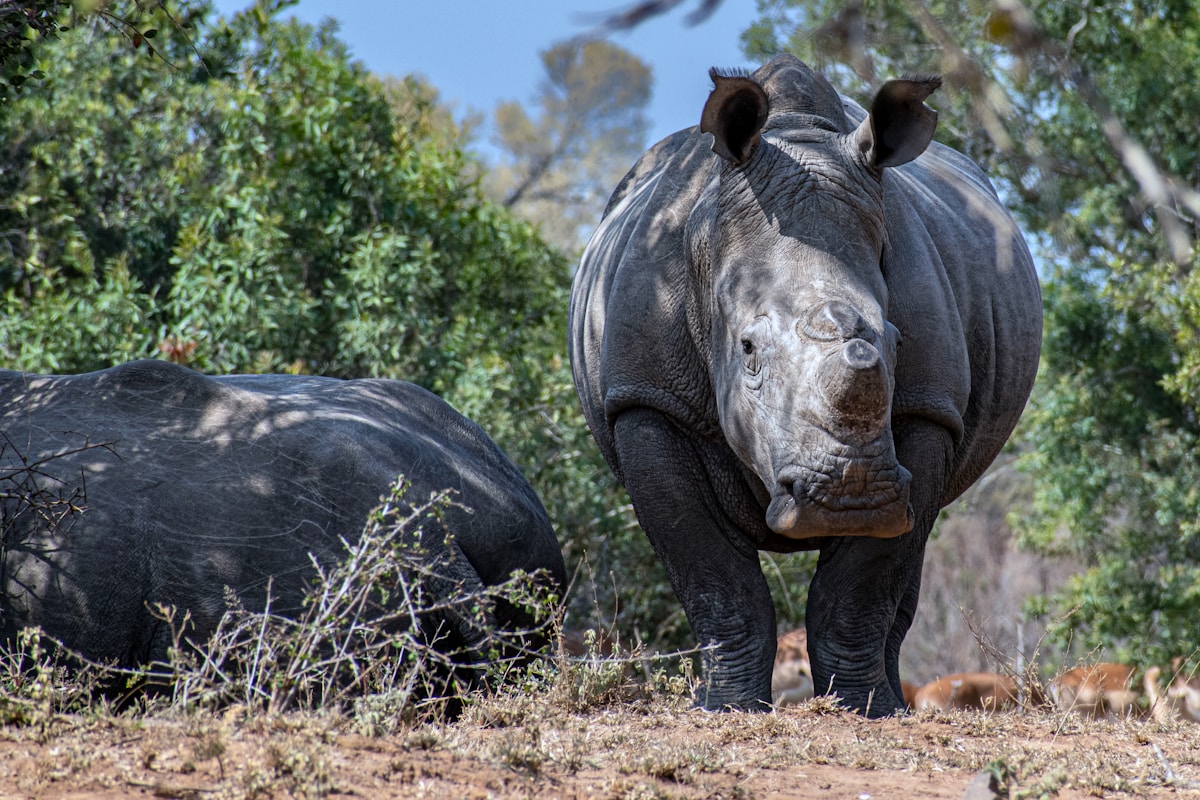
- White rhino: Most reliably seen in the south, particularly around Berg-en-Dal, Malelane, and the H4-2 road between Crocodile Bridge and Lower Sabie.
- Buffalo: Large herds in the south. Often associated with lion activity.
- Wild dog: Scarce but present, particularly in the central and northern park.
- Cheetah: Open grassland areas, particularly around Satara and Nwanetsi.
Green Season (October–April)
More vegetation means harder game viewing but distinct advantages: no crowds, lower prices, newborn animals (calves, cubs), exceptional birding (migrants arrive in October–November), and the park looks beautiful. Rain showers tend to be brief. October–November shoulder period is often excellent.
Self-Drive Tips
Drive slowly. Park speed limit is 50 km/h on tar, 40 km/h on gravel. Effective viewing speed is 25 km/h or less. Animals emerge unexpectedly; most sightings are missed because people drove past.
Early mornings. Gates open 30 minutes before sunrise. The first 2–3 hours are the most productive for predator activity. Drive to a waterhole or river crossing and wait.
Late afternoons. The hour before sunset is equally productive. Evening drives are not permitted in self-drive vehicles but are available at some camps (guided game drives, R500–800 per person). Book guided night drives and bush walks at the SANParks reception desk in camp on arrival, or call ahead through the SANParks reservations line.
Watch other vehicles. A cluster of stopped cars usually means something significant. If you can pass safely, join them.
Stay in your car. Outside designated picnic sites and rest camps, staying in your vehicle is mandatory. The car is effectively camouflage - animals are far less alarmed by a vehicle than by a person standing.
Turn the engine off. Idling engines mask sound. Park, turn off, and listen.
Check road conditions. The SANParks website and app list which roads are currently open. After heavy rain, some gravel roads close.
Malaria Prevention
Kruger is a malaria risk area. This is not a reason to avoid the park, but it requires preparation.
- Consult a GP or travel health clinic 4–6 weeks before your trip.
- Malarone (atovaquone/proguanil) is the most commonly used prophylaxis for short stays. Doxycycline is cheaper but requires starting 2 days before and continuing 4 weeks after.
- Use DEET-based insect repellent, especially at dusk and dawn.
- Sleep under a mosquito net or in a screened room.
- Wear long sleeves and trousers in the evenings.
- Travel insurance covering medical evacuation is worth considering - emergency medical transport from Kruger to a major hospital in Johannesburg or Pretoria is expensive without cover.
Private Game Reserves
The western boundary of Kruger adjoins a series of private concessions - Sabi Sands (the most famous), Timbavati, Thornybush, Kapama. These reserves share unfenced boundaries with Kruger, meaning animals move freely between them.
On the private reserves, luxury lodges offer all-inclusive stays with twice-daily guided game drives in open 4x4 vehicles with experienced rangers and trackers. Drives go off-road, which increases sightings dramatically. Drives can continue after dark with spotlights, something not permitted in the public park.
| Lodge | Reserve | Rate from (per person, all-inclusive) | Notable for |
|---|---|---|---|
| MalaMala Main Camp | MalaMala | R18,000 | Oldest private reserve; unmatched sightings record |
| Londolozi Tree Camp | Sabi Sand | R20,000 | Legendary leopard sightings; 7 treehouse rooms |
| Singita Ebony Lodge | Sabi Sand | R27,000 | SA’s most acclaimed lodge; extraordinary food |
| Ulusaba Rock Lodge | Sabi Sand | R12,000 | Richard Branson; dramatic hilltop position |
| Tanda Tula Safari Camp | Timbavati | R8,000 | Classic canvas camp; authentic feel; more affordable entry |
| Thorntree River Lodge | Timbavati | R9,000 | White lion territory; well-guided |
See the full private lodge comparison in the Mpumalanga guide.
Combining Kruger with the Panorama Route
Most drives to Kruger pass through or near the Blyde River Canyon and the Panorama Route along the Drakensberg escarpment. The standard approach: drive from Johannesburg via Graskop and God’s Window (2–3 extra hours but worth it), enter through Numbi or Paul Kruger Gate. Alternatively, use the Panorama Route as your exit route on the last day.
Full detail on God’s Window, Bourke’s Luck Potholes, and Pilgrim’s Rest is in the Mpumalanga region guide.
Next Steps
- Kruger National Park guide - Big Five wildlife, park overview, costs, and when to visit
- Where to stay for Kruger - rest camps, private lodges, and budget options near the gates
- Mpumalanga and Kruger region guide - accommodation outside the park, Panorama Route stops, private lodge comparison
- 5-day Kruger itinerary - day-by-day plan with camp recommendations
- 14-day South Africa itinerary - how Kruger fits into a full SA trip
- Health and vaccinations - malaria prophylaxis detail
- Getting around South Africa - car hire from Joburg, domestic flight options
- Last-minute tours - same-day guided safari availability if you’re already in the Mpumalanga region