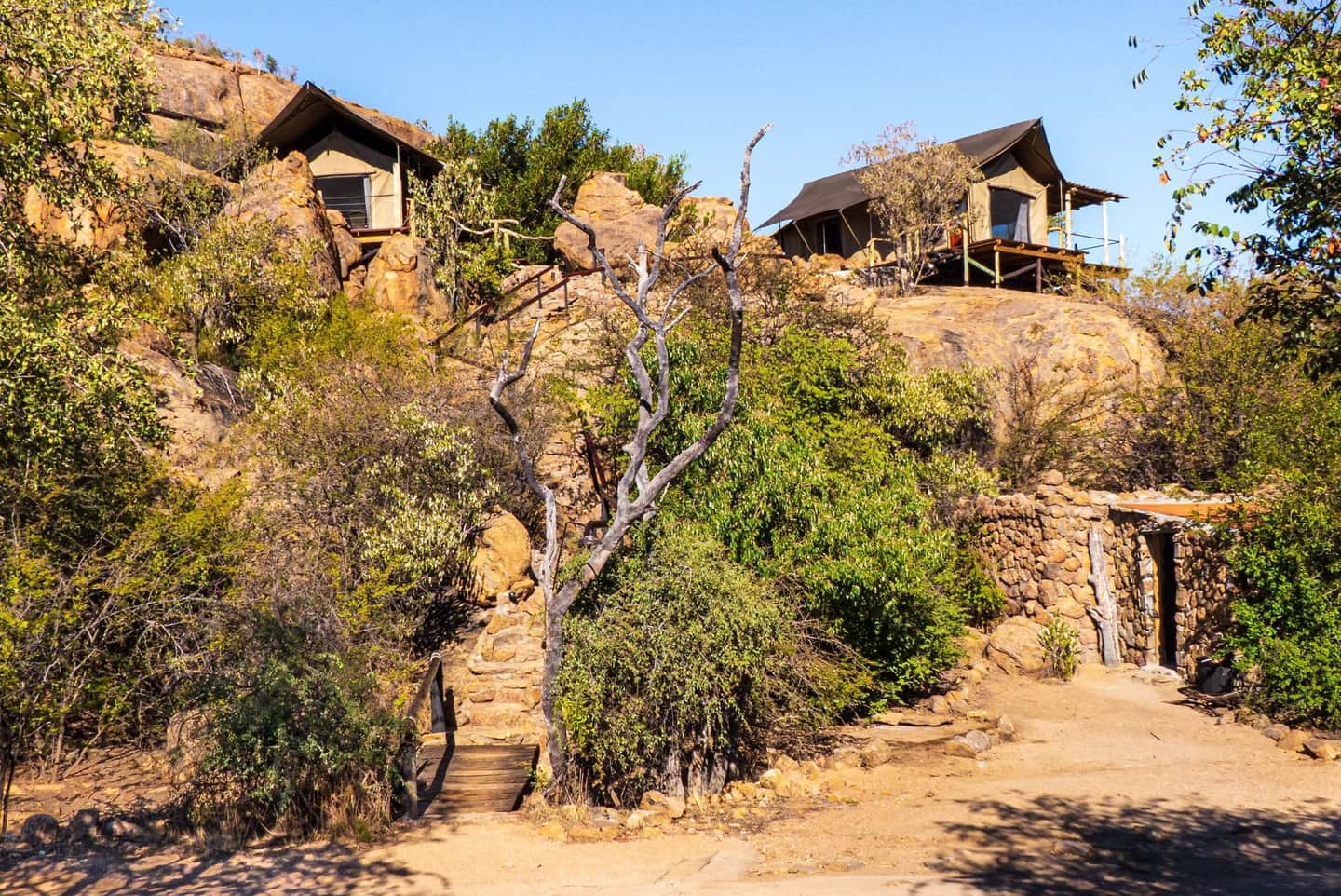
Addo Elephant National Park is South Africa’s third-largest national park and the only park in the world where you can see the Big Seven — lion, leopard, elephant, rhino, buffalo, great white shark, and southern right whale — within a single protected ecosystem. The main park section in the Eastern Cape holds around 600 elephants, the densest elephant population on earth, plus significant lion, black rhino, buffalo, and spotted hyena populations. Critically, Addo is entirely malaria-free — making it one of the most accessible Big Five parks in Africa for families, pregnant travellers, and anyone who cannot take anti-malarial medication.
The park is approximately 70 kilometres from Port Elizabeth (now Gqeberha) on the N2, making it realistic as a day trip. But one or two nights inside or adjacent to the park changes the experience entirely — early morning and late afternoon drives when elephants are most active, and the complete absence of day-trip crowds after 16:00.
SANParks Camps — Inside the Park
SANParks operates multiple camps within Addo, ranging from basic chalets to en-suite bungalows and self-catering cottages. All are accessed via the Addo Boom Gate and sit within the Big Five fencing — animals move freely around the camp perimeters at night.
Addo Main Rest Camp is the primary facility — 120+ units, a restaurant, shop, swimming pool, and fuel station. Book via the SANParks website. Self-catering chalets accommodate 2–6 people and include kitchenettes; en-suite bungalows offer a more hotel-like experience.
Rates: Self-catering chalets approximately R850–R1,600 per night for two people as of 2026 (SANParks sets annual tariffs). Conservation fees are additional: approximately R392 per adult international visitor per day, R196 per child (2025/26 rates — check annually as they increase). Book well ahead — Addo Main Rest Camp fills 3–4 months in advance for school holidays and June–August peak season.
Narina Bush Camp and Matyholweni Camp are SANParks’ more remote options within the park — smaller, quieter, and closer to areas of the park with less day-tripper pressure. Matyholweni in particular is near the southern section and provides excellent lion country.
Private Game Lodges — Immediately Adjacent
Private lodges bordering or within private concessions adjacent to Addo offer full-board all-inclusive packages with guided drives, sundowners, and higher service levels than SANParks camps. They cost significantly more but handle all the logistics — meals, drives, and equipment — without the self-catering admin.
Budget private (approximately R2,500–R5,000 per person per night as of 2026): Several smaller lodges on private land bordering the park offer guided open-vehicle drives into Addo under their own game-drive permits. Quality varies — read recent reviews before booking. Most include breakfast and dinner.
Mid-range private (approximately R5,000–R10,000 per person per night as of 2026): Gorah Elephant Camp inside the park on a private concession is one of the most-cited mid-luxury lodges at Addo — 11 luxury tents, guided drives at hours unavailable to self-drive visitors, and a pool. Elephant sightings at the waterhole in front of camp are reliably frequent.
Luxury (approximately R10,000–R18,000+ per person per night as of 2026): Elephant House and several high-end private game farms in the Greater Addo ecosystem offer full butler service, private vehicle drives, and bush walks with professional trackers. These properties serve the same market as MalaMala or Singita — top-tier safari at a more accessible location and without malaria risk.
Guesthouses Near Addo Village
Addo village, 10 kilometres from the Main Camp gate, has a cluster of owner-run guesthouses that serve self-drive visitors looking for affordable accommodation outside the park fence. These range from basic B&Bs to well-maintained small guesthouses with pools, and are a sensible choice if SANParks accommodation is fully booked or you prefer cooking your own meals.
Rates: Approximately R600–R1,400 per night for a double room as of 2026. Most include breakfast. These properties have no direct game viewing from the rooms — you enter the park daily on your own conservation day fee.
What to Book First
Self-drive visitors planning to stay in SANParks accommodation should book Addo Main Rest Camp as their first action — often 3–4 months out for peak season. If camps are full, a mid-range private lodge with included drives is often a better experience than staying outside the park and paying day conservation fees daily.
For families with children under 12, the SANParks self-catering chalets are excellent value — kitchen facilities mean you control meal timing, and the fenced camps are completely safe for children. A small shop at Main Camp stocks basics including firewood and braai supplies.
Getting There and Practical Notes
Drive from Gqeberha (Port Elizabeth): 72 kilometres on the N2 east, then the R335. Approximately 1 hour. Pick up a hire car at Gqeberha Airport — you will need it for Addo regardless of where you stay. Rates from approximately R450 per day. Compare options at /go/car-hire-south-africa.
Malaria: Addo is entirely malaria-free. No prophylactics needed.
Big Seven: Shark cage diving (at Gansbaai or Mossel Bay, 3–4 hours west) and whale watching (peak July–November) can be added to an Addo trip for the “seven” claim. The marine sector of the park includes a 120-kilometre coastline near Colchester.
Travel insurance: Eastern Cape weather can disrupt small charter flights and boat trips. Travel insurance for South Africa is recommended before departure. For safari tours and guided drives at Addo, booking 2–4 weeks ahead in peak season is advised — early-morning guided departures from Main Camp fill quickly.