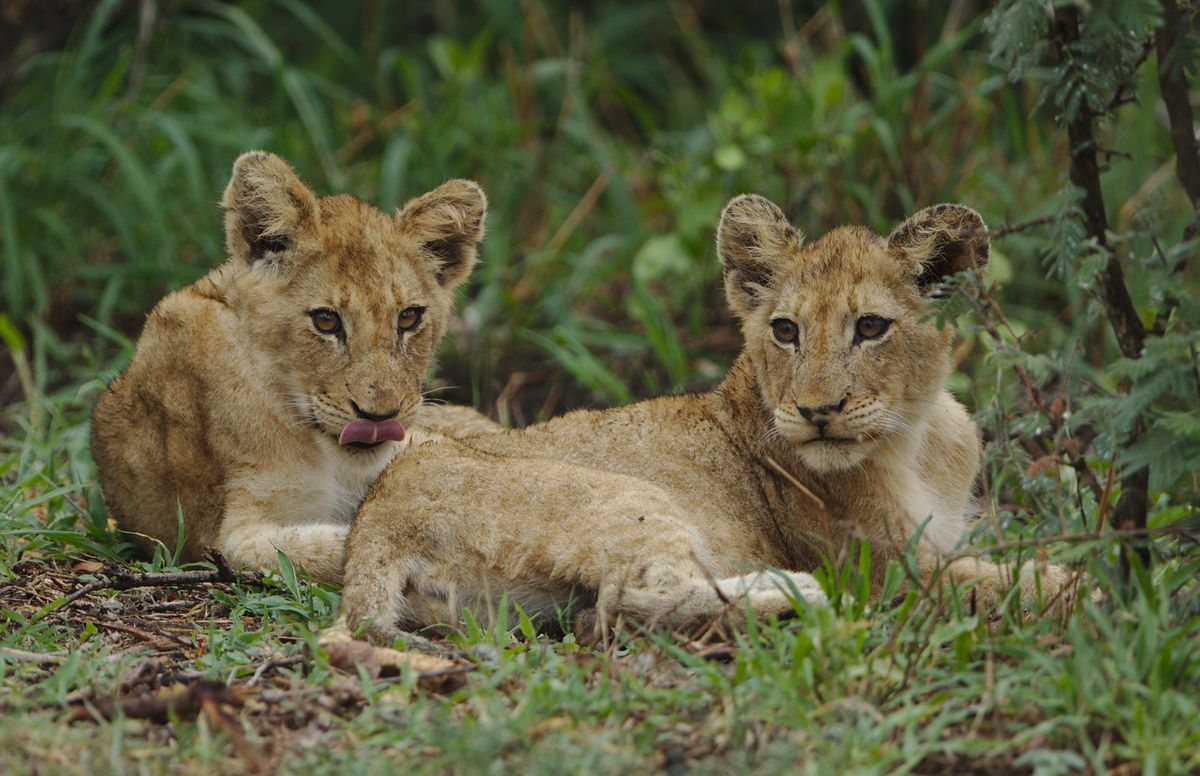
The Sabi Sand Game Reserve shares an unfenced 65,000-hectare boundary with southern Kruger National Park. Animals — lion, leopard, elephant, buffalo, rhino, and wild dog — move freely between the two ecosystems. Since 1948, Sabi Sand’s private lodges have been running guided game drives with professional rangers and trackers, and that experience now defines what the luxury African safari looks like globally.
The defining difference from self-driving Kruger is not luxury — it is the game drive quality. All movement in Sabi Sand is in open 4x4 vehicles with a ranger and a Shangaan tracker. Drives go off-road, follow animals wherever they go, run at night with a spotlight, and are not constrained by the public road network or closing times. The tracker sits on a seat bolted to the front bumper and reads spoor in real time. On most drives in Sabi Sand, you will stop within metres of whatever is found.
The reserve’s most famous attribute is leopard habituation. Rangers have tracked individual leopards and their offspring continuously since the 1970s. Sabi Sand produces more reliable, closer leopard sightings than anywhere else on the continent.
Search safari lodges in Sabi Sand on Booking.com
How Sabi Sand Lodges Work
All accommodation is full board and all-inclusive: rates cover meals, two daily game drives (typically at 05:30 and 15:30–15:00), a bush walk, and laundry. Drinks are usually included at mid-tier and above; the ultra-luxury properties include premium wines and spirits.
No public access is permitted — day visitors cannot enter the reserve. You stay at the lodge, and all movement is on the lodge’s vehicles. There is no self-drive in Sabi Sand.
Shared drives typically carry 6–8 guests maximum. Several lodges offer private vehicles (exclusive use of vehicle and ranger) for an additional fee, usually ZAR 3,000–8,000 per drive.
Malaria: Sabi Sand is in a malaria zone. Risk is highest between November and April. Take prophylaxis and apply repellent. See our health and vaccinations guide for what to discuss with your travel health clinic.
Ultra-Luxury Lodges (ZAR 20,000–50,000+ per person per night)
Singita Sabi Sand
Singita operates two camps inside a private 7,500-hectare concession within Sabi Sand — Boulders Camp (12 suites, riverine forest) and Ebony Lodge (9 suites on the Sand River). The private concession means fewer vehicles at sightings, and Singita’s guiding team is consistently rated among the strongest in Africa. The food and wine programs are genuinely exceptional — Ebony’s wine cellar stocks over 3,000 bottles.
Rates from approximately ZAR 25,000–50,000+ per person per night sharing as of 2026 (all-inclusive).
Book via Booking.com or direct through Singita’s website for the best availability on preferred dates.
MalaMala Game Reserve
MalaMala is the oldest continuously operating private safari lodge in South Africa, running since 1964. It is also its own exclusive entity: a 13,000-hectare private concession with no other lodges on the property. No vehicles other than MalaMala’s own drive on MalaMala land. Three camps — Main Camp (flagship, 18 suites), Rattray’s on MalaMala (most exclusive, 8 suites), and Sable Camp (8 suites for younger travellers and families) — cover different budget levels within the same exceptional wildlife setting.
MalaMala’s Big Five sighting record is exceptional. The concession abuts the Sand River, and waterhole dynamics concentrate game. Rates from approximately ZAR 15,000–35,000 per person per night sharing depending on camp and season.
Londolozi
Londolozi has five camps along the Sand River — Tree Camp (6 suites perched above the river), Private Deck Camp (4 suites, maximum privacy), Founders Camp (10 suites, family-friendly), Varty Camp (10 suites), and Pioneer Camp (3 suites). The Varty family has been tracking leopards here since the 1970s, and Londolozi’s conservation work — documented in multiple wildlife films — is largely responsible for demonstrating that private game reserves could produce better conservation outcomes than state-managed parks.
Rates from approximately ZAR 11,000–45,000+ per person per night sharing depending on camp and season.
Upper-Luxury Lodges (ZAR 8,000–20,000 per person per night)
Sabi Sabi Bush Lodge and Earth Lodge
Sabi Sabi operates four camps:
- Bush Lodge (25 suites) — the entry point, ideal for first-time luxury safari visitors. Pool deck with views over a waterhole. Rates from approximately ZAR 7,000–10,000 pppn.
- Little Bush Camp (6 suites) — smaller, more personal, higher guide-to-guest ratio. Rates from approximately ZAR 11,000–16,000 pppn.
- Selati Camp (8 suites) — intimate camp built on the original 1909 railway siding, antique furnishings, adults preferred. Rates from approximately ZAR 10,000–18,000 pppn.
- Earth Lodge (13 suites) — architecturally distinctive: the lodge sits below the surface of the bush to minimise visual impact. Each suite has a private pool. Rates from approximately ZAR 18,000–30,000+ pppn.
Lion Sands
Two properties on the southern boundary of Sabi Sand:
- Ivory Lodge (9 villas) — ultra-luxury on the Sand River, each villa with private pool and direct deck onto the river. Rates from approximately ZAR 18,000–30,000 pppn.
- Tinga Lodge (9 suites) — more accessible price point while retaining the river frontage. Rates from approximately ZAR 8,000–14,000 pppn.
Inyati Game Reserve
Inyati is a separate 13,500-hectare reserve adjoining Sabi Sand to the north, sharing an unfenced boundary and comparable game density. Slightly lower name recognition than Singita or Londolozi but consistently strong reviews, particularly for guiding. From approximately ZAR 7,000–12,000 per person per night.
Timbavati — The Alternative to Sabi Sand
Timbavati Game Reserve lies adjacent to central Kruger, north of Sabi Sand. The wildlife experience is comparable — Big Five, off-road drives, ranger and tracker — and Timbavati typically runs 10–20% cheaper than the Sabi Sand equivalent tier.
The key difference: Sabi Sand has a longer track record with leopard habituation, and leopard sightings per drive are higher. Timbavati is slightly less consistent for leopard but equally strong for lion and elephant. The terrain is drier and more open than Sabi Sand’s riverine forest, which produces excellent game viewing in the dry season.
Timbavati is also known for white lion sightings. White lions are not albinos but carry a rare recessive gene resulting in white or cream colouration; the bloodline has been confirmed in Timbavati for decades.
Key lodges:
- &Beyond Ngala Tented Camp — Timbavati’s flagship, 9 tented suites. ZAR 18,000–25,000 pppn.
- Kings Camp — 12 suites, family-friendly, strong reviews for guiding. ZAR 9,000–16,000 pppn.
- Umlani Bushcamp — the most affordable authentic bush camp in the area. Bucket showers, reed walls, no air conditioning — deliberately minimal to focus attention on the bush. ZAR 4,500–7,000 pppn. For wildlife enthusiasts who want the real experience without the price.
Klaserie and Thornybush — Budget Greater Kruger
The Klaserie Private Nature Reserve and Thornybush Game Reserve lie between Timbavati and Hoedspruit, also adjacent to Kruger. Lodges here start from approximately ZAR 3,000–6,000 per person per night — genuinely affordable for the private reserve experience without the name recognition of Sabi Sand.
Wildlife in Klaserie and Thornybush is excellent: Big Five is present, leopard is regularly sighted, and herd dynamics on elephant and buffalo are impressive. The trade-off is that leopard habituation is less advanced than Sabi Sand, and guide experience varies more between lodges.
Thornybush: Motswari, Thornybush Collection (multiple camps), N’Kosi Lodge. Rates from ZAR 3,500–9,000 pppn. Klaserie: Kapama River Lodge (consistently rated 9.5+ on Booking.com), Olifants River Lodge. Rates from ZAR 3,000–8,000 pppn.
When to Go
May–September (dry season) is peak for game viewing. Vegetation drops, animals concentrate around water sources, and game drive productivity is highest. Days are warm (22–28°C), nights cold in June–July (5–10°C near the Sand River — bring warm layers).
October–November is shoulder season: vegetation still lower than peak rainy season, game remains concentrated, and lodge rates are discounted 10–20% from peak. Heat builds toward November.
December–March (green season): Rates drop 25–40%. Vegetation is thick and sightings are harder. Newborn season (December–January) produces exceptional predator activity as big cats hunt impala, wildebeest, and zebra lambs. Birdlife is spectacular — over 300 species active and many migrants present. Best for photographers who want mood and colour.
Getting There
Self-drive: Johannesburg to Paul Kruger Gate (Skukuza): 4.5–5 hours via N4/R40. Sabi Sand’s Paul Kruger gate opens onto the reserve — confirm your lodge’s preferred gate. A standard car is fine; 4x4 is not necessary for the access roads.
Fly-in from Johannesburg: Charter from Lanseria Airport to Sabi Sand’s private airstrip (Arathusa, Sabi Sand Wildtuin) — approximately 1 hour, ZAR 4,000–7,000 per person return depending on aircraft and group size. Lodges can arrange charter connections.
Via Hoedspruit: Airlink operates scheduled flights from Johannesburg (OR Tambo) to Hoedspruit/Eastgate Airport (FHL), approximately 1 hour. From Hoedspruit, lodges arrange a 45–60 minute road transfer or short charter. Car hire in Johannesburg if self-driving.
See Also
- Best luxury safari lodges in South Africa — full ranked list across all reserves
- Kruger National Park where to stay — for rest camps and budget options inside the park
- South Africa safari cost guide — full budget breakdown including private reserve costs
- Kruger vs private game reserves — self-drive vs guided safari compared
- Honeymoon safari guide — why Sabi Sand tops honeymoon lists
- Health and vaccinations — malaria prophylaxis before entering Sabi Sand