Cape Town has more variety of beaches within 45 minutes than almost any city on Earth. The Atlantic Seaboard offers cold, dramatic beaches framed by mountain ranges. False Bay’s warmer water draws surfers and families. The Cape Peninsula’s wilder southern beaches are long, windswept and largely empty. Here is what to expect at each.
Clifton Beaches
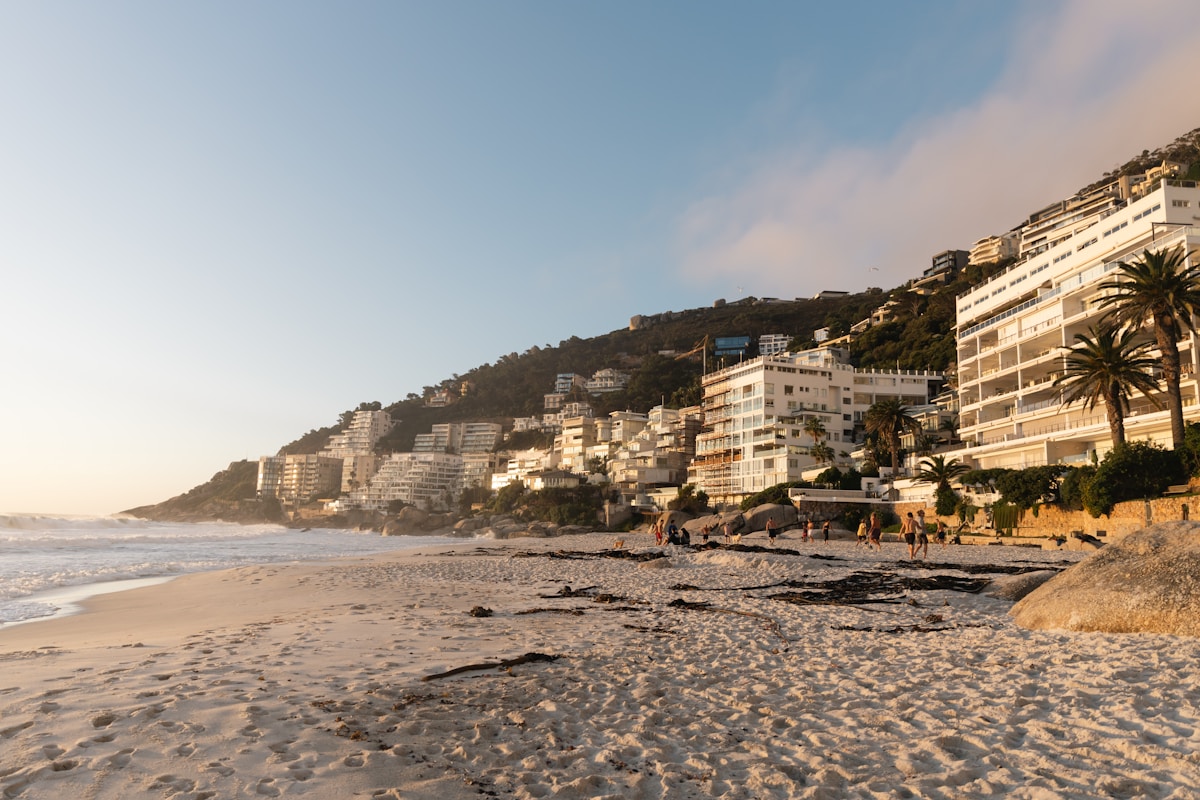
Clifton’s four beaches - First, Second, Third and Fourth - are separated by granite boulders and reached by stairs from Victoria Road. Fourth Beach is the most accessible and most social; First Beach is the quietest.
The setting is exceptional: white sand, clear turquoise water, the Twelve Apostles range rising directly behind. The beaches are sheltered from the south-east wind (the Cape Doctor) that can make Camps Bay unusable, which matters in summer.
Water temperature: 12–16°C year-round. The Benguela Current brings cold Antarctic water up the Atlantic coast. Most people sit on the sand; the tidal pool at Third Beach warms up significantly in summer sun.
Facilities: No facilities directly on the beaches - toilets and food available at the car park on Victoria Road. Parking is extremely limited in peak season. Take an Uber or arrive before 09:00.
Best for: Sunbathing, people-watching, the Atlantic backdrop. Not ideal for swimming in the open sea.
Camps Bay Beach
Camps Bay beach is wider and more developed than Clifton - a long curve of white sand backed by the iconic strip of bars and restaurants on Victoria Road, with the Twelve Apostles mountain range rising directly behind.
The vibe: Camps Bay is where Cape Town’s social scene comes out in summer. The beach is busy, the restaurant strip is buzzing from mid-afternoon, and the sunset is genuinely spectacular over the Atlantic. It is glamorous in a specifically Cape Town way.
Water temperature: Same as Clifton - 12–16°C. The open sea is cold. A tidal pool at the southern end of the beach is more forgiving.
Facilities: Multiple restaurants and bars on the beach strip. Toilets in the car park area. Parking is challenging in peak season.
Best for: Sunbathing, sundowners, the social scene, families who want restaurants nearby.
Muizenberg Beach
Muizenberg is the best learner surfing spot in Cape Town and one of the most distinctive beaches on the False Bay coast. The row of brightly painted Victorian bathing boxes on the beachfront is a Cape Town landmark.
Water temperature: False Bay faces north-east and is heated by the Agulhas Current - water temperatures reach 18–22°C in summer, compared with 12–16°C on the Atlantic side. This makes it the most comfortable Cape Town beach for actual swimming.
Surfing: The Muizenberg break is long, mellow and consistent - ideal for beginners. Multiple surf schools operate here (approximately R350–450 for a 90-minute lesson as of 2026 including board and wetsuit hire). The surfing community at Muizenberg is large and welcoming.
Facilities: Parking, changing rooms, lifeguards, cafés and surf shops along Beach Road. The suburb itself has good independent coffee shops.
Best for: Learning to surf, swimming (warmest water near the city), families, the vintage beach-box photographs.
Boulders Beach
Boulders Beach in Simon’s Town is the location of a wild African penguin colony - several thousand penguins living among the granite boulders and using the cove as a breeding and resting site. Entry to the colony via SANParks boardwalk costs approximately R205/adult as of 2026.
The beach itself is a small sheltered cove between granite boulders - calm water, good for swimming, and entirely surreal given the penguin presence. The water here is relatively warm (False Bay side).
Practical details: Simon’s Town is 45 km south of Cape Town - approximately 45–55 minutes by car or 60–75 minutes by train on the scenic False Bay Metrorail line (approximately R30 for a local train ticket as of 2026, though service is unreliable; confirm before travelling). Arrive before 10:00 in summer to avoid crowds.
Best for: Penguin encounters, sheltered swimming, families, the Cape Peninsula day-trip route.
Noordhoek Beach
Noordhoek is the Atlantic Seaboard’s long beach - an 8-kilometre sweep of white sand backed by the Chapmans Peak cliffs, consistently windswept and largely uncrowded outside of summer weekends. Horses are ridden on the beach regularly in the mornings.
The water is cold and the surf can be powerful - check conditions before swimming. The Red Herring restaurant at the car park is worth the drive on its own.
Practical details: 35 km south of Cape Town via Chapman’s Peak Drive (toll: approximately R45 as of 2026). A hire car is necessary - no reliable public transport.
Best for: Long walks, horse riding, photography, escape from crowds.
Llandudno Beach
Llandudno is a small, rocky cove south of Camps Bay - less accessible than Clifton or Camps Bay, which keeps the crowds down. The drive in is steep and parking is limited. The Atlantic water is cold and the waves can be strong.
Best for: A quieter alternative to Clifton for those with a car.
Big Bay - Bloubergstrand
North of Cape Town (approximately 25 km on the N1 and R27), Bloubergstrand and Big Bay face south across Table Bay with a direct, unobstructed view of Table Mountain. Big Bay is Cape Town’s kite-surfing capital and also has the city’s most famous Table Mountain photograph angle.
Water temperature: Atlantic, similar to Clifton - 14–18°C in summer. The wind is strong and consistent, which is the point for kite surfers.
Facilities: Restaurants, kite schools, parking. The waterfront development at Big Bay has a supermarket, restaurants and the kite-surf launch area.
Best for: Kite surfing, Table Mountain photography, the view.
Scarborough Beach
Scarborough is the most remote Atlantic beach on the Cape Peninsula - a long, wild beach at the very southern end of the Atlantic Seaboard, backed by fynbos and the Scarborough village. Almost entirely uncommerced. Cold water, strong surf, excellent for long walks.
Practical details: 60 km from Cape Town, accessible only by car. The Camel Rock restaurant in Scarborough is a worthwhile stop for lunch on a Cape Peninsula drive.
Best for: Wild, uncrowded Atlantic beach experience.
A Note on the Cold Water
Visitors from warm-water beach destinations are sometimes caught off guard by Cape Town’s Atlantic beaches. The Benguela Current brings water up from Antarctica along the west coast - summer sea temperatures of 12–16°C are typical at Clifton and Camps Bay. Wetsuits are worn by locals. The experience is striking and the beaches are beautiful, but expect the sensation of swimming in cold water.
For warm swimming, go to False Bay (Muizenberg, Boulders, Fish Hoek) - the water on that side runs 18–22°C in summer.
Getting to Cape Town Beaches
Clifton and Camps Bay: 15–20 minutes from the city centre by Uber (approximately R80–120). No reliable public transport. Parking in peak season is very limited. A Cape Town coastal tour is a good option if you want a guide to combine multiple beaches - Chapman’s Peak, Boulders, and the Cape Point peninsula - in a single day without needing to navigate yourself.
Muizenberg: 30 minutes by car, or take the Metrorail False Bay line (journey time approximately 60 minutes; check service status first).
Boulders Beach/Simon’s Town: 45 minutes by car. Metrorail False Bay line stops at Simon’s Town (journey time approximately 75 minutes, subject to service).
Noordhoek and Cape Peninsula southern beaches: Hire car required.
Ready to explore? Cape Peninsula day trip guide covers the full coastal route. For where to stay near the best beaches, see where to stay in Cape Town.
Search hotels in Cape Town on Booking.com
See Also
- Cape Peninsula day trip - the full route from Hout Bay to Boulders and Cape Point
- Things to do in Cape Town - beyond the beaches
- Cape Town city guide - orientation and practical information
- Where to stay in Cape Town - accommodation by area
- 3-day Cape Town itinerary - how to structure a short visit