Cape Town Travel Guide - What to See, Do and Know
Your guide to Cape Town: Table Mountain, the Cape Peninsula, Boulders penguins, Winelands day trips, and where to stay with costs.
Guides for Cape Town
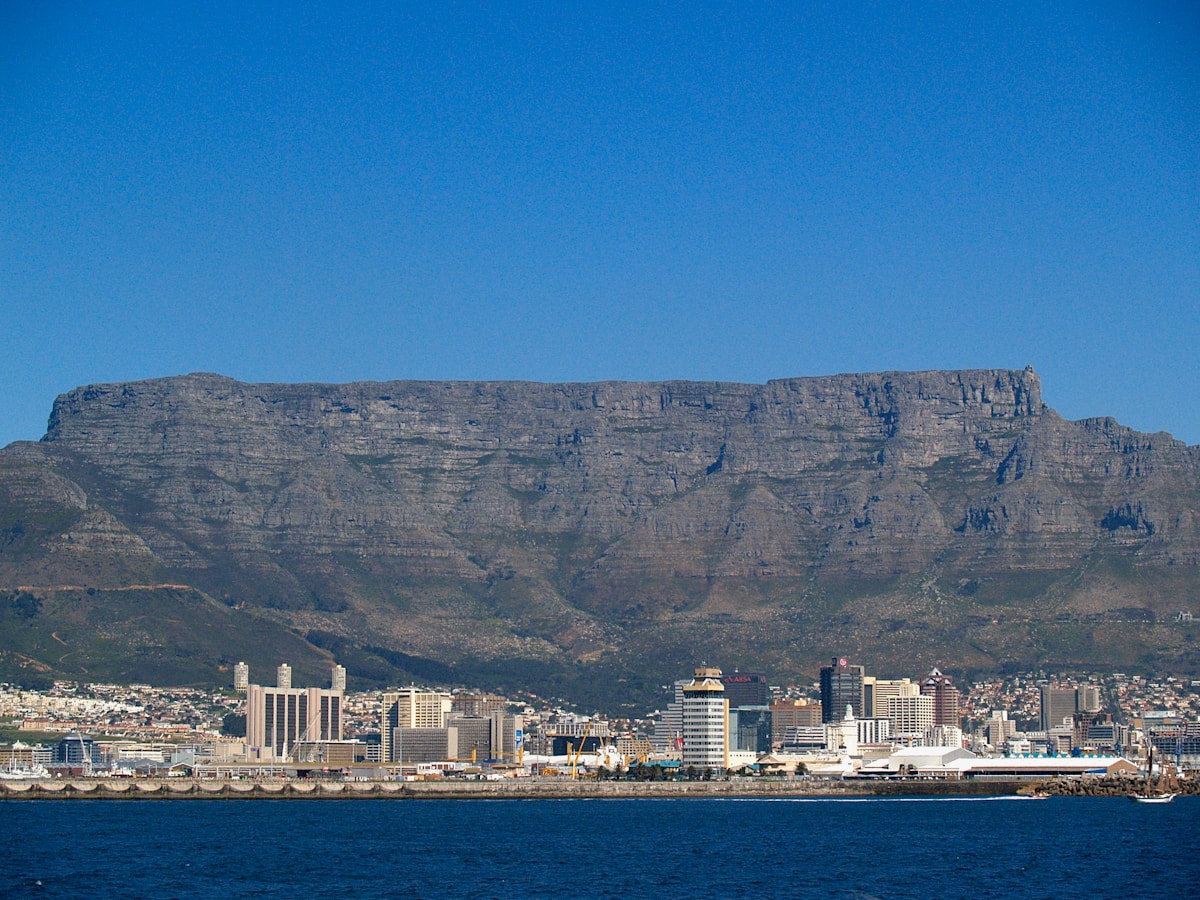
Cape Town is one of the most visually dramatic cities in the world. Table Mountain rises directly behind the city centre, the Atlantic Ocean wraps around both sides of the peninsula, and the light in the late afternoon turns the Twelve Apostles mountain range a deep ochre. It’s genuinely beautiful - and it knows it.
Most visits centre on the city bowl, the Atlantic Seaboard, and the Cape Peninsula, which stretches south for 60 km to the Cape of Good Hope. A week is reasonable to see the highlights without rushing. With two weeks you can add the Winelands (45 minutes east) and make day trips along the coast toward the Garden Route.
For accommodation detail - specific hotels by neighbourhood with rates - see the Cape Town accommodation guide. For costs and planning, see the South Africa budget guide.
Key Neighbourhoods at a Glance
| Neighbourhood | Character | Best for |
|---|---|---|
| V&A Waterfront / Green Point | Harbour, polished, tourist hub | First-timers, convenient base |
| City Bowl / Bo-Kaap | Historic, walkable, urban | Walking, markets, culture |
| De Waterkant | Gentrified, boutique, adjacent to waterfront | Restaurants, character |
| Sea Point | Promenade, mixed, local feel | Atlantic views, Joburg expat zone |
| Camps Bay / Clifton | Upmarket beach strip | Sunsets, restaurants, sand |
| Southern Suburbs | Residential, leafy, quieter | Kirstenbosch, wine estates |
| Simon’s Town / False Bay | Seaside village, 45 min south | Penguins, naval history, quieter beaches |
For a detailed breakdown of where to stay based on your priorities - beach access, nightlife, family-friendliness, or budget - see the Cape Town neighbourhood guide.
City Bowl is the commercial centre - the V&A Waterfront, the Company’s Garden, the Bo-Kaap, and Long Street. The Waterfront is a shopping and restaurant complex built around the old harbour; most accommodation searches land you here.
Atlantic Seaboard - Sea Point, Camps Bay, Clifton, Bakoven - runs along the west coast of the peninsula below Signal Hill. The beaches face the cold Atlantic (Benguela Current, typically 12–16°C) but are spectacular. Camps Bay has a string of restaurants on the promenade; Clifton has four sheltered sandy coves.
Southern Suburbs - Newlands, Constantia, Claremont - are quieter and more residential, with Kirstenbosch Botanical Garden and the Constantia wine estates a short drive from the city.
Simon’s Town is 45 minutes south on the warmer False Bay coast - where Boulders Beach and the penguin colony are.
Top Things to Do
Table Mountain
The aerial cableway costs R430 adult return (2025/26 prices). Allow 1.5–2 hours on top - the views extend across the city, the peninsula, Robben Island, and on clear days to Cape Agulhas 200 km away. Book online (tablemountain.net) to avoid long queues, especially in summer.
The alternative is to hike. Platteklip Gorge is the most direct route - 1.5 hours up, steep but well-marked, accessible for most fit adults. Skeleton Gorge (starting from Kirstenbosch) is longer and more varied. Both routes allow the cableway down. Check weather before going - the mountain closes without notice in high wind or low cloud.
Full detail including all hiking routes, what to bring, and the best viewpoints is in the Table Mountain guide.
Cape Peninsula Drive
A full day - and one of the world’s great coastal drives. The standard loop goes south through Hout Bay, Noordhoek, Kommetjie, and into the Cape Point section of Table Mountain National Park. Entry costs R353 per adult (2025/26 SANParks international rate).
Key stops on the loop:
| Stop | What to see | Time needed |
|---|---|---|
| Hout Bay harbour | Working fishing harbour, seals | 30 min |
| Chapman’s Peak Drive | Cliffside toll road (R60) along sheer cliffs | 30–45 min driving |
| Noordhoek Beach | Wild, 8 km beach, horses sometimes | 30 min walk |
| Cape Point lighthouse | Dramatic headland walk, views | 1–1.5 hours |
| Cape of Good Hope | Southwesternmost point of Africa | 20 min |
| Boulders Beach | African penguin colony | 45 min–1 hour |
| Simon’s Town | Naval village, waterfront | 30 min |
Full detail, including road conditions, the best viewpoints, and the False Bay whale watching season, is in the Cape Point guide.
Boulders Beach Penguins
Entry R220 per adult (SA National Parks). The African penguin colony at Boulders Beach, near Simon’s Town, is one of the few places in the world where you can walk alongside wild penguins on a sheltered beach. The colony has around 2,000–3,000 birds. Go early morning (before 09:30) or late afternoon (after 16:00) to avoid the midday crowds. The penguins are most active at these times anyway.
Robben Island
Where Nelson Mandela was imprisoned for 18 of his 27 years behind bars. A half-day trip: the ferry leaves from the Clock Tower Precinct at the V&A Waterfront, the island tour is led by former political prisoners, and you visit Mandela’s cell. Cost R650 adults (includes ferry and tour). Book via Robben Island Museum’s website, well in advance - it sells out in summer, and tours are sometimes cancelled due to weather. Allow 4 hours total. Full detail and booking tips in the Robben Island guide.
Kirstenbosch National Botanical Garden
Entry R220 (adult). The garden covers the eastern slopes of Table Mountain - 528 hectares of indigenous South African flora, with a boomslang (tree snake) canopy walkway through the treetops. Saturday sunset concerts (November–April) are a Cape Town institution: doors open at 16:00, people picnic on the lawns, live music from 17:30. Book concert tickets separately.
V&A Waterfront
The waterfront complex has the Two Oceans Aquarium (R260 adults - excellent sharks, rays, and the kelp forest tank), Zeitz MOCAA contemporary African art museum (R200), and Nobel Square with statues of South Africa’s four Nobel Peace Prize laureates. The restaurant selection around the harbour is the widest in the city - from cheap takeaways to serious fine dining.
The Winelands
Forty-five minutes east on the N2. Stellenbosch is the wine hub - a university town with a historic oak-lined centre, dozens of cellar doors, and some of the country’s best food. Franschhoek (French Corner) has the best restaurant concentration outside Cape Town. Paarl is larger and less polished but home to some significant estates.
Wine tastings start at R150–300 per person at most cellar doors. A guided wine tour from Cape Town handles the driving and typically visits three to four estates with tastings included. See the dedicated Winelands guide for estate-by-estate recommendations, tasting fees, and the best way to structure a day trip.
Bo-Kaap
The Malay Quarter - brightly painted houses on steep cobbled streets above the city centre. It’s a residential neighbourhood with a Cape Malay Muslim community whose ancestors were brought from Southeast Asia in the 17th century. Walk the streets, visit the Bo-Kaap Museum (R50), and have roti from one of the local spots on Wale Street. It’s 10 minutes from the waterfront on foot.
Getting Around Cape Town
| Method | Best for | Cost |
|---|---|---|
| Uber | All tourist zones | R40–120 per trip within city |
| MyCiTi bus | Atlantic Seaboard (Waterfront to Camps Bay) | R10–20 with myconnect card |
| Hire car | Cape Peninsula drive, Winelands day trips | R400–700/day |
| Metered taxi | Airport transfers (pre-booked) | R300–500 to city centre |
| Walking | City Bowl, Bo-Kaap, V&A Waterfront | Free |
Uber is the standard option for inter-area trips. MyCiTi is useful for the waterfront–Sea Point–Camps Bay corridor. Hire a car for the peninsula and wine country - it’s far more flexible than an organised tour. GetRentacar compares rates from the main Cape Town airport agencies in one place.
Airport to city: Cape Town International is 20 km southeast of the city centre. Uber costs R200–280 (30–40 minutes depending on traffic). Pre-booked metered taxis (ask your hotel) cost R300–500.
See getting around South Africa for domestic flight options and car hire costs.
Where to Stay in Cape Town
Cape Town’s accommodation clusters across five distinct zones - V&A Waterfront, City Bowl, Atlantic Seaboard, Southern Suburbs, and Simon’s Town - each with a different character, price level, and proximity to the main sights. The full Cape Town accommodation guide covers specific hotels by neighbourhood with honest notes and ZAR rates for every budget.
Search hotels in Cape Town on Booking.com
December–January prices are 30–50% higher. Book luxury properties 2–3 months ahead for peak season.
Day Trips from Cape Town
| Destination | Drive time | Highlights |
|---|---|---|
| Stellenbosch | 45 min | Wine estates, food, university town |
| Franschhoek | 60 min | Best restaurants, wine valley, Huguenot heritage |
| Hermanus | 90 min | Whale watching (July–Nov), cliff path |
| Paternoster | 2 hours | West Coast village, crayfish, whitewash cottages |
| Gansbaai | 2 hours | Shark cage diving (context: orca impact since 2017) |
| Langebaan | 1.5 hours | West Coast National Park, lagoon, flowers (Aug–Sep) |
For whale watching detail, see the Hermanus whale watching guide. For shark cage diving, see the Gansbaai guide. For a longer road trip south, the Garden Route guide starts 4 hours east.
Where to Eat in Cape Town
Cape Town’s food scene is one of the strongest in Africa. Cape Malay cuisine - slow-cooked curries, bobotie, samosas, koeksisters - originates from Bo-Kaap and is available across the city. Braai (barbecue) is the national social event: boerewors, lamb chops, and sosaties over wood coals. For a deep-dive into the best restaurants and dishes by area, see the Cape Town food guide. For guided experiences - Bo-Kaap cooking classes, township food walks in Langa, Biscuit Mill Saturdays, and Winelands day trips - see the Cape Town food tours guide.
Fine dining and mid-range:
| Restaurant | Area | Price range | Known for |
|---|---|---|---|
| The Test Kitchen | Woodstock | R1,200–1,800 pp | Tasting menus, consistently rated South Africa’s best |
| La Colombe | Constantia | R1,500–2,000 pp | French-Asian fusion, Constantia wine estate setting |
| Pier | V&A Waterfront | R400–700 pp | Seafood, harbour views |
| Kloof Street House | Gardens | R250–450 pp | Heritage house, eclectic menu |
| The Pot Luck Club | Woodstock | R350–600 pp | Tapas-style sharing plates, Old Biscuit Mill rooftop |
Budget and casual:
- Mzansi (Harrington Street, City Bowl) - Cape Malay platters from R120, excellent bobotie
- Kalky’s (Kalk Bay harbour) - fish and chips from R80, eat on the harbour wall
- Old Biscuit Mill Neighbourgoods Market (Woodstock, Saturdays only) - street food stalls from R50–120, craft coffee, live music
- Mariam’s Kitchen (Bo-Kaap) - home-style Cape Malay curries and rotis from R80
- Surf Shack (Muizenberg) - burgers and milkshakes from R90, surfer crowd
For wine, the Constantia wine route is 20 minutes from the city centre - Groot Constantia (R130 tasting, South Africa’s oldest wine estate, founded 1685), Beau Constantia (R200 tasting, views over False Bay), and Steenberg (R180 tasting, excellent MCC sparkling). All prices approximate as of 2026.
Woodstock and the Creative Quarter
Woodstock, 10 minutes east of the city centre by Uber, has become Cape Town’s creative hub. The Old Biscuit Mill complex houses restaurants, design studios, and the Saturday Neighbourgoods Market. The surrounding streets have street art, independent galleries, and craft breweries - Devil’s Peak Brewing Company (craft beers from R45) and Woodstock Brewery (taproom open Thursday–Saturday) are both worth a visit. The area is walkable during the day but take an Uber after dark.
Safety in Cape Town
Cape Town has a reputation for crime, but the tourist areas are generally safe with basic precautions. The V&A Waterfront, City Bowl, Atlantic Seaboard (Sea Point, Camps Bay, Clifton), Southern Suburbs, and Simon’s Town are all safe during daylight hours and into the evening at restaurants.
Practical safety tips:
- Use Uber rather than hailing taxis on the street - it is the standard transport for locals and tourists alike
- Avoid walking in the CBD (central business district around the train station and Grand Parade) after dark
- Do not walk between the CBD and the Waterfront via the foreshore at night - take an Uber (R30–40)
- Keep phones and cameras close in crowded markets and on busy streets
- Leave valuables in your accommodation safe - do not carry passports or large amounts of cash
- Avoid: the Cape Flats townships (Nyanga, Khayelitsha, Mitchells Plain, Manenberg) unless on an organised township tour with a reputable guide
- Car break-ins happen - never leave anything visible in a parked car, including at trailheads
Cape Town is significantly safer than Johannesburg for tourists. Most visitors spend a full week here without any issues.
Lion’s Head Sunrise Hike
The Lion’s Head trail is a 2.5 km loop that takes 1–1.5 hours to the summit (669 m). The sunrise hike is a Cape Town institution - locals and tourists gather at the top before dawn. The path involves short sections of chains and ladders near the summit, but most reasonably fit walkers manage it. Start from the Signal Hill Road car park. Bring a headlamp for pre-dawn starts, warm layers (it is windy at the top), and water. Free - no entry fee.
Full-moon hikes are particularly popular - check dates and go midweek to avoid crowds.
Best Time to Visit Cape Town
October to March is summer - warm to hot (25–35°C), long daylight hours, and almost no rain. December and January are peak tourist season with higher prices and bigger crowds. February and March are slightly quieter but equally warm.
April to May offers the best balance: warm days (20–25°C), fewer tourists, green landscapes after early rains, and significantly lower accommodation prices.
June to August is winter - cool (12–18°C), with regular rain fronts from the Atlantic. The city is quieter and cheapest, and this is whale-watching season on the south coast (Hermanus, 90 minutes east).
September is the transition month - wildflowers bloom in the West Coast and Namaqualand, and the weather starts to improve.
Practical Notes
| Best months | Nov–Mar (summer, busy) or Apr–May (quieter, still warm) |
| Rainy season | June–August (wet, mild) |
| Cape Doctor wind | Oct–Feb southeast gales - check forecast |
| Malaria | None - Cape Town is malaria-free |
| Electricity | 230V, Type M plugs (3 large round pins) |
| Visas | Most Western passports: 30 days visa-free. See visa guide |
| Budget | R600–900/day budget; R3,000–6,000 mid-range. Full breakdown: costs guide |
Book an experience
Top experiences in Cape Town
Best price guaranteed · Instant confirmation · Free cancellation on most bookings
Looking for a place to stay? Browse hotels in Cape Town , free cancellation on most bookings.