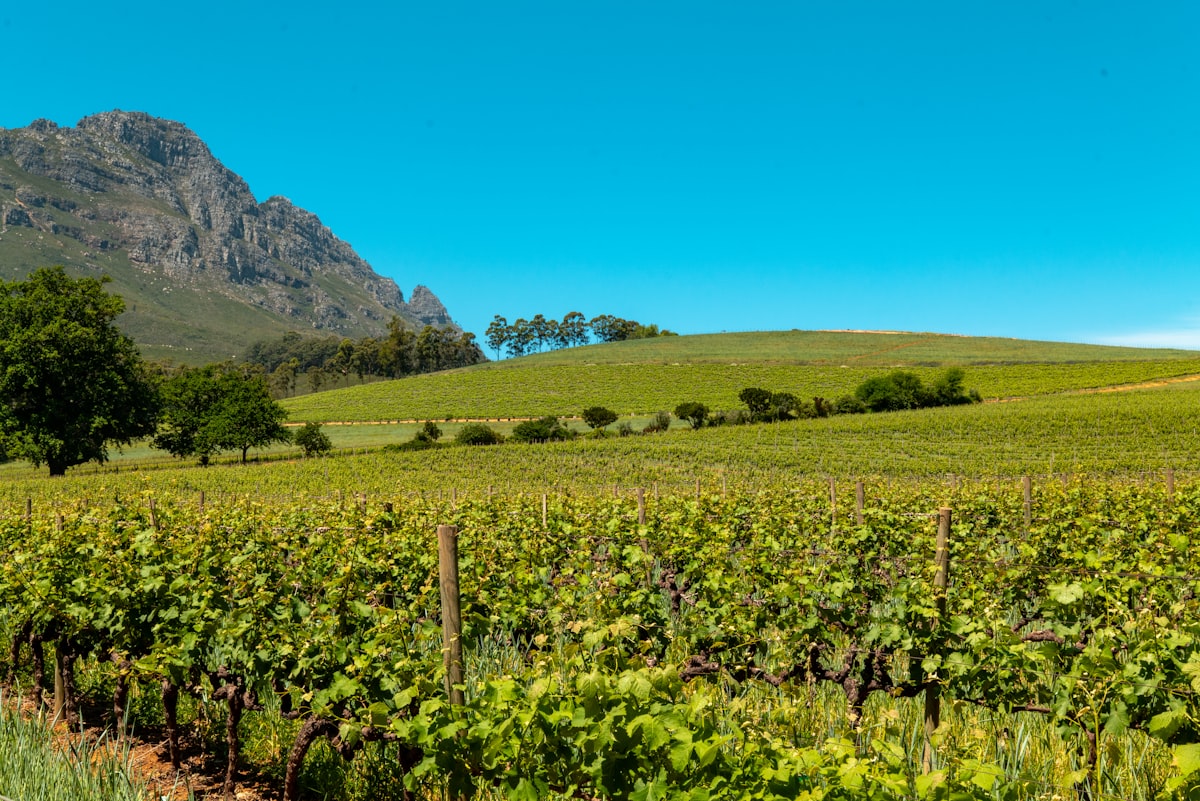
Stellenbosch is the oldest European-established town in South Africa after Cape Town, and the most important wine-producing region on the continent. It sits at the base of the Hottentots Holland mountains, 50 km east of Cape Town, in a valley of extraordinary beauty - mountain ridges on three sides, vineyard-covered slopes, and a tree-lined town centre that has looked roughly the same for the past two centuries.
The town is also home to Stellenbosch University, which brings a different energy to the cafes and restaurants than you find in purely agricultural wine regions. The combination of students, winemakers, heritage buildings, and the kind of outdoor dining culture that Cape Dutch summers produce makes it one of the most appealing towns in South Africa.
The Town Centre
Church Street (Dorp Street) is the most photographed stretch in Stellenbosch - an avenue of oak trees planted in the 18th century, flanked by Cape Dutch homesteads and vine-shaded restaurants. Walk its full length in either direction.
The Village Museum on Ryneveld Street is an exceptional collection of four historic houses spanning 1709 to 1850, each furnished to the period. It gives you a quick grounding in the Cape Dutch and Cape Regency architecture you will see throughout the region. Entry from approximately R80 per adult as of 2026.
The Braak - the town square - is surrounded by historic buildings including the VOC Kruithuis (powder magazine, 1777), now a small military museum. The area feels like an extension of the original Dutch colonial settlement rather than a reconstructed tourist attraction.
Oom Samie se Winkel on Dorp Street is a tourist shop, yes, but a legitimately fascinating one - a 19th-century trading store that still sells biltong, rooibos, jam, and assorted South Africana from wooden crates and shelves stacked to the ceiling.
Stellenbosch Botanical Garden - small but beautiful, particularly from spring onwards. Worth an hour if you’re between estate visits.
The Wine Route
The Stellenbosch Wine Route covers over 150 producer members across six sub-regions. That is too many to visit meaningfully in a day trip. A practical approach is to choose one or two sub-regions or specific estates that match your interests (fine reds, natural wine, food-focused, cellar door architecture) and give those your full attention.
Sub-Regions
Jonkershoek Valley (east of town): A narrow mountain valley with a nature reserve at its head and a handful of estates including Lanzerac and Stark-Condé. Lanzerac is one of the historic Stellenbosch estates with a hotel on-site.
Banhoek Valley (northeast): Home to Delaire Graff (one of South Africa’s most spectacular wine estates - the views across the valley are genuinely extraordinary), Jordan Wine Estate, and Glen Carlou. Plan to eat lunch at one of the estate restaurants here.
Helderberg (south, towards Somerset West): Rustenberg, Vergelegen (a national monument, one of the most beautiful Cape Dutch homesteads in the country), and Morgenster. Vergelegen is worth visiting as much for the architecture and gardens as the wines.
Bottelary Hills (northwest): Less scenic than the mountain valleys but home to Kanonkop and Beyerskloof - two of the most celebrated Pinotage producers in the country.
Devon Valley and Papegaaiberg: Dornier, Villiera, and Spier. Spier is one of the larger operations with a hotel, multiple restaurants, and a programme of concerts and events throughout the summer.
Simonsberg-Stellenbosch: Warwick Estate, Tokara, Muratie, Thelema. Tokara has a glass-walled tasting room with dramatic mountain views and a serious deli.
Estate Highlights
Delaire Graff - The most spectacular setting on the Helshoogte Pass. The tasting room and restaurant sit above the vineyards with the Simonsberg and Drakenstein mountains framing the view. Serious Cabernet-based wines and a destination restaurant. Tastings from approximately R350 per person; book the restaurant well in advance.
Rust en Vrede - Specialist in single-estate red wines, particularly Cabernet Sauvignon and Shiraz. A favourite of South Africa’s serious red wine drinkers. The estate restaurant holds a long-standing reputation for excellence. Tasting fee from approximately R250.
Kanonkop - The benchmark Pinotage producer. A self-guide tasting at the historic homestead with the estate’s wines, including their flagship Paul Sauer Bordeaux blend. Tasting fee from approximately R200. Walk-in friendly on weekdays.
Vergelegen - Wine is secondary here; the architecture, gardens, and history are the main event. Five camphor trees planted around 1700 are heritage specimens. The estate wine (particularly the Vergelegen V Cabernet blend) is excellent, but the setting sells itself. Entry fee applies to the gardens; wine tasting from approximately R250.
Jordan - Modern, well-run estate on the Stellenbosch Kloof Road with good Chardonnay and Cabernet. The Bakery at Jordan serves breakfast and lunch with estate-view tables - a popular Saturday morning spot. Tasting from approximately R175.
Eating in Stellenbosch
96 Winery Road - Long-standing farm restaurant between Somerset West and Stellenbosch. Excellent Cape cuisine in a converted farm building; reserve ahead. Main courses approximately R200–R350.
Terroir at Kleine Zalze - One of Stellenbosch’s most consistently praised restaurant-on-estate experiences. Modern South African cooking with estate wines. Mains approximately R250–R380.
Schoon de Companje - Artisan bakery and cafe on the edge of the Stellenbosch Brewing Company premises. Good for a quick lunch between estate visits. Excellent sourdough and coffee.
The Couch Bistro - Town-centre restaurant popular with university staff and local winemakers. No-fuss food, good value, reliable.
Wijnhuis - Wine bar and restaurant on Church Street with a list covering most Stellenbosch producers by the glass. Good for working through the region without booking a tasting.
Hiking and Outdoors
Jonkershoek Nature Reserve - Immediate access from town to serious mountain hiking in the Jonkershoek Valley. The reserve has marked trails from 2 to 18 km, ranging from valley walks to ridgeline routes. Entry from approximately R200 per person as of 2026. The full Panorama Trail is one of the best hiking days in the Western Cape.
Assegaaibosch Nature Reserve - Easier terrain, good for walking with children. Protea and fynbos at its best in late winter and spring.
Stellenbosch Mountain - The mountain directly behind the university (accessed via Dorp Street extension) has informal trails for short walks. Ask at your accommodation for current access conditions.
Where to Stay
Stellenbosch has accommodation across all price points - guesthouses in town, boutique hotels on estates, and self-catering cottages in the vineyards.
Search hotels in Stellenbosch on Booking.com
For a curated breakdown of estate hotels, town-centre guesthouses, and self-catering options, see our Stellenbosch hotels guide.
Lanzerac Hotel - Historic estate hotel 2 km from the town centre, with luxurious rooms in the original Cape Dutch homestead and newer garden rooms. From approximately R4,500 per room per night including breakfast.
Nooitgedacht Guesthouse - Comfortable mid-range guesthouse in the town, walking distance to restaurants and the main square. From approximately R1,800–R2,400 per room.
Spier Hotel - Large estate hotel with pools, multiple restaurants, and on-site activities. Works well for families. From approximately R2,200 per room.
Akademie Street Boutique Hotel - Small, elegant guesthouse in a historic building off the main square. Excellent location. From approximately R2,500 per room.
Self-catering cottages across the Stellenbosch wine routes are plentiful and can be found through SafariNow, Airbnb, and direct estate bookings. Prices from approximately R1,200 per night for a simple cottage.
Stellenbosch vs Franschhoek
Both towns sit in the Winelands and get confused by first-time visitors. Franschhoek (30 km from Stellenbosch over the Franschhoek Pass) is smaller and more boutique - fewer estates but the estate restaurants are arguably stronger. The two complement each other well on a multi-day Winelands trip. If you have one day, Stellenbosch gives you more to work with; if you have two, split them. See the Stellenbosch vs Franschhoek comparison for a detailed breakdown.
Ready to plan your trip? Stellenbosch Tours, Cape Winelands Tours, Car Hire in Cape Town, or Tours & Activities in Cape Town.
See Also
- Wine tasting in the Cape Winelands - estate-by-estate guide for the whole Winelands region
- Franschhoek Wine Tram guide - hop-on hop-off service connecting 20 estates in the Franschhoek valley
- Cape Winelands day trip from Cape Town - Stellenbosch, Franschhoek, and Paarl overview
- Cape Winelands vs Stellenbosch comparison - choosing where to base yourself
- Stellenbosch vs Franschhoek comparison - detailed breakdown of the two wine towns
- Cape Town food guide - where Stellenbosch restaurants fit in the broader Cape food scene
- 3-day Cape Town itinerary - Day 3 covers the Stellenbosch wine route
- Western Cape region guide - the Winelands in the broader province context