Johannesburg is the largest city in sub-Saharan Africa by population and the economic engine of the continent - and its food scene reflects that reach. A city of 5 million people draws in migrant communities from across South Africa and the continent, meaning you can eat Ethiopian injera in Yeoville, bunny chow from a KwaZulu-Natal transplant in Braamfontein, and wood-fired Wagyu in Sandton, all within the same city.
The most distinctive Joburg food experiences are found in its food markets, its Soweto township food culture, and its braai restaurants - a South African tradition that here reaches its most polished formal expression.
Prices listed are approximate as of 2026.
Neighbourgoods Market at 44 Stanley
44 Stanley (44 Stanley Avenue, Milpark) is the most food-serious address in Johannesburg - a converted industrial precinct housing independent coffee shops, delis, wine bars, and weekend markets. The Neighbourgoods Market runs here every Saturday from approximately 9am–2pm.
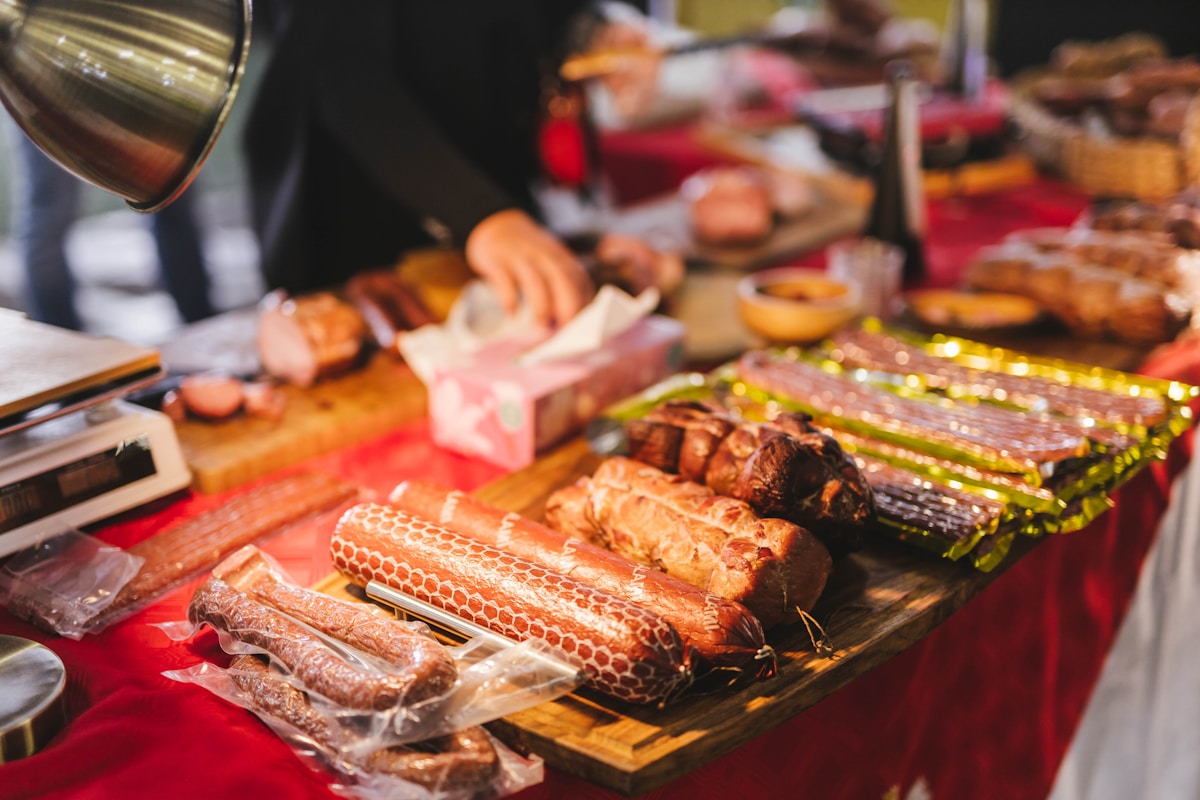
The market covers artisan bread and pastries, aged and washed-rind cheeses, charcuterie, free-range chicken and pork, organic produce, fermented goods, craft beer, and a solid selection of cooked food stalls. Breakfast is the main event - the crowd peaks between 10am and 12pm. Budget roughly R80–160 for breakfast; R60–120 for snacks and produce.
The precinct’s permanent tenants are worth visiting on weekdays too. Truth Coffee (Joburg outpost) and several independent roasters serve specialty coffee in a setting more considered than most CBD options. Salvation Café and similar spots do weekday lunches.
Maboneng Precinct
Maboneng (roughly 5th Street and Main Street, City and Suburban) was South Africa’s most celebrated urban regeneration project of the 2010s. It has been through difficult years since the pandemic and ongoing inner-city challenges, but a core of restaurants, bars, and food businesses remains.
Arts on Main (Market Street, Maboneng) hosts a Sunday market and a permanent cluster of food tenants. The Mad Giant Brewery taproom (now relocated to Newtown, but historically associated with Maboneng) was instrumental in building Joburg’s craft beer scene. Several farm-to-table and contemporary South African restaurants operate in the precinct.
The precinct is best visited during the day or early evening in a group - Joburg’s inner city requires the same street-awareness as any other major urban centre. A guided food or walking tour through Maboneng (from approximately R400–600 per person) is the recommended approach for first-time visitors.
Soweto Food Tours
Soweto’s food culture is the most authentic and historically layered in Johannesburg. Vilakazi Street - the only street in the world to have been home to two Nobel laureates (Nelson Mandela and Archbishop Desmond Tutu) - is also where the most visitor-accessible traditional food is concentrated.
Sakhumzi Restaurant (6980 Vilakazi Street, Orlando West, Soweto) is the largest and most tourist-visited, serving a buffet of traditional South African dishes: umngqusho (samp and beans), pap (a stiff maize porridge), chakalaka (a spiced vegetable relish), roasted chicken, and shisa nyama grilled meat. Expect approximately R150–220 per person for a buffet lunch, including live music on weekends.
Wandie’s Place (618 Makhalima Street, Dube, Soweto) is slightly off the Vilakazi Street circuit and has been a Soweto institution since the 1980s. The menu is similar - traditional buffet with braai options - but the atmosphere is more local and less tour-group oriented. Approximately R130–200 per person for a buffet.
For a structured food tour of Soweto beyond Vilakazi Street - which typically includes a shisa nyama experience, a visit to a local shebeen (informal bar), and a home-cooked meal hosted by a resident family - operators like Jimmy’s Face to Face Tours and Lebo’s Soweto Backpackers run half-day options for approximately R600–900 per person in a group, or R1,500–2,500 for a private booking. These tend to be more rewarding than restaurant visits alone.
Braamfontein and Melville
Braamfontein is Joburg’s student and creative district, immediately north of Park Station. The concentration of universities gives it a younger energy and more experimental food scene than the CBD or Sandton. Weekend brunch crowds fill cafes along Juta Street - Nice Restaurant and The Thunderdome are among the consistently mentioned spots for contemporary South African café food. Budget R100–180 for brunch.
Melville (particularly 7th Street) is the bohemian alternative to the northern suburbs - a low-rise strip of restaurants, bars, and coffee shops where the vibe is more 2010s Cape Town than north-Joburg. The area has lost some momentum in recent years but remains one of the more relaxed places to eat in the city. Restaurant mains at most Melville spots run R140–260, with plenty of casual options under R100.
Both areas are significantly more walkable than Sandton or Rosebank and easier to navigate without a car.
South African Braai Culture
Braai is not simply a cooking method - it is the primary social ritual of South African life, cutting across race, class, and region. Boerewors (a coarse, coriander-spiced beef and pork sausage, cooked in a spiral), lamb chops, chicken pieces, and corn on the cob cooked over wood coals are the standard lineup. Pap (maize porridge), chakalaka, and potato salad are the standard accompaniments.
Marble Restaurant (Keyes Art Mile, Rosebank) takes braai culture into a fine-dining context - an open-flame kitchen centred on wood-fired cooking, with dry-aged beef, lamb, and seasonal vegetables cooked over coals. It is consistently ranked among South Africa’s top restaurants. Expect R300–500 per person for mains; the tasting menu runs approximately R1,200–1,500 per person excluding wine. Book at least two to three weeks ahead for weekends.
The Butcher Shop & Grill (Melrose Arch and Nelson Mandela Square, Sandton) operates at the other end of the formality spectrum - a reliably excellent steakhouse with an emphasis on South African dry-aged beef. Grass-fed sirloin, ribeye, and fillet mains run approximately R250–380. The dry-aged beef from specialist South African producers is worth the price premium over similar cuts at a standard steakhouse.
For a township braai experience without a structured tour, most Soweto restaurants run outdoor shisa nyama grills, particularly on weekends. The experience is louder and more communal than a suburban restaurant - and the meat, bought fresh from the butcher next door and grilled immediately, is often better.
Sandton and Rosebank
Sandton is Johannesburg’s financial district and has the highest concentration of upmarket restaurants in the city. The range is large: Japanese, Italian, French bistro, contemporary African, and South African fine dining all well-represented.
Rosebank is the most accessible of the northern suburbs for food - the Rosebank Mall and its surrounds have a dense cluster of restaurants across price points, and the Zone@Rosebank has several casual options. The African Craft Market building hosts a rooftop food and craft market on Sundays.
For a full upmarket dinner in Sandton, budget R350–600 per person for mains at a top restaurant; more for a tasting menu. Staying nearby makes evening dining easy — see Hotels in Johannesburg for options across Sandton, Rosebank, and Melville.
Practical Tips
Getting around Johannesburg for food requires a car or ride-share (Uber is widely used and reliable). The city’s sprawl means that Soweto, Maboneng, Braamfontein, and Sandton are all 20–40 minutes apart by car, and walking between neighbourhoods is rarely practical or advisable.
Joburg’s market timing: Neighbourgoods at 44 Stanley runs Saturdays only (approximately 9am–2pm). Arts on Main runs Sundays. Both wind down early - plan to arrive before midday.
Booking: Marble and other Rosebank fine dining venues require booking. Soweto restaurants on Vilakazi Street accept walk-ins but can be swamped by tour groups from 12–2pm; arriving by 11am or after 2pm is better.
Safety: Inner-city areas (Maboneng, Braamfontein) are best navigated with local knowledge or as part of a guided tour. Sandton, Rosebank, and Melville are more straightforward for independent movement.
Tipping: 10–15% at sit-down restaurants. Nothing at market stalls or informal food stalls unless service has been exceptional.
Ready to explore Johannesburg further? Hotels in Johannesburg, Tours & Activities in Johannesburg, or plan your stay with our Johannesburg city guide.
See Also
- Johannesburg city guide - overview of things to do
- Where to stay in Johannesburg - hotels near the best eating areas
- Best restaurants in Johannesburg - a curated shortlist
- Johannesburg food: dishes to try - deeper dive into the ingredients and dishes
- Soweto guide - more context on Soweto before a food tour
- Things to do in Johannesburg - how food tours fit into a broader Joburg itinerary
- Cape Town food guide - comparison with Cape Town’s food culture