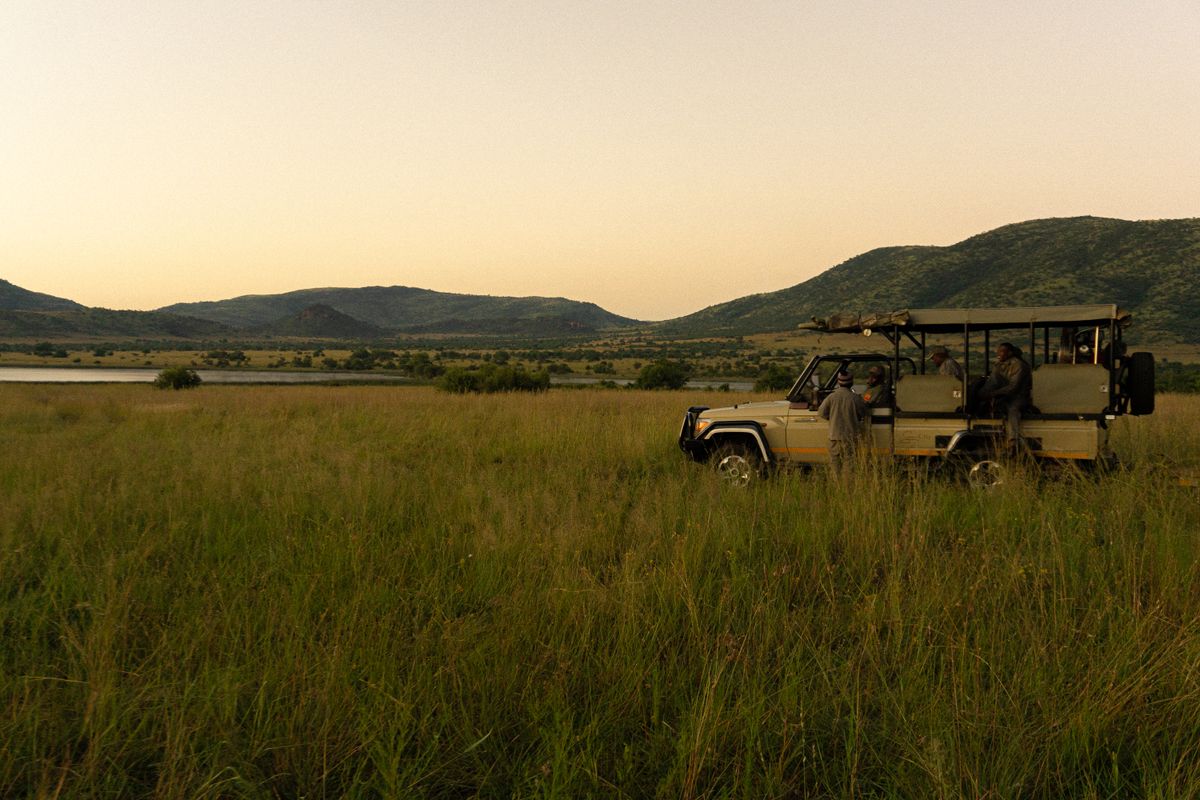
Kruger National Park is one of Africa’s great wildlife destinations - 19,485 square kilometres of bushveld, riverine forest, and open savanna that support all of the Big 5, more than 500 bird species, and one of the most diverse mammal populations on the continent. Knowing which tour format matches your group makes the difference between a wildlife encounter and a waiting game. This guide covers every tour type, with honest prices (as of 2026), the trade-offs between them, and the notes that first-time safari visitors most often wish they’d had before arriving.
Kruger Safari Tours at a Glance
| Tour type | Price from (2026) | Duration | Best for |
|---|---|---|---|
| Day tour from Johannesburg | R2,200–R3,000 pp | Full day | First visit, no park stay needed |
| Sunrise game drive (inside park) | R500–R1,200 pp | 3–4 hrs | Best predator activity window |
| Walking safari (3-hour) | R950–R1,500 pp | 3 hrs | Tracking, birds, close bush experience |
| Private reserve day (Sabi Sands) | R3,500–R6,000 pp | Full day | Off-road driving, leopard tracking |
| Multi-day Kruger package | R4,000–R8,000 pp/night | 2–4 nights | Comprehensive Big 5 coverage |
All prices are approximate and in South African Rand. See sections below for full detail.
1. Guided Day Safari from Johannesburg
If you are based in Johannesburg and want a Kruger experience without committing to an overnight stay, a full-day guided safari from Johannesburg is the most straightforward option. Operators depart from OR Tambo or Sandton, drive approximately 4.5 hours to Kruger’s western gate, spend 4–5 hours on a guided open-vehicle game drive inside the park, and return to Johannesburg by evening.
What to expect: The drive time is significant - around 9 hours of travel total for a 4–5 hour park experience. This is the compromise of a day trip to a park of this size. That said, most operators time the in-park hours around the golden morning game-drive window (6am–10am in the park, adjusted for the travel distance), which maximises wildlife activity. You will not see everything in one day, but lion, elephant, hippo, and crocodile sightings are common. Leopard and rhino require patience - any day is possible, none is guaranteed.
Price: Approximately R2,200–R3,000 per person including transport, a professional guide, park entry fees, and a packed lunch or stop at a rest camp restaurant. Book directly through a licenced operator or via GetYourGuide.
Best for: First-time Kruger visitors based in Johannesburg who cannot add overnight nights. Also useful for visitors with a single free day between flights.
2. Sunrise Game Drives (Staying Inside the Park)
Staying inside Kruger - in one of SANParks’ 12 main rest camps - and booking a sunrise game drive from the camp is the format that serious wildlife observers prefer. Camp-based drives depart before the gates open (typically 4:30am–5am), meaning your open vehicle is on the road during the golden hour when predators are most active and light is at its photographic peak.
How it works: SANParks operates guided game drives from most rest camps. These run in open-sided vehicles with a certified field guide. The vehicles carry 8–12 passengers. You book these directly through the SANParks website or at the camp reception desk. Sunrise drives typically last 3–4 hours and return to camp before the midday heat sets in.
Price: Approximately R500–R1,200 per person depending on the camp and drive type (sunrise versus sunset). Park accommodation entry (conservation fee) is separate: approximately R392 per international adult per day (2025/26 SANParks rates).
Best camps for game drives: Lower Sabie (south of the park, high lion and leopard activity), Satara (central camp, lion territory), and Skukuza (the main camp, good general wildlife access) are the most consistently productive for guided drives.
What you gain over self-drive: A certified field guide reads tracks, identifies calls, and has radio contact with other guides across the park. When a leopard is spotted on a termite mound, the radio network puts your vehicle there within minutes. This is not something self-drive visitors can replicate.
3. Walking Safaris
A walking safari in Kruger is a fundamentally different experience from a vehicle drive. On foot, you cover perhaps 5–8 km in 3 hours, but notice the things that a vehicle rolling at 30 km/h inevitably misses: the tracks of a hyena crossing the path before dawn, a dung beetle navigating a clearing, a yellow-billed hornbill calling from a fever tree overhead.
Safety: Trails are led by armed field guides with years of tracking experience. The guides brief the group before departure on positioning and protocol if large animals are encountered. In practice, most encounters involve buffalo herds spotted at distance, giraffe between trees, or smaller mammals like mongoose and warthog. Encounters with lion or elephant on a walking trail are not common, but they are possible - the briefing is serious for good reason.
Types of walking experiences:
- Guided morning walks (3 hours): Available from most rest camps. SANParks and private operators both run these. From approximately R950–R1,500 per person.
- Wilderness trails (3 nights): SANParks’ Wilderness Trail camps (Wolhuter, Bushman, Sweni, Olifants, Nyati, Metsi-Metsi) offer multi-day walking experiences sleeping in remote trail camps. These book out months in advance and cost approximately R6,500–R8,500 per person all-inclusive for 3 nights. Worth every rand for those who can plan ahead.
4. Private Reserve Upgrades: Sabi Sands and Timbavati
Adjacent to Kruger’s western boundary, Sabi Sands and Timbavati private game reserves operate on unfenced borders with the national park. Animals move freely between Kruger and the private reserves. The practical difference for visitors is significant.
What private reserves offer that Kruger does not:
- Off-road driving: Open vehicles leave the tarred road and drive directly toward sightings through the bush. In Kruger, you must stay on designated roads.
- Night drives: Private reserves conduct legal night game drives with spotlights. Kruger’s public camps do not allow private vehicles in the park after the gates close at sunset.
- Closer approach distances: Private reserve guides know individual animals (particularly the famous habituated leopards of Sabi Sands) and can approach at distances that would be impossible in the national park.
- Lower vehicle numbers: Public Kruger roads can have 15–20 vehicles at a popular sighting. A private reserve might have two.
Sabi Sands: Home to some of Africa’s most photographed leopards. Mala Mala, Londolozi, and Singita are the flagship lodges. A night in a full-board lodge with two game drives runs approximately R8,000–R35,000 per person per night, depending on the lodge tier.
Timbavati: MalaMala’s northern neighbour, less commercially visible but equally high-quality wildlife. Umlani Bushcamp offers one of the more affordable private reserve experiences - from approximately R4,000–R6,000 per person per night all-inclusive.
Day access: Some private reserves offer day access without overnight accommodation, typically including a game drive, lunch, and a sunset drive. Costs run approximately R3,500–R6,000 per person. This gives you a private reserve game drive without the full lodge cost, though you miss the night drive and the rhythm of a full day in the bush.
5. Self-Drive vs. Guided: The Honest Comparison
Self-drive is how most South Africans experience Kruger, and it is an excellent option - but the trade-offs are real.
| Factor | Self-Drive | Guided Tour |
|---|---|---|
| Flexibility | High - your schedule, your pace | Low - group departures |
| Wildlife finding | Your own observation | Guide’s tracking knowledge + radio network |
| Off-road access | No - tarred and designated dirt roads only | Yes (private reserves only) |
| Night drives | No - gates close at sunset | Yes (private reserves) |
| Cost (per person) | Lower if solo/couple; depends on car hire | Higher, but includes knowledge |
| Best for | Repeat visitors, photographers wanting time | First visit, best wildlife odds |
Self-drive logistics: Hire a car in Johannesburg (Nelspruit is closer but has fewer hire car options). The Kruger entry gates closest to Johannesburg are Phabeni and Numbi, approximately 4.5 hours’ drive. Reservations for camps are made through the SANParks website - book 6–12 months ahead for peak season (July, August, school holidays). A fuel stop at Hazyview or Nelspruit before the gate is advisable.
6. Prices Summary and Malaria Note
Key prices at a glance (2026):
- SANParks conservation fee: approximately R392 per international adult per day
- Rest camp accommodation: R800–R3,500 per unit per night (huts, chalets, camping)
- Guided sunrise drive from camp: R500–R1,200 per person
- Walking safari (3 hours): R950–R1,500 per person
- Day tour from Johannesburg: R2,200–R3,000 per person
Malaria: Kruger is a malaria risk area year-round. Risk is lower in the dry season (May–September) and higher November–April. Consult a travel health professional about prophylaxis before your trip. If travelling with children, consider a malaria-free alternative: Pilanesberg National Park (Big 5, 2 hours from Johannesburg) or Addo Elephant National Park in the Eastern Cape.
Best time to visit Kruger: May to September (dry season). Animals concentrate around waterholes, vegetation is thinner for visibility, and temperatures are mild. July and August are peak booking months - reserve accommodation 6–12 months ahead. December–February is lush and green but hot, with thick vegetation reducing sightings and malaria risk at its peak.
Browse available Kruger National Park safaris and tours for current dates and pricing.