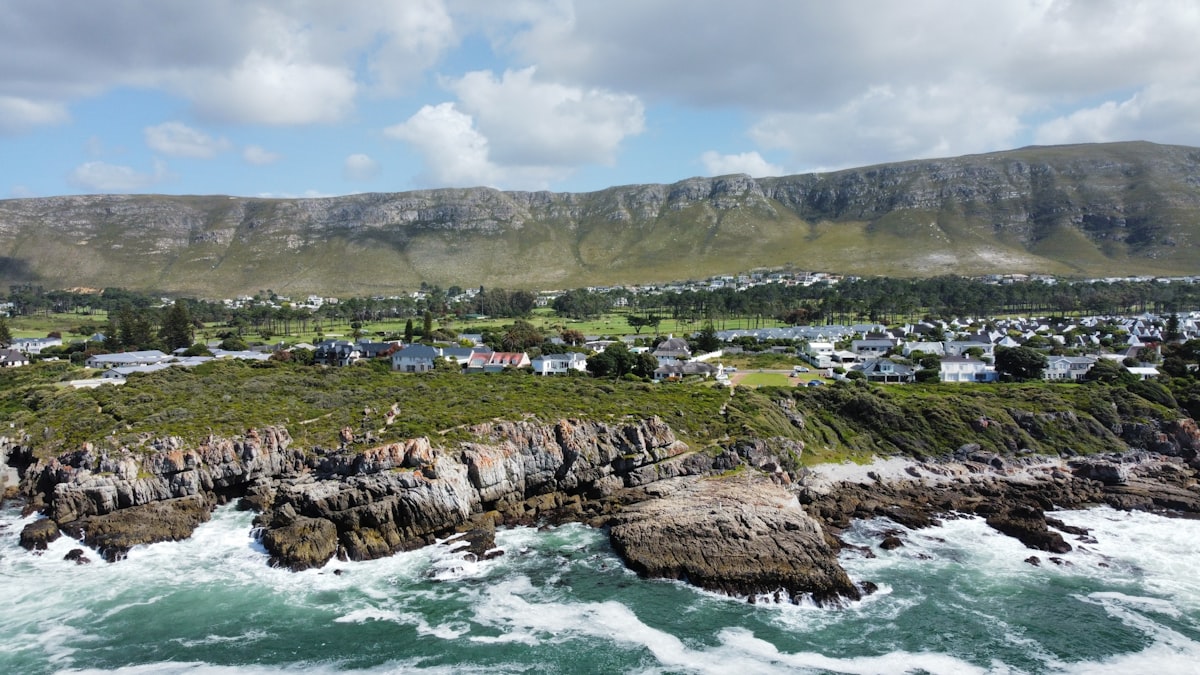
Hermanus sits about 120 km east of Cape Town along a rugged stretch of the Western Cape coastline - close enough to reach on a day trip but rewarding enough to justify an overnight stay or longer. The town earned its reputation as one of the world’s best land-based whale-watching destinations when the first southern right whales began entering Walker Bay each winter, and it has never really looked back. There is a whale crier who still walks the streets blowing a kelp horn to announce sightings - which tells you everything about how seriously the town takes its marine residents.
Whale Season
Southern right whales arrive in Walker Bay from around late May or early June to calve and nurse their young in the sheltered bay. The peak of whale activity is July through October, with September and October often producing the most dramatic displays - breaching, lobtailing, and spyhopping are all common. By late November most of the whales have departed for deeper feeding grounds in Antarctic waters.
The Marine Dynamics whale-watching boat trips (from approximately R1,200 per person as of 2026) take you out into Walker Bay for close-range encounters - you can also book Hermanus whale-watching tours through GetYourGuide for combined boat and coastal experiences - but the cliff path provides surprisingly intimate views from shore. Female southern rights often bring their calves into the shallow waters directly below the cliffs, resting and nursing within metres of the viewing platforms.
Hermanus Cliff Path
The 12 km cliff path runs the full length of Hermanus seafront, linking the old harbour at the western end to the suburb of Voelklip in the east. It is completely free to walk and mostly flat, with multiple viewpoints and benches overlooking Walker Bay. Even outside whale season it is one of the finest coastal walks in the Western Cape - the combination of fynbos vegetation, dramatic rock formations, and sea views makes it worth doing regardless of what is happening in the water.
Allow two to three hours to walk the full length and back. The section between the Old Harbour and the new harbour is the busiest and the most accessible, with level paths and good whale-watching platforms.
Old Harbour Museum
The Old Harbour Museum at the western end of the cliff path occupies the original boat slipway where fishermen launched their open boats into Walker Bay from the mid-1800s onwards. Entry is approximately R40 per adult (as of 2026). The museum is small but worth an hour - it tells the story of the crayfish and whale fishing industry that sustained Hermanus before tourism, and several original fishing boats are displayed in the open-air section on the slipway.
The harbour itself is picturesque and well-maintained, with resident Cape fur seals hauled out on the rocks below.
Hemel-en-Aarde Wine Valley
“Heaven and Earth” in Afrikaans, the Hemel-en-Aarde valley lies just 10 minutes’ drive from the town centre and has developed into one of the most respected cool-climate wine regions in South Africa. The valley and its two sub-appellations (Upper Hemel-en-Aarde and Hemel-en-Aarde Ridge) are particularly known for Pinot Noir and Chardonnay - grapes that benefit from the maritime influence and morning mist that roll in from Walker Bay.
Key estates to visit:
Hamilton Russell Vineyards - the pioneering estate that put the valley on the map. Their Pinot Noir and Chardonnay remain benchmarks. Tastings from approximately R100 per person.
Bouchard Finlayson - consistently strong Pinot Noir and an unusual Tête de Cuvée white. Tastings from approximately R120 per person.
Creation Wines - food and wine pairing experiences in a dramatic hilltop setting. Tastings with food from approximately R250 per person.
Storm Wines - boutique producer focused almost entirely on Pinot Noir and Chardonnay. Book ahead as tastings are by appointment.
Most estates are open Monday to Saturday; Sunday hours vary. Always book ahead for weekend visits, especially during whale season.
Shark Cage Diving
The shark cage diving operators based at Gansbaai, 40 km east of Hermanus, have seen significant disruption to white shark activity since 2017 when a pair of orcas established themselves in the area and began preying on great white sharks. Actual white shark sightings in the cage have become far less predictable than they once were, and the honest operators will tell you this upfront. Trips still depart regularly and sightings do occur - blue sharks and shortfin mako sharks are encountered more frequently now - but do not book primarily on the expectation of guaranteed great white shark encounters.
Marine Dynamics and White Shark Projects are the most reputable operators, both based in Gansbaai. Day trips including transport from Hermanus run from approximately R2,200 per person as of 2026.
Hermanus Whale Festival
The Hermanus Whale Festival runs for three days in early October — in 2026 it takes place on 2–4 October (check hermanuswhalefestival.co.za for current year dates). The festival combines live music, food markets, conservation talks, and whale-watching activities. It draws around 100,000 visitors and accommodation books out months in advance - if you plan to coincide with the festival, lock in your room well ahead.
Where to Eat
Fisherman’s Cottage on Market Square has been a Hermanus fixture for decades. The menu is built around whatever the day boats bring in - snoek, yellowtail, hake, crayfish in season. Two courses from approximately R320 per person. Booking recommended.
Bientang’s Cave is carved into the cliff face directly on the whale-watching path, with sea views from every table. It leans into the whale-season theatre well - watching whales from the restaurant terrace while eating snoek pâté is as Hermanus as it gets. Lunch main courses from approximately R180, dinner from R250. Book ahead in season.
The Lemon Tree on Church Street is a reliable daytime option - good burgers, decent salads, and excellent coffee without the tourist-price premium of the seafront spots.
Where to Stay
Budget - from approximately R600/night: Hermanus Backpackers on Main Road is well-run with private rooms available alongside dorms. Marine Accommodation on 15th Avenue has clean, no-frills en-suite rooms with good proximity to the cliff path.
Mid-range - R1,200 to R2,500/night: The Marine Hermanus is the most prominent address in town, perched directly on the cliff path with whale-facing rooms. Rooms on the seaward side offer whale watching from the balcony. The Harbour House Hotel on Marine Drive is slightly more relaxed in atmosphere with similarly good positions.
Luxury - from approximately R3,500/night: Birkenhead House is the stand-out choice - a nine-room boutique property with a pool and views over Walker Bay. Rates are high but include breakfast and afternoon tea. Whale Rock Luxury Lodge on Marine Drive offers sea-view suites at slightly lower price points.
For a curated breakdown of Hermanus accommodation by location and price, see our Hermanus where to stay guide.
Getting to Hermanus
Hermanus has no public bus or train connections from Cape Town. The practical options are:
- Self-drive: 1 hour 40 minutes from Cape Town via the N2 and R43. Parking is straightforward outside peak whale season.
- Shuttle/day tour: Multiple Cape Town operators run whale-watching day trips to Hermanus (approximately R800–R1,400 per person including transport). Book through Cape Town tour operators or GetYourGuide.
- Baz Bus: Does not serve Hermanus directly.
The Garden Route lies east - Hermanus makes a logical first stop if you are driving the full coastal route from Cape Town.
What to Know Before You Go
- Malaria risk: none. Hermanus is completely malaria-free.
- Best months: June to November for whales; December to April for beach weather and wine estates.
- Currency: ZAR. The town has multiple ATMs and virtually all businesses accept cards.
- Walker Bay is protected - swimming is safe at the beaches, though the water is cold (typically 14–18°C year-round due to Benguela Current upwelling).