Search hotels in South Africa on Booking.com
Malaria prophylaxis is expensive, causes side effects, and rules out certain travellers entirely - pregnant women, young children under certain ages, and those on incompatible medications. South Africa is one of the very few African countries where you can do a genuine Big 5 safari without any of that. Several of its finest game reserves sit entirely outside the malaria transmission zone, offering wildlife encounters that match or beat Kruger on certain species, with none of the health complications.
Here is where to go and what to pay.
Why Malaria-Free Matters
Malaria is transmitted by Anopheles mosquitoes, which in South Africa are found only in the low-altitude bushveld of Kruger, northern KwaZulu-Natal (Hluhluwe-iMfolozi, iSimangaliso, Sodwana Bay), and Limpopo. Reserves above roughly 1,500m elevation or outside these corridors carry no malaria risk - no prophylaxis, no daily tablets, no mosquito nets over the bed.
For families with children under five, pregnant travellers, or anyone who reacts badly to mefloquine or doxycycline, the malaria-free reserves are the obvious choice. For everyone else, skipping a course of prophylaxis that costs R800–1,500 per person is a welcome bonus. See our health and vaccinations guide for a full breakdown of which areas carry risk and which vaccinations are recommended across South Africa.
Madikwe Game Reserve - North West Province
Nearest airport: OR Tambo International (Johannesburg), 3.5 hours by road. Charter flights operate from Lanseria direct to Madikwe’s airstrip.
Best time: May–September for dry-season game viewing; November–March for green-season rates (20–30% cheaper).
What you’ll find: Big 5 plus the continent’s largest population of African wild dogs, cheetah, and brown hyena. Madikwe is one of the few reserves in southern Africa where you are likely - not just possible - to see wild dogs on any given two-day stay. The reserve runs 75,000 hectares of mixed bushveld and is fenced, meaning no self-drive: all game drives are conducted in open vehicles with accredited rangers.
Lodges:
- Luxury: Jaci’s Safari Lodge - open-meru tents under riverine forest, from approximately R12,500 per person per night all-inclusive as of 2026. Madikwe Safari Lodge, from approximately R10,000 per person all-inclusive.
- Mid-range: Tau Game Lodge - large lodge set on a hillside with big-five sightings around the waterhole, from approximately R5,500 per person all-inclusive as of 2026.
- Budget: Mosetlha Bush Camp - no electricity, shared ablutions, lantern-lit dinners, canvas walls. Genuinely rustic, genuinely affordable at approximately R3,200 per person all-inclusive as of 2026. Run by a community conservation trust.
See our full Madikwe Game Reserve guide for gate hours, conservation fees, and a detailed lodge breakdown.
Pilanesberg National Park - North West Province
Nearest airport: OR Tambo International, roughly 2 hours. Sun City is adjacent.
Best time: May–September. The park sits in an ancient volcanic crater and is drier than Madikwe - good game-viewing year-round, better animal concentration in winter.
What you’ll find: Big 5 in a self-drive setting, which makes it rare among malaria-free reserves. Pilanesberg is 55,000 hectares - smaller than Kruger but large enough for an authentic bush experience, and the roads are accessible in an ordinary hire car. Lion, rhino (white and black), elephant, buffalo, and leopard are all resident.
Lodges:
- Luxury: Ivory Tree Game Lodge - suites on a private concession with dedicated game drives, from approximately R9,500 per person all-inclusive as of 2026.
- Mid-range: Bakubung Bush Lodge - full-service lodge overlooking a hippo pool, from approximately R4,500 per person per night including dinner and breakfast.
- Budget: Manyane Resort (SANParks-managed) - chalets from approximately R1,200 per unit, camping from R350. Day visitors pay the park conservation fee of approximately R280 per adult international visitor as of 2025/26.
Full Pilanesberg guide and self-drive tips - including which gates to use and where sightings are most reliable. Browse guided safari tours at Pilanesberg on GetYourGuide.
Eastern Cape Reserves - Addo, Shamwari, Amakhala, Kwandwe
The Eastern Cape is entirely malaria-free - one of the few provinces in South Africa where you can drive between coast, winelands, and Big 5 game without changing your health calculus at all. The region holds SANParks’ third-largest park and a cluster of world-class private reserves within an hour of each other.
Nearest airports: Gqeberha (PLZ) - 45 minutes to Addo, 1.5–2 hours to the private reserves. Flights from Cape Town and Johannesburg from approximately R1,000–2,500 one-way as of 2026.
Best time: Year-round, but autumn (March–May) and spring (September–October) are ideal - mild temperatures, low tourist density.
Addo Elephant National Park
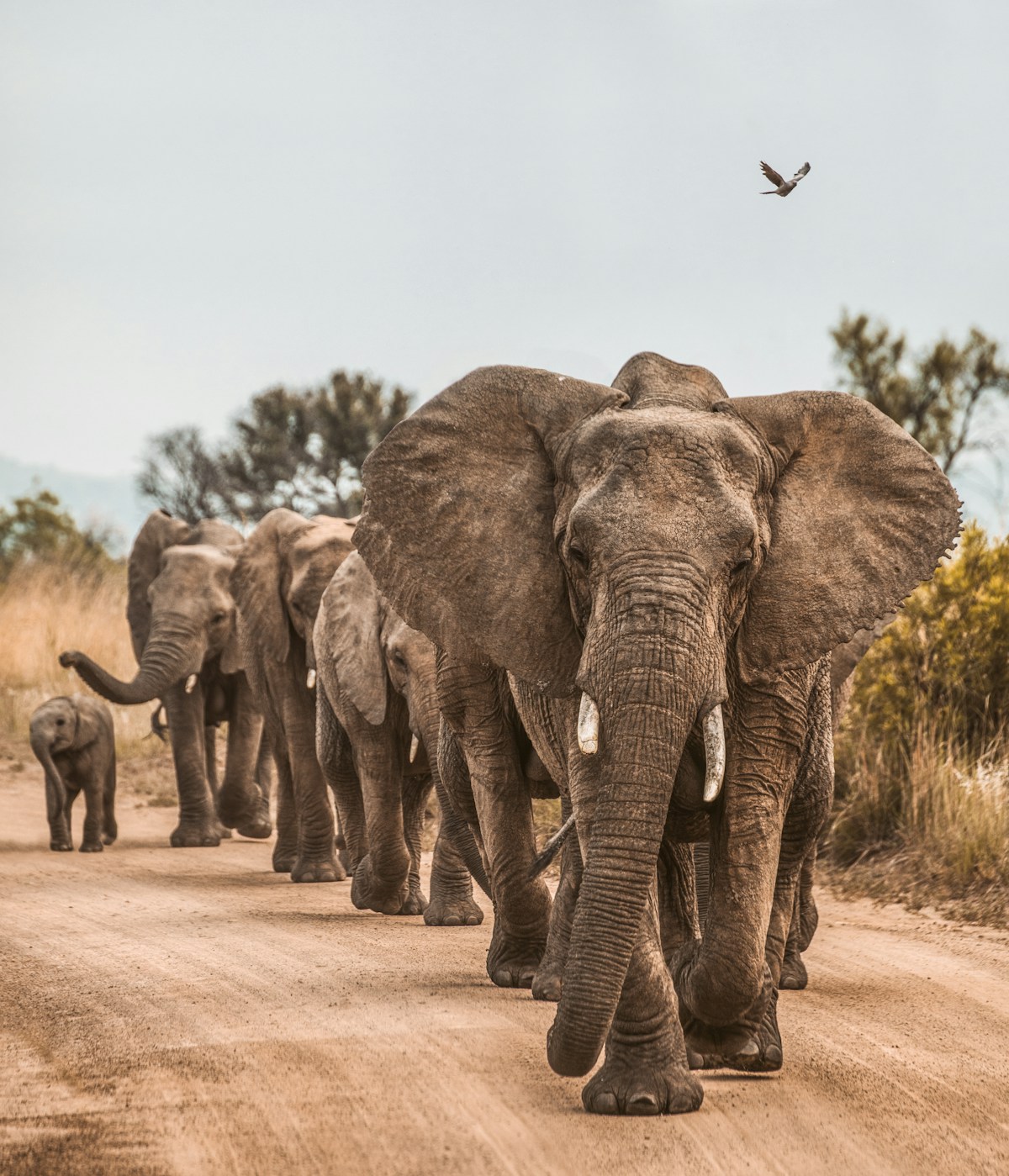
SANParks. Self-drive, day visits possible. International conservation fee approximately R492 per adult per day as of 2025/26 (fees increase each November - verify at sanparks.org). Elephant sightings are among the most reliable in Africa - 600+ resident animals. Big 5 plus the “Big 7” (great white shark, southern right whale) in the coastal section. Accommodation inside the park from approximately R1,250 (cabins) to R1,700 (chalets) per unit at Main Camp. Private concession lodges from approximately R7,500 per person all-inclusive (RiverBend) up to R10,000+ (Gorah).
Full details: Addo Elephant National Park guide. Book Addo safari tours and game drives on GetYourGuide.
Shamwari Private Game Reserve
Luxury-only private reserve. Six lodge options, from Eagles Cradle Family Lodge (designed specifically for young families) to Long Lee Manor - the historic main lodge. Rates from approximately R8,000 to R20,000+ per person per night all-inclusive as of 2026. Shamwari is 25,000 hectares and carries one of the strongest conservation programmes in the Eastern Cape - its Born Free centres rehabilitate captive wildlife. No day visits.
Amakhala Game Reserve
Mid-range to luxury. A federation of private farms covering 6,500 hectares, Amakhala is the most accessible price tier in Eastern Cape private safari. Woodbury Tented Camp from approximately R4,500 per person all-inclusive; Hlosi Game Lodge (adults-only, higher-end) from approximately R8,500 per person all-inclusive as of 2026. Big 5 - black rhino, lion, elephant, buffalo, leopard. Strong cheetah and wild dog populations.
Kwandwe Private Game Reserve
Luxury. 22,000 hectares of exclusive reserve with just five lodges - total of 38 beds across the whole property. This is among South Africa’s most exclusive malaria-free safari experiences. Rates from approximately R20,000–35,000 per person per night all-inclusive as of 2026. Black rhino breeding programme; high leopard density. No children under 10 except at Great Fish River Lodge.
Waterberg and Welgevonden - Limpopo
Nearest airport: Hoedspruit (HDS) or OR Tambo (Johannesburg, 3 hours by road). Charter flights into Welgevonden airstrip.
Best time: May–September.
What you’ll find: The Waterberg plateau sits at high enough elevation to be malaria-free despite being in Limpopo, the province that borders Kruger. Welgevonden Private Game Reserve covers 37,000 hectares and holds Big 5, wild dog, cheetah, brown hyena, and over 300 bird species. It is unfenced from the broader Waterberg Biosphere.
Lodges:
- Luxury: Waterberg Wilderness - boutique eco-lodge with solar power and plunge pools, from approximately R9,500 per person per night all-inclusive as of 2026. Leobo Private Reserve, for groups, from approximately R250,000 per night for the full property.
- Mid-range: Ekuthuleni Lodge - smaller lodge with personalised service, from approximately R5,500 per person all-inclusive.
- Budget: Lapalala Wilderness School accommodation is sometimes available for adult travellers at conservation rates - contact directly.
Malaria-Free vs Kruger: What You’re Trading
Kruger’s advantages are scale (20,000 km²), predator density, and self-drive flexibility at an affordable entry price. Its disadvantages are the malaria risk, the long distances between camps, and summer heat that pushes 40°C.
The malaria-free reserves counter with compactness (sightings are more frequent per hour driven or driven by a ranger), no health complications, and - in the case of Madikwe and the Eastern Cape private reserves - wild dog, cheetah, and rhino encounter rates that can exceed Kruger’s. The big miss is Kruger’s unique feeling of wilderness scale.
If you’re travelling with young children, pregnant, or have medical contraindications to antimalarials: the choice is already made. See our family travel guide for more on what to expect with kids at each reserve type.
For an honest comparison with additional context, see our Kruger vs Pilanesberg guide.
Quick Comparison Table
| Reserve | Province | Big 5 | Wild Dogs | Self-Drive | Budget/Night pp | Luxury/Night pp |
|---|---|---|---|---|---|---|
| Madikwe | North West | Yes | Yes (best in SA) | No | R3,200 | R12,500+ |
| Pilanesberg | North West | Yes | Rare | Yes | R350 (camping) | R9,500+ |
| Addo | Eastern Cape | Yes | No | Yes | R1,250 (cabin) | R10,000+ |
| Shamwari | Eastern Cape | Yes | Yes | No | - | R8,000–20,000+ |
| Amakhala | Eastern Cape | Yes | Yes | No | R4,500 | R8,500+ |
| Kwandwe | Eastern Cape | Yes | No | No | - | R20,000+ |
| Welgevonden | Limpopo | Yes | Yes | No | - | R9,500+ |
Prices approximate, per person per night all-inclusive. 2026 figures. Verify directly with each lodge.
Malaria-Free Safari Near KwaZulu-Natal
KwaZulu-Natal’s main safari parks — Hluhluwe-iMfolozi, iSimangaliso Wetland Park, and Sodwana Bay — all carry year-round malaria risk and are not included in the malaria-free category. This is the most common misconception among travellers planning a KZN safari. If avoiding malaria is a priority and you’re based in Durban or KZN, the practical options are:
Within 4–5 hours of Durban (driving):
- Nambiti Private Game Reserve — 23,000 hectares in the KZN Midlands, altitude-based malaria-free zone. Big 5, private lodges from approximately R5,000 per person all-inclusive as of 2026. Around 3.5 hours from Durban. The closest genuine Big 5 malaria-free experience for visitors based in KZN.
- Amakhala Game Reserve (Eastern Cape) — approximately 5 hours from Durban via the N2. Mid-range Big 5 option from R4,500 per person. See Eastern Cape section above.
- Addo Elephant National Park — also approximately 5–6 hours, but self-drive accessible and SANParks pricing makes it South Africa’s most affordable Big 5 malaria-free option.
Fly-in alternatives:
- Pilanesberg and Madikwe are 90-minute flights from King Shaka International (Durban). With a same-day flight connection and 2–3 nights in the reserve, the total journey is comparable to a long weekend in KZN’s own parks — but without the malaria risk.
The key point: there is no Big 5 malaria-free safari within KwaZulu-Natal province proper (as of 2026). Nambiti comes closest geographically. Travellers willing to drive 5–6 hours gain access to the full Eastern Cape malaria-free cluster. For families or travellers specifically avoiding prophylaxis, these are the realistic options.
See Also
- Madikwe Game Reserve - full guide
- Addo Elephant National Park - full guide
- Pilanesberg National Park - guide and self-drive tips
- Health and vaccinations for South Africa
- Family travel in South Africa
- Kruger vs Pilanesberg - which is right for you
- Kruger vs Addo - Big Five comparison with malaria context