Search hotels in Cape Town on Booking.com
A safari honeymoon in South Africa is structurally different from any other kind of honeymoon. The days organise themselves around the animals rather than around things to do: dawn drive, breakfast at the lodge, midday at the pool or in the suite, late-afternoon drive, sundowners in the bush, boma dinner, and sleep to sounds you will not hear anywhere in the northern hemisphere. The question is not whether to do a safari — it is which reserve, which lodge, and which time of year best suits what you want.
Private Reserves vs Kruger National Park
The Case for Private Reserves
South Africa’s private game reserves exist on concessions adjacent to or surrounding the national parks. The most celebrated cluster borders western Kruger: Sabi Sand, Timbavati, Klaserie, Thornybush, and Manyeleti. The critical differences for a honeymoon:
Open-vehicle drives. In private reserves, guides use open Land Rovers that can leave the road to follow animals — driving through bush, stopping metres from a pride of lions. In Kruger national park, you stay on tarred or gravel roads in your own enclosed vehicle at all times.
Night drives. Private reserves offer evening game drives with spotlights that pick up nocturnal animals — serval, civet, honey badger, white-tailed mongoose, and predators on the move. Night drives are prohibited in the national park.
Walking safaris. An armed ranger takes you into the bush on foot — tracking, reading signs, standing still with elephants 30 metres away. One of the most viscerally memorable experiences available in South Africa. Not permitted in Kruger.
Exclusivity. A private camp might have six suites and fifteen staff for twelve guests. Drives go out with a maximum of eight guests per vehicle (often fewer). There is no queuing at gates, no convoys of hire cars, no Winnebagos. The reserve belongs, effectively, to whoever is staying.
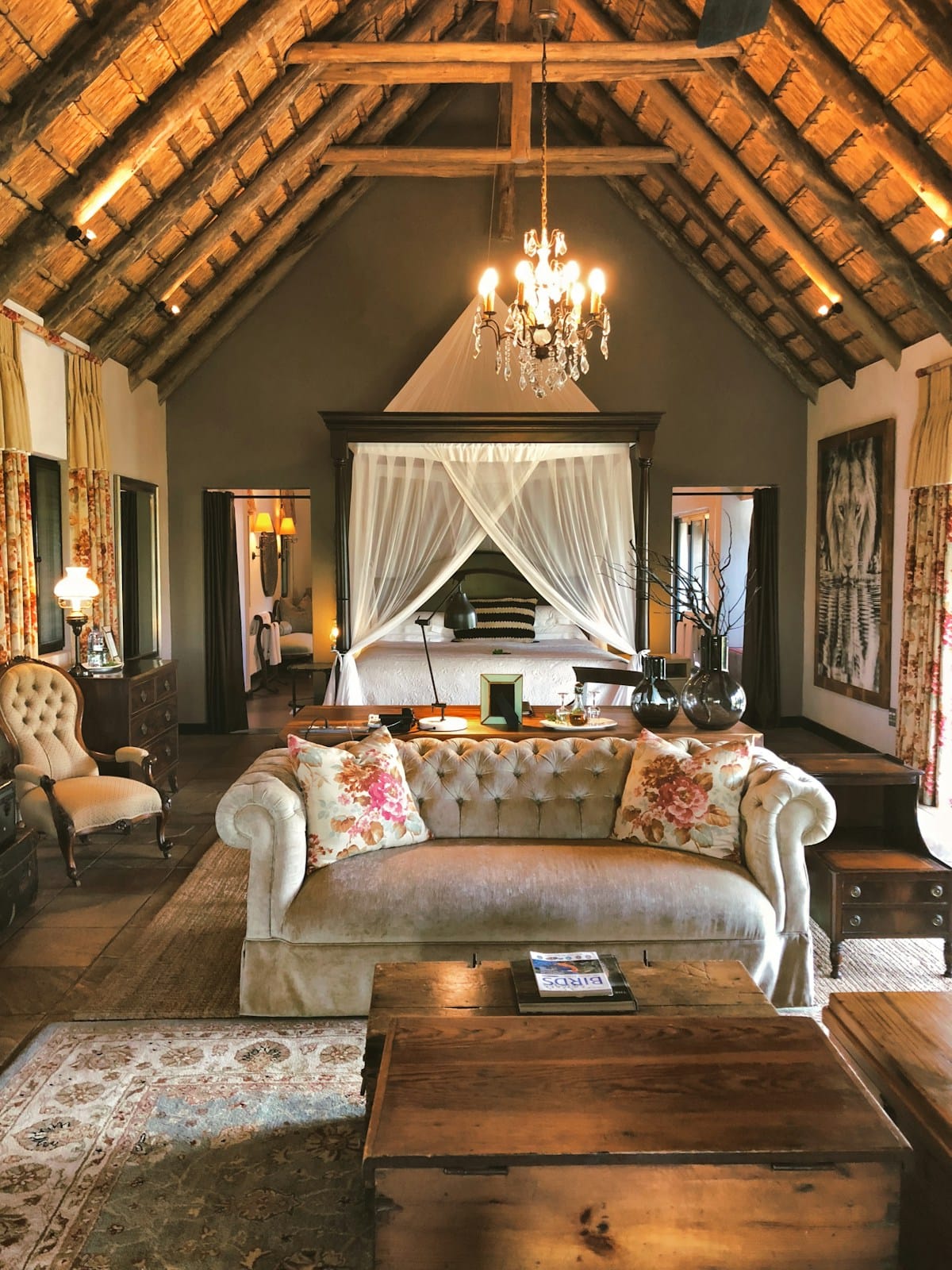
Lodge experience. Private camps are designed for exactly this kind of intensive short stay — private plunge pools, outdoor bush showers, fire pits, in-suite dinners available on request, and staff who genuinely remember your name and your preferences.
The Case for Kruger National Park
Kruger is 19,485 km² — larger than Israel. The wildlife density is extraordinary, and the self-drive experience has an intimacy of its own: you set your own pace, stop as long as you like, and stumble onto things independently. If you’re a seasoned safari traveller who has done private reserves before, the freedom of a national park is a different pleasure.
For honeymoons, though, most couples choose the private reserve. The structured day, the full-service lodge, and the professional guide create an experience that doesn’t require effort or planning once you’re there. Private reserve is the right choice unless you specifically want self-drive independence or are working to a tight budget.
Cost comparison (per person per night, all-inclusive, approximate 2026 rates):
| Option | Low end | High end |
|---|---|---|
| Kruger national park (SANParks camp) | R350/person | R2,200/person |
| Kruger border lodge (not in reserve) | R2,000/person | R4,500/person |
| Private reserve (mid-range) | R5,500/person | R10,000/person |
| Private reserve (luxury) | R15,000/person | R42,000/person |
SANParks national park camps are bookable at sanparks.org. Private reserves are booked directly with each lodge or through a specialist travel agent (Rhino Africa and Wilderness Safaris are both well-regarded).
Named Honeymoon Lodges by Reserve
Sabi Sand Game Reserve
The Sabi Sand is the most famous private concession in Africa — it borders western Kruger without a fence, so animals move freely between the park and the reserve. It has the highest density of leopard trackers and is the place in South Africa where you are most likely to see a leopard kill. The Sand River runs through several concessions, creating permanent water and concentrating animals year-round. For a full breakdown of camps by price tier — from Singita and MalaMala to the more accessible mid-range lodges — see our Sabi Sand lodge guide.
Singita Boulders Lodge — Six suites, each an individual villa facing the Sand River. Service modelled on a small European hotel rather than an African camp. Rates include all meals, house wines and spirits, twice-daily game drives, and conservation fees. From approximately R28,000–R42,000 per person per night as of 2026. Tell them it’s your honeymoon — private bush dinners are arranged for celebrating couples.
Singita Ebony Lodge — Twelve suites in the same Sabi Sand concession, slightly more social in atmosphere, same exceptional game viewing. From approximately R22,000–R38,000 per person per night all-inclusive.
Dulini Leadwood Lodge — Six suites, the same concession, operated by &Beyond at a notably lower rate. Open-vehicle drives from the same guide network as the adjacent properties. From approximately R8,500–R14,000 per person per night all-inclusive.
Cheetah Plains — Nine luxury villas, each with private pool and outdoor shower, on its own Sabi Sand concession. Adults-only. From approximately R12,000–R20,000 per person per night all-inclusive.
Lion Sands Ivory Lodge — Six large bush villas, private plunge pools, sleep-outs in the tree houses (Chalkley Treehouse) available as an add-on. From approximately R15,000–R24,000 per person per night all-inclusive.
Timbavati Private Nature Reserve
Timbavati adjoins Kruger from the north of Sabi Sand and shares the same unfenced boundary. Known for sightings of the rare white lion, though sightings are never guaranteed. More remote feel than Sabi Sand; fewer camps.
andBeyond Ngala Safari Lodge — Six tented suites on the Tiyisela River in the Ngala Private Game Reserve (adjacent to Timbavati). Private game drives, walking safaris, stargazing. From approximately R9,500–R15,000 per person per night all-inclusive.
Umlani Bushcamp — Eight reed-and-thatch chalets, no electricity in the camp, solar lanterns only. One of the most authentic bush experiences available in the Greater Kruger for under R5,000 per person per night.
Madikwe Game Reserve
Madikwe is the malaria-free option for couples who cannot take prophylaxis or prefer not to. A 75,000-hectare reserve in North West Province, bordering Botswana, with Big 5 and Africa’s largest sustainable wild dog population. Four hours by road from Johannesburg or a 45-minute charter flight.
Molori Safari Lodge — Five suites (each is a full-size villa with private pool and chef). Madikwe’s most exclusive property and one of the handful of genuinely world-class malaria-free lodges in Africa. From approximately R15,000–R22,000 per person per night all-inclusive as of 2026.
Madikwe Safari Lodge (Dithaba Camp) — The boutique camp within the Madikwe Safari Lodge complex, six suites, more intimate than the main lodge. From approximately R9,000–R14,000 per person per night all-inclusive.
Rhulani Safari Lodge — Six chalets, excellent wild dog sightings record, genuinely warm staff, strong value for Madikwe. From approximately R6,500–R10,000 per person per night all-inclusive.
Eastern Cape Private Reserves (Malaria-Free)
The Eastern Cape offers several large private reserves within four hours of Port Elizabeth (Gqeberha). All Big 5 are present; most reserves have successfully reintroduced lion and buffalo alongside the resident elephant, rhino, and leopard. No malaria risk.
Kariega Game Reserve — Five lodges across a 10,000-hectare reserve near Kenton-on-Sea. Main Lodge and Ukhozi Lodge are best for couples. From approximately R5,500–R8,500 per person per night all-inclusive as of 2026.
Kwandwe Private Game Reserve — The Eastern Cape’s most exclusive reserve. Four lodges, two of which (Ecca Lodge and Great Fish River Lodge) operate with just six suites each. From approximately R9,000–R16,000 per person per night all-inclusive.
Malaria: What You Need to Know
Which reserves are malaria zones?
| Reserve | Malaria risk |
|---|---|
| Sabi Sand (Mpumalanga) | Yes — prophylaxis required |
| Timbavati (Limpopo/Mpumalanga) | Yes — prophylaxis required |
| Madikwe (North West) | No — malaria-free |
| Pilanesberg (North West) | No — malaria-free |
| Eastern Cape reserves | No — malaria-free |
Prophylaxis options: Atovaquone-proguanil (Malarone), mefloquine, and doxycycline are all prescribed for South African malaria zones. Malarone is the most commonly used by short-stay visitors — it starts one to two days before travel and ends seven days after. Book an appointment with a travel health clinic at least four to six weeks before departure.
Risk level: The risk in the Greater Kruger is low relative to East and West Africa but is not zero, particularly from November to April (rainy season, more standing water, more mosquitoes). May to September (dry season) carries lower risk. Prophylaxis, long sleeves at dusk and dawn, and DEET-based repellent together give strong protection.
For couples who want to avoid malaria entirely: Madikwe, Pilanesberg, Kariega, and Kwandwe are all Big 5 reserves with no malaria risk and lodge standards that match or exceed the Greater Kruger mid-range tier. This is not a compromise — it is a genuinely excellent bush experience without the prophylaxis.
Best Months for a Safari Honeymoon
| Month | Condition | Verdict |
|---|---|---|
| Jan–Feb | Hot, rainy. Lush but thick vegetation. Birthing season for prey species. | Avoid for first-time safari |
| Mar–Apr | Rain easing. Birds beautiful. Migrant species present. Shoulder prices. | Good for birders |
| May–Jun | Start of dry season. Vegetation thinning. Animals beginning to concentrate at rivers. | Excellent |
| Jul–Aug | Peak dry season. Cool nights, warm days. Best wildlife visibility in Kruger. | Best for wildlife |
| Sep–Oct | Warm. Dry. Crowds building but still manageable. Last of dry season. | Very good |
| Nov | First rains. Migrant birds arrive. Animals more dispersed. | Good for birds, harder for mammals |
| Dec | Hot. Summer. High crowds and high prices across lodges. | Avoid peak weeks |
Our recommendation: May–August for the best wildlife. October for a balance of wildlife, shoulder prices, and warm evenings (comfortable for al fresco boma dinners).
Booking Your Safari Honeymoon
Book direct or through an agent? Most private lodges accept direct bookings and there is no cost difference. A specialist agent (Rhino Africa, Wilderness Safaris, &Beyond’s own team) adds value if you’re combining multiple reserves or properties, as they can negotiate room upgrades and honeymoon add-ons that won’t appear on a property’s own website.
What to book in advance: The top camps at Singita, Molori, and Lion Sands sell out six to twelve months ahead for peak dates (July–August, October, and December). Book the lodge first, then build the Cape Town and Garden Route legs around it.
What’s included: Most private reserve rates are all-inclusive — all meals, house spirits, twice-daily game drives, and bush walks. Confirm before booking what “all-inclusive” covers at a specific property; some exclude premium wines, spa treatments, or sleep-outs.
For the full Cape-to-safari route, see our 10-day honeymoon itinerary and our guide to the best honeymoon destinations in South Africa.
Before You Travel
Get these sorted before departure:
- Safaris & Tours in Kruger — browse game drives and packages from Hazyview and Nelspruit operators; useful for day visits around your main lodge stay
- Travel Insurance for South Africa — essential for medical evacuation from remote reserves; confirm your policy covers safari activities and helicopter medevac
- Car Hire in South Africa — for Cape Town and Garden Route legs before your bush segment; most lodge transfers are arranged separately
- eSIM for South Africa — arrive connected; useful for WhatsApp communication with lodge staff and operators from the moment you land