Search hotels in Port Elizabeth on Booking.com
The Eastern Cape is where families, honeymooners, and travellers on repeat visits to South Africa come when they want the full Big 5 safari experience without the health trade-offs that Kruger and northern KwaZulu-Natal require. No malaria prophylaxis. No course of doxycycline or Malarone to plan around. No risk assessment for children or pregnant travellers. The entire province sits outside the malaria belt, and it still holds some of the best-managed game reserves in southern Africa.
This guide covers every major reserve in the region, what wildlife you can realistically expect, entry fees and lodge price ranges, and how to plan a trip from either Cape Town or Johannesburg.
Why the Eastern Cape Is South Africa’s Premier Malaria-Free Safari Region
South Africa has several malaria-free safari options — Madikwe, Pilanesberg, and Welgevonden in the north, plus the entire Western Cape. But the Eastern Cape stands apart because it combines the widest selection of reserves at different price points with proximity to a major international gateway (Gqeberha/Port Elizabeth airport) and a landscape that feels genuinely wild, not suburban-adjacent.
The region’s climate is mild year-round. You will not encounter the 40°C heat spikes common in Limpopo during summer. The Eastern Cape thicket biome — dense, thorny bush interspersed with open grassland and riverine woodland — supports enormous biodiversity, including browsing species such as black rhino and kudu that need this kind of scrub country to thrive.
For a broader look at malaria-free options across the whole country, see our malaria-free safari South Africa overview.
The Main Reserves
Addo Elephant National Park
The only national park in the Eastern Cape’s safari cluster and the most accessible for independent travellers. Addo covers approximately 1,640 square kilometres in its core section, expanding to 180,000 hectares across its marine and Karoo wilderness sections.
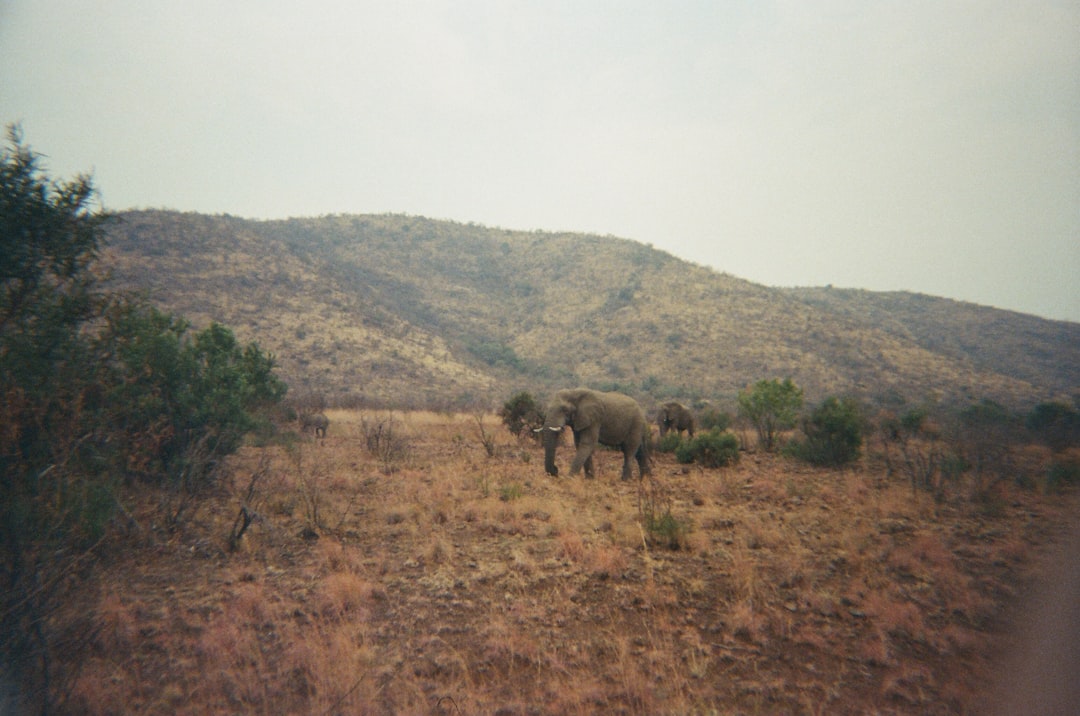
Wildlife: Over 600 elephants — the densest concentration of African elephants anywhere on the continent. Full Big 5 including lion, leopard, black rhino, and Cape buffalo. The park is also one of the few places in Africa where you can see the so-called Big 7 — elephant, lion, leopard, rhino, buffalo, great white shark (offshore in the marine section), and southern right whale (seasonal, June to November).
Entry fees (SANParks 2025/26): Approximately R480 per adult international visitor, R240 per child (2–11 years) per day as of 2026. Check current rates at sanparks.org before visiting — fees increase annually.
Self-drive vs guided: Addo is the only reserve in this group where self-drive game viewing is standard. You drive your own vehicle on a well-maintained gravel road network and encounter wildlife without a ranger. Guided game drives depart from main rest camps and cost approximately R700–900 per person as of 2026.
Getting there: 45–50 minutes by road from Gqeberha (Port Elizabeth), 75 minutes from Grahamstown (Makhanda). Most visitors fly into Gqeberha, collect a rental car, and drive directly. See our Gqeberha travel guide for airport and car hire details.
Accommodation in the park: SANParks runs the main Addo Elephant Park Rest Camp with chalets, rondavels, and camping. A 2-bed self-catering chalet costs approximately R2,200–3,000 per night as of 2026. For a full breakdown of lodge options at different price tiers, see our Addo Elephant National Park guide. Book Addo game drives and safari tours on GetYourGuide.
Shamwari Private Game Reserve
The most internationally recognised name in Eastern Cape safari, Shamwari is a 25,000-hectare private reserve with six lodges operating on the same concession, all sharing exclusive wildlife access.
Wildlife: Big 5, cheetah, wild dog. Shamwari’s lion prides and elephant herds are well-established. The reserve also runs the Shamwari Born Free centre, which rehabilitates captive-born lions and leopards — visitors can view the animals in large bomas as part of the conservation programme.
Lodges and prices (approximate, as of 2026):
- Long Lee Manor — flagship Victorian manor house, from approximately R8,000–10,000 per person per night all-inclusive
- Eagles Cradle Family Lodge — family units with private viewing decks, designed for children of all ages, from approximately R8,000 per person per night all-inclusive
- Bayethe Tented Lodge — ten luxury tents, adults-only, from approximately R9,500 per person per night
- Sarili Lodge — six-suite exclusive use, from approximately R18,000–22,000 per person per night
All rates include twice-daily game drives, all meals, and drinks. No day visits are permitted.
Getting there: Approximately 1 hour 15 minutes from Gqeberha by road.
Kwandwe Private Game Reserve
A 22,000-hectare reserve on the Great Fish River that prioritises exclusivity over volume. Kwandwe has five lodges, all small (between 6 and 9 rooms), and the wildlife density of both herbivores and predators is exceptionally high for a reserve of its size.
Wildlife: Big 5, cheetah, African wild dog, hyena, aardwolf. Kwandwe has one of the more reliable wild dog packs in the Eastern Cape — a species that requires large unfenced territories and is genuinely hard to see in Kruger.
Lodges and prices (approximate, as of 2026):
- Ecca Lodge — nine rooms, contemporary design, from approximately R11,000 per person per night all-inclusive
- Melton Manor — exclusive-use, six rooms, private chef and game vehicle, from approximately R15,000 per person per night
- Great Fish River Lodge — eight suites overlooking the river gorge, from approximately R12,500 per person per night
Getting there: Approximately 1 hour 45 minutes from Gqeberha by road, or guests can arrange light aircraft transfers from Gqeberha airport (approximately 20 minutes).
Pumba Private Game Reserve
A 6,500-hectare reserve near Grahamstown that sits at a more accessible price point than Shamwari or Kwandwe while still offering Big 5 game viewing with a dedicated ranger and tracker on every drive.
Wildlife: Big 5 including white rhino. Pumba is notable for its white lion programme — not albino but leucistic lions, a natural genetic variant. Significant cheetah population. Hippo and crocodile in the waterways.
Lodges and prices (approximate, as of 2026):
- Water Lodge — adults-only, suites with private pools overlooking a waterhole, from approximately R7,000–9,000 per person per night all-inclusive
- Msenge Bush Lodge — family-friendly, open-plan design, from approximately R5,500–7,500 per person per night all-inclusive
Getting there: Approximately 1 hour 30 minutes from Gqeberha by road, 20 minutes from Grahamstown (Makhanda).
Kariega Game Reserve
A 10,000-hectare private reserve bisected by the Kariega and Bushmans rivers, providing exceptional waterway game viewing alongside standard bush drives. Kariega is also known for its rhino conservation work — it was the site of a significant poaching incident in 2012, and the rehabilitation of injured rhinos (including Thandi, the most famous survivor) became an international conservation story.
Wildlife: Big 5, cheetah. The riverine terrain means hippo and crocodile are present alongside the standard Big 5 species.
Lodges and prices (approximate, as of 2026):
- Main Lodge — nine suites in colonial homestead style, from approximately R6,500–8,500 per person per night all-inclusive
- Ukhozi Lodge — adults-only, six suites with private plunge pools, from approximately R8,000–10,000 per person per night
- River Lodge — family-friendly, nine chalets, lower price point from approximately R4,000–5,500 per person per night all-inclusive
- Settlers Drift — tented camp on the river, six tents, from approximately R8,500 per person per night
Getting there: Approximately 1 hour 15 minutes from Gqeberha by road.
When to Go
The Eastern Cape is a genuine year-round destination — no single season is definitively wrong, and the trade-offs are manageable either way.
May to August (dry winter): The vegetation thins, making animals easier to spot against bare branches and brown grass. Temperatures are comfortable — daytime highs around 20–24°C, nights down to 8–12°C. Pack a fleece for early-morning game drives. This is the most popular season.
September to November (spring): Baby animals appear, birdlife increases, and the bush begins to green up. Temperatures are warming but not yet oppressive. Arguably the best all-round season.
December to February (summer): Lush green landscape, active predator behaviour, and peak calving season. Heat is manageable in the Eastern Cape — daytime highs rarely exceed 32°C. This period coincides with South African school holidays, so book lodges several months in advance.
March to April (autumn): Fewer crowds, lower prices at some lodges, pleasant temperatures. A strong shoulder-season choice.
Getting There
By air: Gqeberha (Port Elizabeth, IATA: PLZ) is the primary gateway. Direct flights operate from Johannesburg O.R. Tambo (approximately 1 hour 30 minutes, from approximately R1,200–2,800 one-way as of 2026) and Cape Town International (approximately 1 hour 20 minutes, from approximately R1,000–2,500 one-way). Book flights from Johannesburg via our flights to South Africa guide.
By road from Cape Town: Approximately 7–8 hours along the N2, passing through the Garden Route. Many travellers combine an Eastern Cape safari with a Garden Route road trip — the reserves sit at the Garden Route’s eastern terminus.
By road from Johannesburg: Approximately 10–11 hours. Flying is almost always more practical unless you are combining with an overland road trip.
Car hire: A standard sedan is adequate for Addo (tarred roads to the main entrance, gravel inside). For the private reserves, you are driven in the lodge’s game vehicle — no personal vehicle is required once you arrive.
Accommodation Tiers
Self-Catering and Budget (Addo Only)
SANParks camps at Addo provide the only genuine budget option in the Eastern Cape safari cluster. Camping sites from approximately R380 per site per night. 2-bed chalets from approximately R2,200 per night. Backpacker beds from approximately R360 per person per night as of 2026. Meals are self-catered or available from the camp restaurant.
Mid-Range Private Reserves (R3,500–R7,000 Per Person Per Night)
Kariega River Lodge and Pumba Msenge Bush Lodge sit at the accessible end of the private reserve spectrum without sacrificing guided game drives or the all-inclusive format. All meals, safari activities, and conservation levies are typically included.
Luxury Private Reserves (R7,000–R15,000 Per Person Per Night)
Shamwari’s main lodges, Kwandwe Ecca, Pumba Water Lodge, and Kariega Ukhozi operate at this tier. Expect private plunge pools, dedicated butler service, curated wine lists, and spa facilities alongside the game drives.
Ultra-Luxury and Exclusive Use (R15,000+ Per Person Per Night)
Kwandwe Melton Manor, Shamwari’s Sarili Lodge, and Kariega Settlers Drift represent the top tier — exclusive-use properties with private vehicles, customised programmes, and rates that include everything from helicopter transfers to private chef dining in the bush.
Eastern Cape vs Other South African Safari Regions
The Eastern Cape competes primarily with Madikwe and Pilanesberg (both malaria-free) and Kruger (malaria risk, northern sections). The Eastern Cape’s main advantages are the diversity of reserves at different price points, the accessibility from both Cape Town and Johannesburg, and the combination of bush, coast, and winelands within a single region.
Kruger’s scale and wilderness feel remain unmatched — a week in the Kruger biosphere is a different experience from three days at a 25,000-hectare Eastern Cape reserve. But for travellers who want to avoid malaria medication, need the flexibility to include children or elderly relatives, or are combining safari with a coastal or wine country itinerary, the Eastern Cape is consistently the stronger choice.
For the full comparison of malaria-free options across South Africa including Madikwe and Pilanesberg, see our malaria-free safari guide.
For more on planning the wider Eastern Cape region including the Wild Coast and Jeffreys Bay, see our Eastern Cape travel guide.
Browse Eastern Cape tours and safari experiences on GetYourGuide.