Search hotels in Stellenbosch on Booking.com
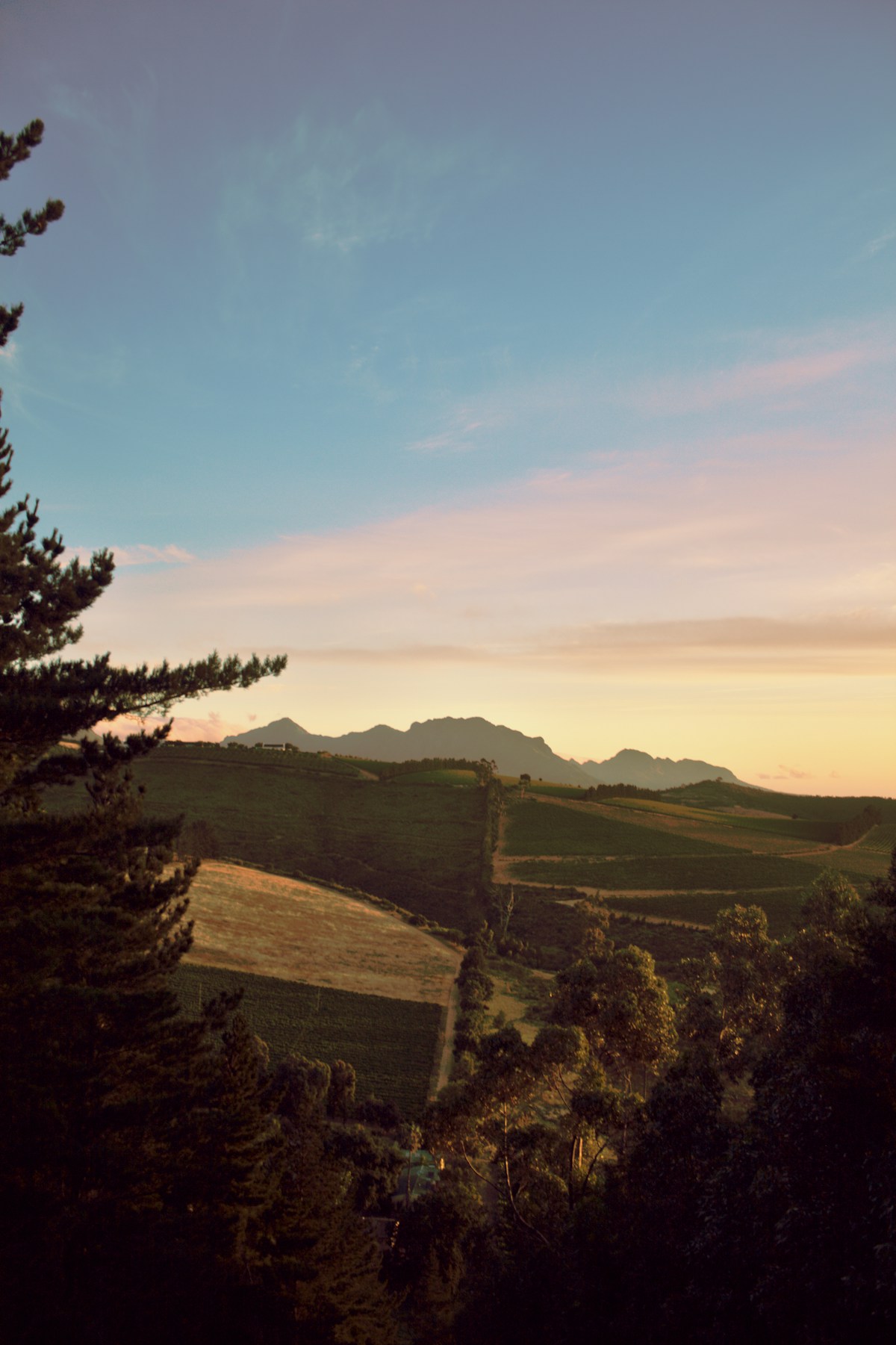
Many first-time visitors plan a “Cape Winelands” trip and mean Stellenbosch. That’s not wrong - Stellenbosch is the heart of wine country and can absorb as much time as you give it. But the Cape Winelands is a broad region of distinct valleys, each with different wine styles, landscapes, and personalities. This guide explains the difference, helps you decide how much of the Winelands to explore, and tells you how to make the most of each area.
The Difference: Stellenbosch vs the Cape Winelands
The Cape Winelands is a geographic and tourism region covering the wine-producing valleys of the Western Cape. Its main constituents:
| Valley | Character | Signature wines |
|---|---|---|
| Stellenbosch | SA’s red wine heartland, university town | Cabernet Sauvignon, Bordeaux blends |
| Franschhoek | French-influenced, fine dining, boutique | Chardonnay, Chenin Blanc, Cap Classique |
| Paarl | Broader, family-friendly, diverse estates | Shiraz, Chenin Blanc, Viognier |
| Robertson | Cooler inland valley, off-tourist-trail | Chardonnay, Shiraz, Muscadel |
| Elgin | High-altitude cool-climate | Pinot Noir, Sauvignon Blanc |
| Constantia | Historic, closest to Cape Town | Sauvignon Blanc, red blends |
| Walker Bay/Hemel-en-Aarde | Coastal, wine + whale watching | Pinot Noir, Chardonnay |
Stellenbosch is within this region - the biggest, most central valley, and the best starting point. But treating the two as synonymous means missing Franschhoek’s restaurants, Paarl’s family estates, or Elgin’s extraordinary Pinot Noir.
Quick Verdict: What to See in How Much Time
| Time available | Recommendation |
|---|---|
| Half day | Stellenbosch town only - architecture walk, one estate (Spier or Simonsig) |
| Full day | Stellenbosch (morning) + Franschhoek (afternoon) via Helshoogte Pass |
| 2 days | Add Paarl or Constantia; stay overnight at an estate |
| 3–4 days | Full Winelands loop - Stellenbosch, Franschhoek, Paarl, Robertson or Elgin |
| 1 week+ | Proper wine country immersion - stay at a farm, cycle between estates |
Stellenbosch: What to Expect
Stellenbosch is simultaneously one of South Africa’s oldest towns and home to one of its largest universities. The combination of 17th-century Cape Dutch architecture and student energy is unique. Dorp Street and Church Street are lined with whitewashed gabled buildings converted into restaurants, galleries, and wine shops.
Top estates within 20 minutes of town:
- Rust en Vrede - benchmark Cabernet; serious red wine destination. Tastings from R200 (US$11)
- Kanonkop - Pinotage and Paul Sauer Bordeaux blend. By appointment. From R180 (US$10)
- Warwick - bicycle tours, Lady of the Night Cabernet Franc. From R180 (US$10)
- Spier - largest estate, most family-friendly; eagles, restaurants, tasting from R100 (US$6)
- Delheim - scenic location, lunch at the Manor House restaurant
Walking tour of Stellenbosch town: Start at the Village Museum (R60/adult, US$3), walk Dorp Street, turn on Church Street toward the Botanical Gardens, and end at the University Botanical Garden. The whole circuit is 3–4 km. Free except museum entry.
The Broader Winelands: What You Miss by Staying in Stellenbosch Only
Franschhoek Valley (30 km from Stellenbosch): A small valley with a concentrated strip of South Africa’s best restaurants. The Franschhoek Wine Tram (hop-on-hop-off) connects 20+ estates. This valley is best for people who want a fine dining and sparkling wine focus. Babylonstoren’s biodynamic farm estate and Haute Cabrière’s cliff-face cellar are not replicable elsewhere in the Winelands.
Paarl (15 km north of Stellenbosch): Paarl is the Winelands’ workhorse - large family-friendly estates (Fairview with its goat tower is the most visited), broader style, less crowd pressure than Stellenbosch on weekends. The Paarl Rock viewpoint (granite domes overlooking the valley) is one of the Western Cape’s great panoramas. Estate entry: R80–R150/person (US$4–US$8) typically.
Constantia (30 minutes from Cape Town, not part of the central Winelands): Historically the oldest wine-producing area in South Africa (Groot Constantia, founded 1685). Now surrounded by Cape Town’s southern suburbs. Excellent Sauvignon Blanc and historic manor houses (Groot Constantia R80 entry for the estate/US$4). Easy to combine with a Cape Town day.
Robertson (130 km east of Stellenbosch): Off the standard tourist track. The Robertson Wine Valley runs along the Breede River and produces Chardonnay and Shiraz at prices significantly lower than Stellenbosch or Franschhoek. Springfield Estate and De Wetshof are standouts. Good if you’re self-driving east toward Oudtshoorn.
Wine Tasting Costs and What to Expect
Wine tasting fees have increased significantly across the Winelands since 2020. A typical “tasting flight” of 5–6 wines costs R100–R250/person (US$6–US$14) at most estates as of 2026. Premium estates with large wine portfolios or sommelier-led experiences charge R200–R400 (US$11–US$22). Most tastings are waived if you purchase above a certain amount (typically R250–R400 worth of wine).
Booking in advance is recommended for popular estates on weekends, particularly November–March. Many of the best experiences (estate lunches, cellar tours, bicycle tastings) require pre-booking.
Logistics: Getting Around the Winelands
Rental car: Most flexible. The R44 and R310 connect Stellenbosch to Franschhoek (30 min), Stellenbosch to Paarl (20 min). Do not drink and drive - this is non-negotiable and rigorously enforced in South Africa.
Wine tour from Cape Town: Guided full-day tours with a driver run R1,200–R2,500/person (US$66–US$138) as of 2026. Price typically includes transport and 3–4 estate stops; tastings billed separately.
Franschhoek Wine Tram: Self-guided, excellent for the Franschhoek Valley. Day pass R360–R420 (US$20–US$23); transport only.
Cycling: Stellenbosch estates are bikeable on good weather days. Several operators offer guided wine cycling tours from R850–R1,200 (US$47–US$66).
Staying in the Winelands
If you’re staying overnight rather than day-tripping, the Winelands becomes a very different experience - quieter evenings, morning drives through vineyard mist, estate breakfasts.
Stellenbosch:
- Lanzerac Hotel & Spa - from R5,500/night (US$302)
- Devonvale Golf & Wine Estate - from R2,200/night (US$121)
- Stumble Inn Hostel - budget, dorms from R280 (US$15)
Franschhoek:
- Akademie Street Guesthouses - from R2,500/night (US$138)
- Le Franschhoek Hotel - from R3,800/night (US$209)
Search hotels in Franschhoek on Booking.com
Farm stays (most memorable):
- Babylonstoren - from R5,000/night (US$275); all meals farm-fresh
- La Motte Estate - cottages from R3,500/night (US$192)
All prices are approximate as of 2026.
Best For
Stellenbosch only (half day to one day):
- First visit to SA wine country
- Short trip from Cape Town
- Combination of food, architecture, and wine without committing to a region
Full Cape Winelands exploration (2+ days):
- Wine enthusiasts who want to compare styles
- Longer stays (7+ days in the Western Cape)
- Accommodation at a farm estate for a complete immersive experience
The Winelands as a whole rewards as much time as you give it. A half day in Stellenbosch is worthwhile. A full week based at an estate is one of the best ways to experience the Western Cape that isn’t Table Mountain.
Read our full Stellenbosch guide for specific estate and restaurant recommendations. For Franschhoek, see the Franschhoek Wine Tram activity page. For broader South Africa travel planning, see our best time to visit guide.
Ready to plan your trip? Cape Winelands Tours, Car Hire in Cape Town, or Tours & Activities in Cape Town.
See Also
- Cape Winelands day trip from Cape Town - how to plan your day from the city
- Stellenbosch wine tours - guided cellar-door tours from Cape Town with transport included
- Wine tasting in the Cape Winelands - estate-by-estate guide for the whole region
- Stellenbosch vs Franschhoek comparison - the two main wine towns compared
- Cape Town food guide - the city’s restaurant scene for context
- Western Cape region guide - the Winelands in the broader Western Cape
- Cape Town vs Johannesburg comparison - if you’re still deciding which city to base your trip around
- Garden Route vs Wild Coast - the next coastal route decision after the Winelands
Plan Your Trip
✈️ Book your flights to South Africa 🛡️ Get travel insurance 📱 Stay connected with an eSIM 🚗 Rent a car