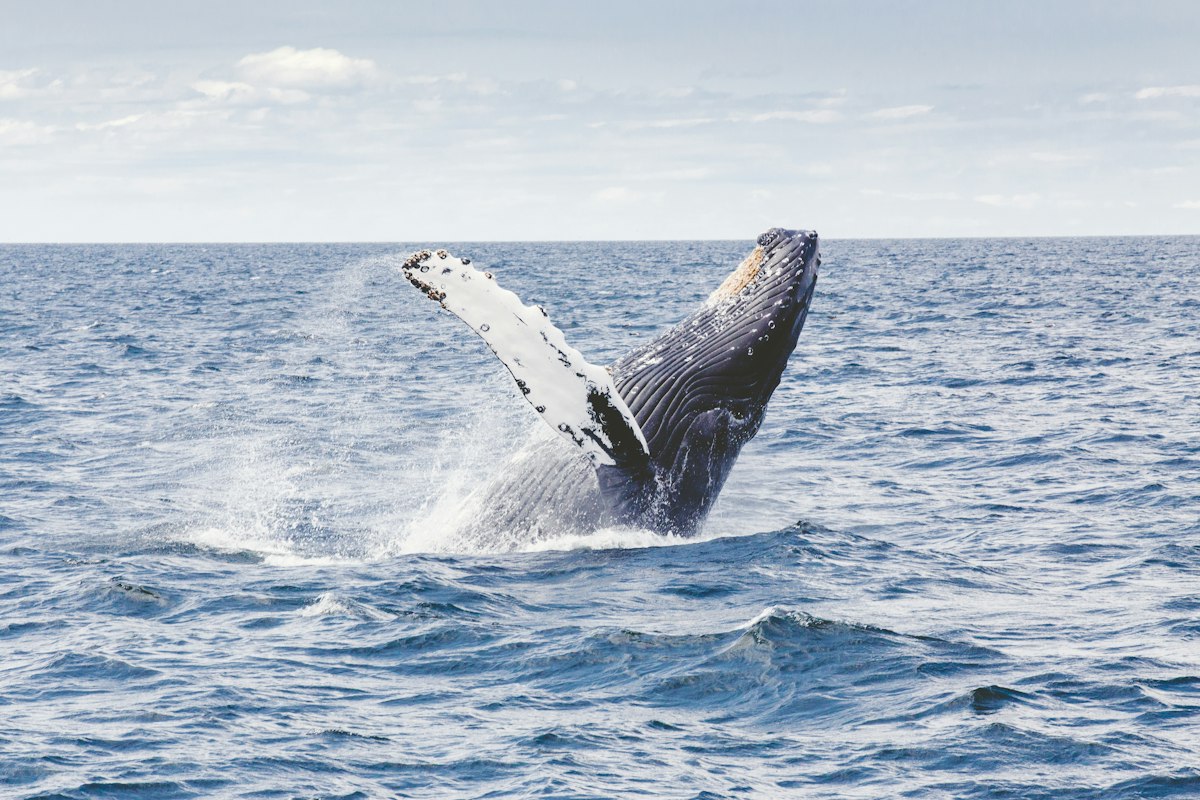
South Africa is one of the best places in the world to watch whales from the shore, and the Western Cape coastline is the centre of that experience. Every year, southern right whales migrate from Antarctic feeding grounds to Walker Bay, where they calve and nurse their young in calm, sheltered waters. We have been following this migration for years, and the window is reliably good from June through November, with a peak that consistently falls in September and October.
Why Hermanus?
Hermanus sits at the top of Walker Bay on the Overberg Coast, roughly 120 km east of Cape Town. The town has a dedicated whale crier who walks the streets blowing a kelp horn when whales are spotted, which tells you everything you need to know about how central this is to local life.
The cliff-top path along the rocky coastline gives unobstructed views across the bay. On a clear September morning you can spot five or six animals from a single vantage point without a boat, binoculars, or a tour guide. The Hermanus New Harbour also runs licensed boat-based watching trips that bring you within 50 metres of surfacing adults.
Month-by-Month Guide
June is the start of the season. Whales arrive from late May, and by mid-June the bay holds a reliable population. Numbers are building but sightings are not yet guaranteed every day. Accommodation is cheaper and the town is quieter than the September peak. Average water temperature around the bay drops to around 12 degrees Celsius, so bring a jacket for cliff walks.
July brings more consistent sightings. The population grows through the month. Walker Bay sees its first cow-and-calf pairs, which are often more active and easier to photograph than solitary adults. The Whale Festival, usually held in late September, draws crowds, but July is still uncrowded and excellent value. Expect whale sightings on most clear-weather days.
August ramps up further. The bay can hold 30 or more animals simultaneously by late August. This is also when orca pods occasionally appear in the bay, though sightings remain uncommon. We rate August as a strong month because you get near-peak whale numbers without the festival crowds.
September is the peak of the season and the single best month for whale watching in South Africa. The bay is at maximum population and females with calves are highly active. Breaching, lob-tailing, and spyhopping are all common. The Hermanus Whale Festival (traditionally held in the last weekend of September) brings food stalls, markets, and live music. Accommodation books out early, so reserve at least two to three months ahead. Rates at guesthouses typically run R1,200 to R3,500 per night in September.
October remains excellent and is our preferred month for visitors who want good whale numbers without the festival pressure. The calves are growing, the weather is warming toward summer, and wildflowers from the Overberg fynbos are still visible on the Cliff Path. Boat trips from Hermanus New Harbour cost approximately R1,500 per adult for a two-hour trip.
November is the tail end of the season. Some animals remain, but numbers thin noticeably from mid-November onward as the whales begin their return journey south. If you are combining whale watching with a Garden Route road trip, November lets you time both in one itinerary as the whale season winds down and summer beach conditions improve.
Land-Based vs Boat-Based Watching
Land-based watching from the Cliff Path is free, endlessly accessible, and remarkably productive during peak season. The path runs 12 km from Grotto Beach to beyond New Harbour. We recommend the section between the Old Harbour Museum and Windsor Hotel for reliable close-approach sightings.
Boat-based trips must be licensed under the Marine Living Resources Act. Operators must maintain a 300-metre distance from whales unless the animal approaches the vessel. Licensed operators include Southern Right Charters at New Harbour. Trips run approximately two hours and prices in 2026 start at around R1,500 per adult.
Beyond Hermanus
Southern right whales are not exclusive to Hermanus. De Kelders near Gansbaai, roughly 45 km east, is known as one of the world’s best land-based whale watching sites and sees fewer visitors. Witsand in the Breede River estuary is another reliable calving ground. Along the Garden Route, Plettenberg Bay hosts humpback and Bryde’s whales during summer, though peak activity there runs December to February rather than mid-year.
Practical Notes
We recommend three nights minimum in Hermanus during the July to October window. Self-drive from Cape Town takes around 90 minutes via the N2 and R43. The Hermanus Tourism office on Mitchell Street maintains a real-time whale sighting board. Accommodation during September fills months in advance; outside of the festival weekend, July and October offer the best combination of reliable sightings and availability.
For the full South Africa travel calendar including safari timing, see our best time to visit guide.