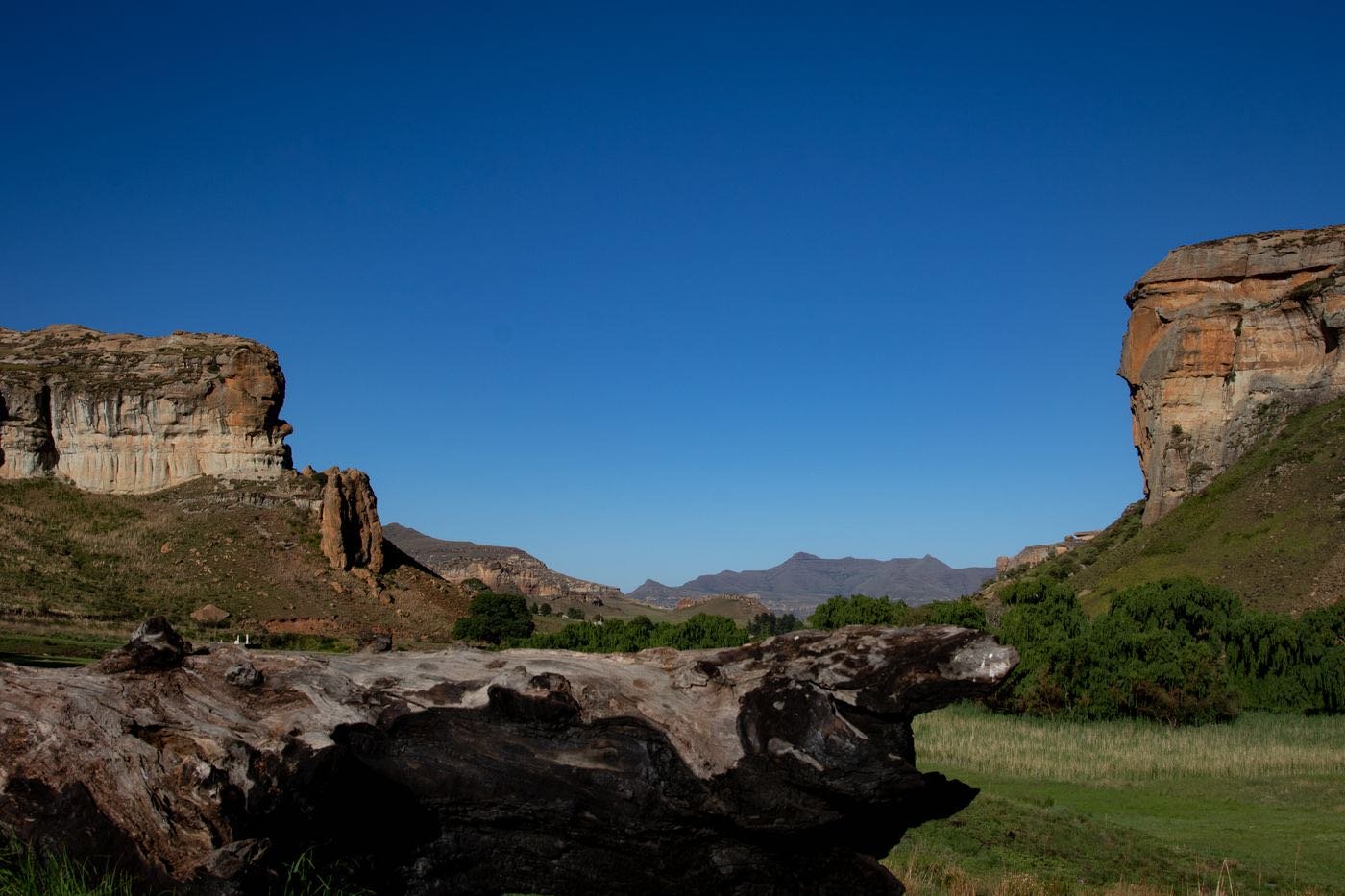
The best hikes in South Africa are Platteklip Gorge and Lion’s Head in Cape Town, Tugela Gorge and the Amphitheatre in the Drakensberg, and the multi-day Giant’s Cup and Otter Trails. They range from a two-hour morning walk to a five-day coastal trek. Most need no technical skill, but several require permits and early starts.
We have grouped them by effort. For a deeper look at the Drakensberg, see our Drakensberg hiking guide. Distances and fees below are approximate as of 2026, and the trail operators set the final numbers.
| Hike | Distance and time | Note |
|---|---|---|
| Platteklip Gorge, Cape Town | About 2 to 3 hours up | No entry fee for the walk |
| Lion’s Head, Cape Town | About 2 to 3 hours return | Chains and ladders near the top |
| Tugela Gorge, Drakensberg | About 14 km return, 5 to 6 hours | Gentle gain, short scrambles |
| Amphitheatre via the Sentinel | Day hike, escarpment above 3,000 m | Fixed chain ladders |
| Giant’s Cup Trail | About 60 km, 5 days | Permit via Ezemvelo KZN Wildlife |
| Otter Trail | About 45 km, 5 days, 4 nights in huts | Tide timings matter |
1. Platteklip Gorge, Table Mountain (Cape Town)
Platteklip Gorge is the direct route up the front of Table Mountain, a steep climb that most fit walkers finish in about two to three hours. The path follows a rocky gully and offers little shade, so carry plenty of water.
Getting there: the trailhead is on Tafelberg Road, a short ride-hail from the city centre. There is no entry fee for the walk, though the cable car down is paid.
Local tip: start before 8 am in summer, and check cloud conditions, because the plateau can disappear into mist within minutes. See our Table Mountain guide for more.
2. Lion’s Head (Cape Town)
Lion’s Head is shorter and more social than Platteklip, about two to three hours return, with a spiral path around the peak and a final section using chains and ladders. The summit views take in Table Mountain, Camps Bay and the Atlantic. Our Lion’s Head hike guide covers the trailhead, chains, bypass route, sunrise and full moon hikes.
Best time: sunrise or late afternoon in the warm months. Locals also run group hikes around full moon, which is a safer way to experience it after dark. Confirm current arrangements before planning around them.
Local tip: do not hike on your own on quiet days, and keep valuables out of sight in your car. Join a Cape Town guided hike if you want a leader.
3. Tugela Gorge, Royal Natal National Park (Drakensberg)
The walk to the base of Tugela Falls is about 14 km return, with only gentle elevation gain, and takes five to six hours with time at the falls. The gorge section includes short scrambles through tunnels in the cliff face.
Getting there: the trailhead is inside Royal Natal National Park in KwaZulu-Natal. A conservation fee is payable at the gate; the Drakensberg page lists current figures.
Local tip: go between April and September, when skies are clearer and afternoon storms are less common. Read the Drakensberg destination guide before you choose a base.
4. The Amphitheatre via the Sentinel and Chain Ladders (Drakensberg)
The Sentinel hike to the Amphitheatre summit is a self-guided day hike that ends with fixed chain ladders on the cliff face. The reward is the edge of the escarpment above 3,000 m, with views over the Amphitheatre wall.
What to know: start from the Sentinel car park off the R712 near Witsieshoek, and begin early, because the plateau can cloud over by early afternoon. Altitude can cause headaches, so ascend gradually. The ladders are exposed but manageable for confident walkers.
Local tip: sleeping nearby, at the mountain lodge or in the park, makes a dawn start realistic. See where to stay in the Drakensberg.
5. Giant’s Cup Trail (Southern Drakensberg)
The Giant’s Cup Trail is a five-day, roughly 60 km hut-to-hut route through the southern Drakensberg, from the Sani Pass area to Bushman’s Nek. You sleep in designated huts and carry your own food and sleeping bag.
What to know: the trail requires a multi-day permit booked through Ezemvelo KZN Wildlife, so reserve well in advance. The stages are moderate, and the area is known for open grassland, streams and rock art.
Local tip: book the huts early for April to September, which is the best weather window.
6. The Otter Trail (Tsitsikamma, Garden Route)
The Otter Trail is South Africa’s best-known coastal hike, about 45 km over five days with four nights in huts along the cliffs and beaches of Tsitsikamma. It crosses rivers and rock platforms, and tide timings matter on some stages.
What to know: numbers are limited each day, so book through SANParks as soon as dates open and expect to plan months ahead. Pack waterproof liners for your gear, since river crossings and sea spray are normal.
Getting there: the start is near Storms River on the Garden Route. See our Tsitsikamma guide and Garden Route tours if you prefer a shorter coastal day instead.
How to Choose
Short on time in Cape Town: Lion’s Head. A first big day in the mountains: Tugela Gorge. A strong day hiker with a head for heights: the Amphitheatre. Several days to spare: Giant’s Cup or the Otter Trail. For timing across the year, see our best time to visit South Africa page.
What to Pack and How to Stay Safe
Weather in the mountains changes quickly, so pack a waterproof layer and a warm top even on a sunny morning. Carry at least two litres of water per person on day hikes, sun protection and a charged phone with offline maps. Start early so you finish in daylight.
On Table Mountain and Lion’s Head, hike in a group and leave valuables at your accommodation. In the Drakensberg, sign the mountain register at the trailhead where one is provided, and tell your lodge your route and expected return time. Afternoon lightning is a real risk above 2,500 m in the summer rainy season, so be off the high ground by early afternoon from October to March.
For multi-day trails, check the operator’s gear rules. Hut trails such as Giant’s Cup and the Otter Trail have limited group sizes, set start dates and rules on food storage, so read the booking confirmation carefully.