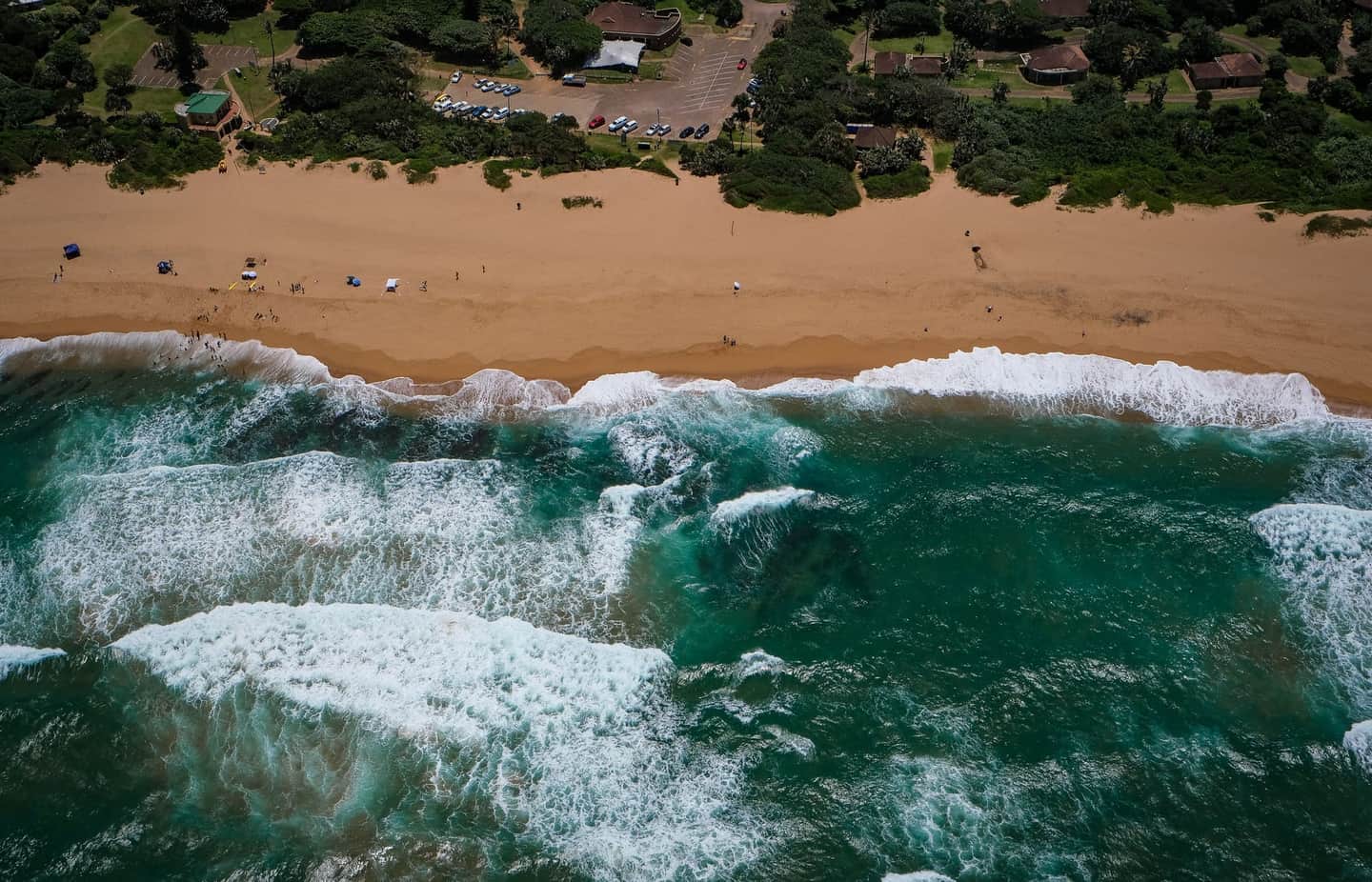
St Lucia is one of the few towns in Africa where the wildlife genuinely comes to you. After dark, hippos wander up from the estuary and graze on the lawns of the residential streets, while crocodiles bask on the sandbars within sight of the main beach. The Indian Ocean is ten minutes on foot from the town centre — and in season, whale sharks cruise the nearshore waters. Add Hluhluwe-iMfolozi’s Big Five 50 kilometres north and the result is one of the most wildlife-dense small towns on the continent.
The town is the main gateway to iSimangaliso Wetland Park, South Africa’s first UNESCO World Heritage Site. iSimangaliso protects a 332-kilometre coastal strip combining five distinct ecosystems — the estuary and hippo-rich lake system behind the town, dune forests, Indian Ocean beaches, offshore coral reefs, and open ocean. St Lucia sits at the southern end of this system, compact enough to cover on foot, with enough operating in a single square kilometre to fill a week without touching a car key.
Hippos in the Streets
The St Lucia Estuary contains the highest concentration of hippos in Africa outside of a national park — approximately 800 animals in the lake system at any one time. By day, they rest in the shallows of Lake St Lucia and the channels connecting it to the ocean. From dusk, they leave the water and spread out across the surrounding terrain to graze, and the terrain directly in front of them is the town.
This is not theatre. The municipality issues advisories and local guesthouses brief arriving guests: do not walk after dark without a torch and awareness of the surroundings. Hippos are territorial, fast over short distances, and responsible for more human deaths in Africa than lions, leopards, or buffalo combined. The encounters are also extraordinary — a fully grown hippo at five metres on a residential street, utterly indifferent to your presence, is a reminder that this town exists at the edge of something genuinely wild.
Crocodiles are similarly abundant. The estuary banks and the southern shore of Lake St Lucia hold substantial numbers; do not enter the water anywhere in the estuary or lake system.
Estuary Boat Safaris
The standard first activity for any St Lucia visitor is a 90-minute boat safari on the estuary. Multiple operators — including Advantage Tours, St Lucia Wetlands Boat Trips, and the iSimangaliso Authority — run scheduled morning and afternoon departures from the jetty at the end of McKenzie Street. Rates run from approximately R350–R450 per person as of 2026.
The boats move slowly through channels lined with papyrus reed and mangrove, and hippos are virtually guaranteed. Crocodiles are reliable year-round. Waterbirds are exceptional — goliath heron, African fish eagle, African spoonbill, and the pink-backed pelican are all commonly seen on a single trip. During the October-to-February turtle season, the boats sometimes encounter leatherback or loggerhead turtles heading in from the open ocean.
Book boat safaris and iSimangaliso tours to compare operators and secure departures in advance — trips fill quickly during South African school holidays.
Whale Shark Snorkelling
From approximately April to July, whale sharks aggregate in the warm Mozambique Channel waters off the KwaZulu-Natal coast. Operators based at St Lucia and the nearby dive hub of Sodwana Bay (60 kilometres north) run day trips combining a boat transit and snorkelling alongside the sharks. Encounters are not guaranteed, but the season, which peaks in May and June, is more consistent here than at most other whale shark destinations.
Half-day whale shark trips depart from St Lucia harbour and run approximately R1,500–R1,800 per person including wetsuit and snorkelling equipment as of 2026. Trips typically last four to five hours including the transit out to the feeding grounds. Whale sharks are filter feeders and entirely non-threatening to snorkellers; the only challenge is keeping pace with a three-to-ten-metre animal moving with apparent effortlessness through open ocean.
Outside whale shark season, the offshore waters hold humpback whales (June–November) and bottlenose dolphins year-round.
Turtle Nesting Season
Between October and March, leatherback and loggerhead turtles haul themselves out of the Indian Ocean onto the beach north of St Lucia town to lay eggs. South Africa’s northern KwaZulu-Natal coast is one of the southernmost regular nesting sites for leatherback turtles, and iSimangaliso protects the most important loggerhead nesting beaches in the southern hemisphere.
The iSimangaliso Authority runs guided turtle tours after dark during the nesting season. Groups of eight to ten accompany a guide to a monitored section of beach and wait without artificial light for a nesting female to emerge. Sightings are not guaranteed on any single night, but success rates across a two-night visit are high during the peak nesting period (November–January). Rates are approximately R550–R650 per person as of 2026.
Book ahead — these tours are fully booked weeks in advance during South African Christmas and New Year school holidays.
Fishing
St Lucia has a long tradition as one of South Africa’s top shore and boat fishing destinations. The estuary mouth and the open beach north of town hold large shoals of shad (elf), kob, garrick, and blacktip sharks throughout much of the year. The mouth of the St Lucia estuary is a protected area and fishing regulations are strictly enforced — permits are required and are available from the iSimangaliso Authority office on the main road. Many guesthouses can connect arriving anglers with local guides who know current run patterns and bait.
Day Trip to Hluhluwe-iMfolozi
Africa’s oldest proclaimed game reserve sits approximately 50 kilometres north of St Lucia — about an hour’s drive via Hluhluwe village. Established in 1895, Hluhluwe-iMfolozi holds the full Big Five and is the global stronghold for white rhino conservation, with the population that seeded recoveries worldwide. The combination with iSimangaliso makes northern KZN one of the most rewarding wildlife circuits in South Africa: hippos and turtles one day, rhino and lion the next.
Self-drive is straightforward: the roads are graded and accessible for standard 2WD vehicles, and the main Hilltop Camp in the Hluhluwe section has a restaurant, fuel, and accommodation. Gates open at 05h00 in summer. Conservation fee approximately R360 per international adult per day. Guided safaris in Hluhluwe-iMfolozi are available for those who prefer a guide.
Getting to St Lucia
St Lucia is approximately 280 kilometres north of Durban, around three hours via the N2 highway. There is no public transport — self-drive is the standard option, or a private transfer from Durban or Richard’s Bay.
Richard’s Bay Airport (RCB) is the closest airport at approximately 60 kilometres south (45 minutes), served by Airlink flights from Johannesburg (1 hour) and Durban (20 minutes). King Shaka International Airport (Durban) is 230 kilometres south and serves more routes including direct connections to Cape Town and Johannesburg.
Malaria
St Lucia and the entire iSimangaliso system are in a malaria risk zone. The risk is highest from October through April when temperatures and rainfall increase. Consult a travel health clinic at least a week before departure, carry DEET-based repellent, and sleep under a mosquito net where provided. The risk drops in the dry season (May–October) but does not disappear — prophylaxis is still recommended.
Where to Stay
For a full accommodation breakdown by area and budget, see our St Lucia where-to-stay guide, covering town centre guesthouses, estuary-frontage lodges, self-catering houses on the northern shore, and SANParks camps inside the park. Alternatively, search current availability and rates on Booking.com.