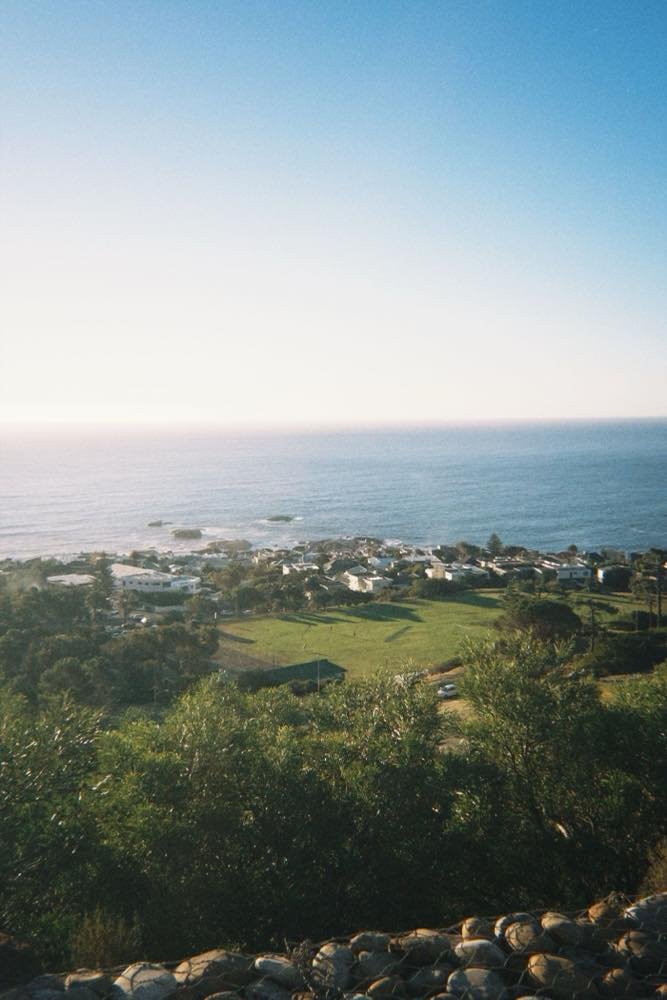
The best free things to do in Cape Town are the Sea Point promenade, Clifton and Camps Bay beaches, a self-guided hike up Table Mountain or Lion’s Head, a walk through Bo-Kaap, the Company’s Garden, Muizenberg and Kalk Bay, and sunset on Signal Hill. None needs a ticket. Allow three or four days to see them all.
Cape Town has a reputation as an expensive stop, but much of what visitors remember costs nothing. We lean on the city’s public spaces: the mountain, the seafront, the old Dutch gardens and the False Bay shoreline. For paid highlights, see our Cape Town things to do guide and the best tours in Cape Town. Prices for anything paid are approximate and dated 2026.
| Spot | Cost | Key detail |
|---|---|---|
| Sea Point promenade | Free | Several flat kilometres, best in the last hour before sunset |
| Clifton and Camps Bay | Free entry | Arrive before 10 am on a hot weekend |
| Platteklip Gorge or Lion’s Head | Free | About 2 to 3 hours each |
| Bo-Kaap | Free to walk | Weekday mornings are quieter |
| Company’s Garden | Free | Founded in 1652 |
| Muizenberg and Kalk Bay | Free | 30 to 45 minutes from the centre by car |
| Signal Hill | Free | Arrive 45 minutes before sunset |
1. Walk the Sea Point Promenade
The paved seafront at Sea Point runs for several kilometres along the Atlantic, between Mouille Point and Bantry Bay. It is flat, lit in the evening and used all day by runners, dog walkers and families. There are outdoor gym stations, lawns and rocky tidal pools along the way, and Lion’s Head rises behind.
Getting there: from the V&A Waterfront it is a short drive or ride-hail to the Mouille Point end. Many visitors who stay nearby simply walk. See where to stay in Cape Town for the area.
Local tip: go in the last hour before sunset in summer, when the light is best and the path is busiest. In midsummer the sun sets after about 7:30 pm.
2. Spend an Afternoon at Clifton and Camps Bay
Camps Bay is a wide beach backed by the Twelve Apostles. Clifton, just to the north, is a string of four small beaches numbered First to Fourth, reached by steps from Victoria Road. Entry to both is free.
What to know: the Atlantic is cold year-round, so most people paddle rather than swim. Wind can make Camps Bay unpleasant in summer afternoons; Clifton’s coves are more sheltered. Parking is limited and fills early on weekends. Our Cape Town beaches guide compares them.
Local tip: arrive before 10 am on a hot weekend or use ride-hail instead of looking for a parking space.
3. Hike Platteklip Gorge or Lion’s Head
Hiking Table Mountain is free. Platteklip Gorge is the most direct route to the top of the plateau: a steep, rocky climb that most fit walkers finish in about two to three hours. Lion’s Head is shorter, roughly two to three hours return, with a final stretch that uses chains and ladders and rewards you with views of Camps Bay and the city.
What to know: carry more water than you expect and set off early. Cloud (the “tablecloth”) can arrive quickly and the temperature drops at the top. Do not hike alone, and check conditions with Table Mountain National Park on SANParks{target=“_blank”} before you go. The cable car back down is paid, so budget for it or walk down. For route detail, see our Table Mountain guide, or join a guided Cape Town hike or tour if you prefer a leader.
Local tip: Lion’s Head has monthly full-moon hikes that locals do in groups, which is a safer way to try a sunset or night ascent. Confirm current arrangements before you plan around them.
4. Wander Through Bo-Kaap
Bo-Kaap sits on the slopes of Signal Hill just above the city centre. It is known for brightly painted houses and cobbled streets, and it has been home to Cape Malay communities for generations. Wale Street and Chiappini Street are the best-known photo spots.
What to know: walking the streets is free. Museums and guided tours charge, but you do not need either to enjoy the area. Respect that people live here: ask before photographing residents, avoid blocking doorways and keep your voice down.
Local tip: weekday mornings are quieter than weekends and mid-afternoon, when tour groups arrive.
5. Stroll the Company’s Garden
The Company’s Garden began in 1652 as a vegetable garden for the Dutch East India Company’s passing ships, which makes it the oldest garden in the country. Today it is a public park of oak-lined paths, lawns, a rose garden and resident squirrels, close to the National Gallery and Parliament.
Getting there: it is walkable from the city centre and Bo-Kaap. Combine it with Bo-Kaap on a single city-centre morning.
Local tip: visit on a weekday, and keep to the busier, central paths as in any city park. Stay out of the quieter corners late in the day.
6. Walk Muizenberg and Kalk Bay
On False Bay, Muizenberg has a long, gentle beach with colourful beach huts and surf conditions suited to beginners. A short walk or drive along the coast leads to Kalk Bay, where fishing boats unload at the harbour and you can watch the working waterfront without paying anything.
Getting there: about 30 to 45 minutes from the city centre by car, longer in traffic. Metrorail services along this line have been unreliable, so check current status before relying on the train. Most visitors use a car or ride-hail. Pair it with our Cape Peninsula day trip.
Local tip: False Bay water is noticeably warmer than the Atlantic side, so Muizenberg is the better beach if you want to swim.
7. Watch Sunset from Signal Hill
Signal Hill sits between Lion’s Head and the city bowl. A public road climbs to viewpoints over the Atlantic seaboard, Table Bay and Robben Island, and in summer many locals bring picnics.
Getting there: drive or take ride-hail. The route is steep, so avoid walking it on your own late in the day. Do not leave anything visible in a parked car at the viewpoints.
Local tip: arrive 45 minutes before sunset to get a spot, and bring a jacket, because the wind picks up when the sun goes down.
Putting It Together
Day one on the Atlantic side: Sea Point, then Clifton and Camps Bay, then Signal Hill for sunset. Day two in the city: Bo-Kaap and the Company’s Garden. Keep the hike and Muizenberg for clear, calm days. For a longer plan, see our 3 days in Cape Town itinerary, and for one paid highlight that is worth the money, book the Robben Island trip ahead.