Bo-Kaap climbs the lower slopes of Signal Hill, ten minutes on foot from the city centre, and it is the one part of Cape Town where the postcard and the neighbourhood are the same place. The brightly painted houses sit on steep cobbled streets, but this is also the historic home of the Cape Malay community, a living Muslim neighbourhood with mosques, a museum and a food tradition that shaped how the whole city eats. This page covers the history, what to visit, how to photograph it without being a nuisance, and how to book a walking tour or cooking class. For the wider picture, see our Cape Town city guide.
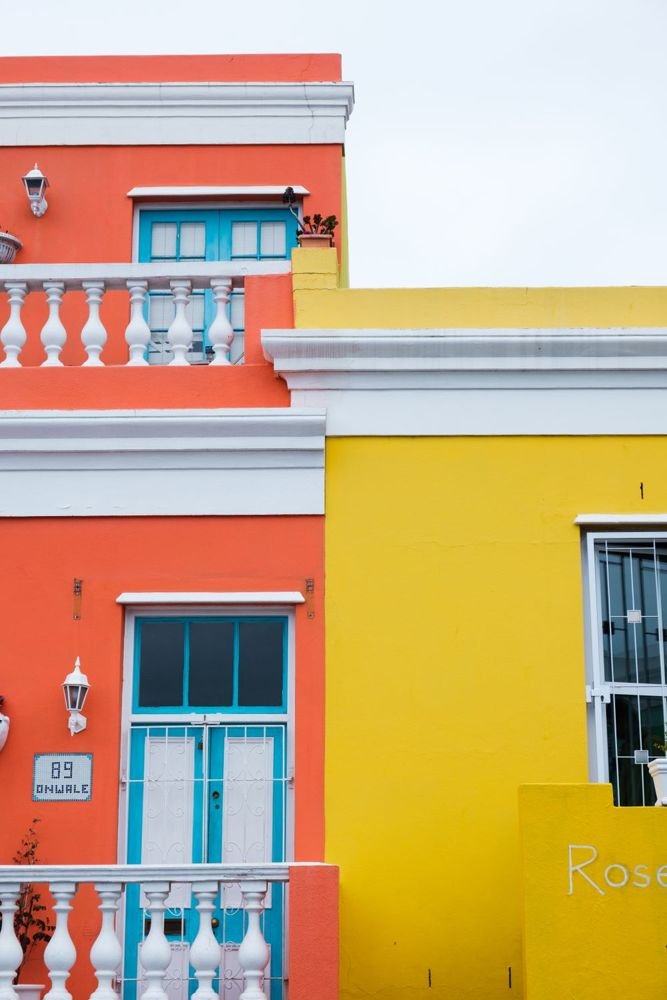 Wale Street and the lanes running off it are the heart of the quarter.
Quick reference
| Location | Slopes of Signal Hill, above the City Bowl |
| Bo-Kaap Museum | R100 international adult (Iziko, as of 2026) |
| Museum hours | Monday to Saturday, 9am to 5pm; winter Saturdays shorter |
| Best time | Early morning on a weekday, 7am to 9am |
| Time needed | 1 to 2 hours; 3 with a cooking class |
| Cost to walk around | Free |
History in brief
The quarter began in the 1760s as rented housing for enslaved people and artisans. Many were brought to the Cape from Southeast Asia, India, East Africa and Madagascar, and political exiles and religious leaders were sent here too. After emancipation in 1834 the community grew and settled permanently, and the area was long called the Malay Quarter. Islam became the neighbourhood’s backbone, and “Cape Malay” came to describe a distinct South African culture rather than a place of origin.
The Auwal Mosque on Dorp Street, completed in 1794, is widely cited as the first mosque in South Africa. Its first imam was Tuan Guru, a political prisoner from the Indonesian archipelago who held classes there. During apartheid, the Group Areas Act drove non-Malay residents out of the quarter, but the neighbourhood was not bulldozed, which is why the early Cape architecture survives, unlike nearby District Six. Today rising property values and mass tourism are the community’s main concerns, which is worth bearing in mind when you visit.
What to see
Bo-Kaap Museum
The museum at 71 Wale Street occupies a house built around 1768 and is run by Iziko Museums. It shows how a 19th-century Cape Muslim family lived and explains the history of the quarter, in rooms that keep their original layout. International adults pay R100, and South African residents pay less (Iziko, as of 2026). Hours are Monday to Saturday from 9am to 5pm, closed on some public holidays, so check the Iziko Bo-Kaap Museum page before you go. Allow 45 minutes.
Wale Street, Chiappini Street and the lanes
Wale Street is the main spine, with the museum, spice shops and the minaret of the Palm Tree and Nurul Islam mosques within sight. Chiappini Street and the lanes beside it are where the colour is most concentrated and where most photos are taken. Each house is painted by its owner, which is why neighbouring colours rarely match. Walk uphill first, then come back down for the view over the city bowl to Table Bay.
Mosques
Several mosques stand within a few blocks, and they are active places of worship. Visit only by invitation or on a guided walk that includes a mosque stop. Take shoes off at the door, cover shoulders and knees, and keep voices low during prayer times. Our South Africa etiquette guide has more on dress and conduct.
Photography etiquette
Residents have publicly objected to tour buses, drones and influencer shoots, so how you behave matters. No official rulebook exists, so these are common-sense norms:
- Ask before photographing any person, and accept no for an answer.
- Do not stand in the road, block doorways or lean on cars for a shot.
- Skip drones and tripods in the narrow lanes.
- Visit between 7am and 9am, when the streets are quiet and the light is soft.
- Spend something locally: a coffee, a snack or a guided walk led by a resident.
Walking tours and cooking classes
A guided walk is the easiest way to get history and access to places you would not enter alone, including a mosque stop and a spice shop. Walks typically take two hours. A Cape Malay cooking class is the best food experience in the city: small groups, usually in a resident’s home, cooking two or three dishes such as samoosas, a curry and dhaltjies, then eating them together. Classes typically last two to three hours, and listings we checked ranged from roughly USD 40 to 65 per person. Options change, so compare Bo-Kaap walking tours and cooking classes in Cape Town and read recent reviews. Groups are small, so book ahead in December and January. Our Cape Town food tours guide compares them against township and market tours.
What to eat
Cape Malay cooking blends Southeast Asian and Indian spice with Dutch and local ingredients, and it is mild and sweet-spiced rather than hot. Look for:
- Bobotie: spiced minced meat baked with an egg custard topping, usually with yellow rice and raisins.
- Koesisters: Cape Malay koesisters are spiced, syrup-dipped doughnuts dusted with coconut, different from the plaited Afrikaans koeksister.
- Samoosas, dhaltjies and roti: the savoury snacks sold from small takeaways along Wale Street.
- Cape Malay curry: fragrant and moderately spiced, often with dried fruit.
For the full dish list and context, see our Cape Town food guide and the national South African food guide. We do not name individual restaurants here, because small family-run places open and close often; walk Wale Street and look for places busy with local lunchtime trade.
Safety by time of day
- Daytime, main streets: fine, with the usual awareness of phones and cameras.
- Early morning: safe on the lower streets; avoid the upper slopes of Signal Hill alone.
- After dark: do not walk. Crime has been reported on the upper edges of Bo-Kaap and Signal Hill, so take a ride-hail door to door.
Our Cape Town neighbourhoods guide rates the other areas by safety and cost.
Getting there and where to stay
Bo-Kaap is a 10 to 15 minute walk from Greenmarket Square and the City Bowl, or a short ride-hail. Parking on the narrow streets is tight, so leave the car elsewhere. Most visitors stay in the City Bowl, De Waterkant or the V&A Waterfront and walk up. Our Cape Town where-to-stay guide compares the areas, and you can search Cape Town hotels on Booking.com. Pair Bo-Kaap with the Table Mountain cableway on a clear morning, or slot it into our 3 days in Cape Town itinerary.