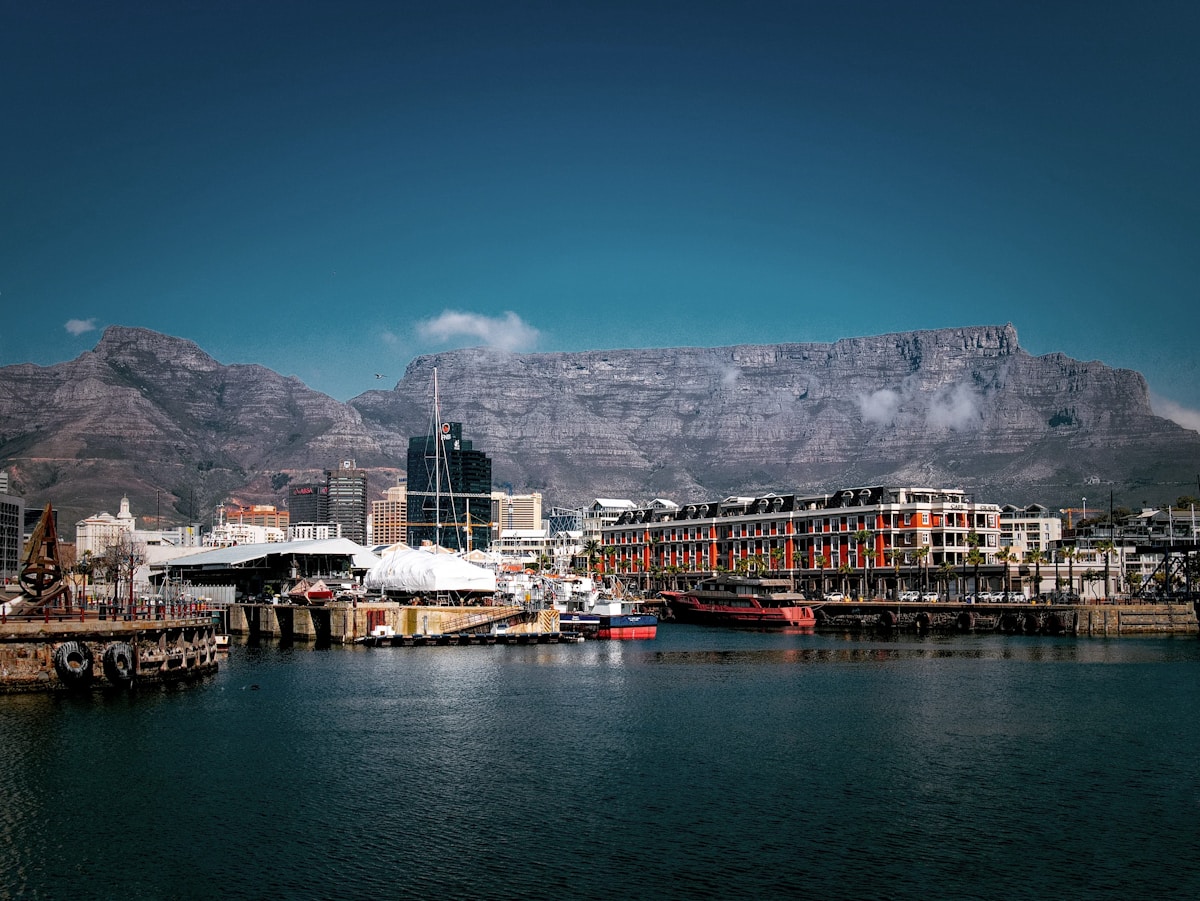
Cape Town has a Mediterranean climate, which means the best time to visit depends on whether you want beach weather, wine harvest, whales, flowers or the lowest prices. Summer (November to March) is dry, hot and windy. Winter (June to August) is cool and wet. The sweet spot for most visitors is February to April: warm, settled weather, the wine harvest, and falling prices once the festive crowds leave. For the wider national picture, see our best time to visit South Africa guide; this page covers Cape Town and its immediate surroundings only.
Cape Town Weather by Month
Figures are typical long-term averages for the city and are approximate. Cape Town is a peninsula, so conditions change sharply between the Atlantic side and False Bay.
| Month | Daytime high | Rain days | Wind | Atlantic sea temp | Crowds and prices |
|---|---|---|---|---|---|
| January | 27°C | 2 to 3 | Strong south-easter | 14 to 16°C | Peak, highest rates |
| February | 27°C | 2 to 3 | Strong south-easter | 14 to 16°C | High |
| March | 25°C | 3 to 4 | Easing | 14 to 16°C | Moderate, falling |
| April | 23°C | 5 to 6 | Light | 13 to 15°C | Moderate (Easter spike) |
| May | 20°C | 8 to 9 | Light, first fronts | 13 to 14°C | Low |
| June | 18°C | 10 to 11 | North-westerly storms | 12 to 14°C | Low, cheapest |
| July | 17 to 18°C | 10 to 11 | North-westerly storms | 12 to 14°C | Low, school holidays bump |
| August | 18°C | 9 to 10 | Fronts, then clearing | 12 to 14°C | Low |
| September | 19 to 20°C | 7 to 8 | Variable | 12 to 14°C | Moderate |
| October | 22°C | 5 to 6 | South-easter returns | 13 to 15°C | Moderate |
| November | 24°C | 3 to 4 | Building south-easter | 13 to 15°C | Rising |
| December | 26°C | 2 to 3 | Strong south-easter | 14 to 16°C | Peak, highest rates |
False Bay beaches such as Muizenberg run several degrees warmer than the Atlantic side in summer, typically 18 to 22°C. See our Cape Town beaches guide for the full picture.
The South-Easter (Cape Doctor)
The wind is the single biggest factor most visitors underestimate. From roughly November to February the south-easter blows through the afternoon at 40 to 60 km/h. It clears the air and cools the city, and it also closes the Table Mountain cable car at short notice, whips sand across Camps Bay and makes Atlantic-side outdoor dining unpleasant. Mornings are calmer than afternoons, so schedule the mountain, Cape Point and hikes early and keep beach time flexible. Check operating status on the Table Mountain Aerial Cableway site before you commit to a time slot, and read our Table Mountain guide for hiking alternatives.
Season by Season
Summer (December to February)
Hot, dry and long-lit, with sunset after 20:00 in December. This is the beach and outdoor-dining season, and the most expensive: rooms in Camps Bay, Clifton and the Waterfront book out months ahead, and local school holidays push demand even higher. Plan around the wind and book the cable car online. Our Cape Town in December guide covers festive prices, concerts and what to book first. If you are visiting on a budget, expect the best rooms to sell out by mid-year.
Autumn (March to May)
For many people this is the best season. The south-easter eases through March, the Winelands are in harvest, days stay warm and prices drop roughly 15 to 25% from the December peak as of 2026. April holds the Easter weekend, when Cape Town fills with domestic visitors and the Two Oceans Marathon weekend (3 and 4 April in 2027, per the organisers) drives up room demand. By May the first cold fronts arrive but plenty of sunny days remain. See our Cape Winelands guide for harvest-season visits.
Winter (June to August)
Cool, wet and quiet. Rain arrives on cold fronts, with clear, crisp days in between, and Table Mountain often wears its cloud “tablecloth”. Hotel rates are at their lowest and restaurants are easy to book. It is also whale season, and the mountains behind the city may carry a light dusting of snow on the coldest days. Bring a waterproof jacket and layers; many guesthouses have limited heating. July brings South African school holidays, so prices rise modestly and weekend crowds appear at Kirstenbosch and the Waterfront.
Spring (September to November)
Rain tapers off, temperatures climb towards 22 to 24°C, and wildflowers bloom along the West Coast. The south-easter starts to return in October and builds into November. September and October are the best months for whales; November is a strong value month, with decent weather and rates still below summer peak. For a trip that pairs the city with a safari, our best time to visit Kruger guide explains why spring suits both.
Wildlife and Natural Seasons
Whale watching (June to November). Southern right whales come into the bays to calve and nurse, peaking in September and October. Hermanus is about 120 km east and is among the best land-based whale-watching spots in the world; closer to the city, False Bay shore points such as Boyes Drive and Simon’s Town also see whales in season. Our whale watching guide for South Africa lists the other bases. Browse Hermanus tours for boat-based and combined day trips.
Shark cage diving. Gansbaai (Dyer Island), around two hours east, is the traditional base, with operators running trips through the year. Since 2017 orca predation has pushed white sharks out of the area, and some trips see none, so ask operators for recent sighting reports before you book. See our shark cage diving guide for the details.
Namaqualand wildflowers (August to September). The Northern Cape’s spring flower display lies several hours north of the city, with late August to mid-September usually best and the show depending heavily on that winter’s rain. See our West Coast and Namaqualand flowers guide.
Penguins at Boulders Beach are present all year; the colony is busiest in the cooler months when the birds spend more time ashore.
Events That Shape Your Timing
| Event | When | Why it matters |
|---|---|---|
| Tweede Nuwe Jaar (Cape Town Minstrel Carnival) | 2 January | Street parades in the city centre and Bo-Kaap; some roads and services restricted |
| The Met horse race, Kenilworth | Usually late January or early February | Fashion day out, strong demand for Southern Suburbs rooms |
| Two Oceans Marathon | Easter weekend, 3 and 4 April in 2027 | Rooms near the UCT route and the Waterfront fill up early |
| Cape Town Marathon | Late May (24 May 2026; 23 May 2027 is the expected date) | Moved from October to May; check the official date and road closures |
| Hermanus Whale Festival | Usually late September or early October | Peak whale season, accommodation in Hermanus books out |
| Kirstenbosch Summer Sunset Concerts | November to March, Sundays | Picnic concerts, popular on warm evenings |
Dates move each year, so confirm with the official organiser and the Cape Town tourism board before booking flights. The Cape Town Marathon was held in October until 2025 and has since moved, so older listings may be out of date.
Best Time to Visit by Purpose
- Beaches and swimming: January to March. Stick to False Bay (Muizenberg, Fish Hoek) when the south-easter is blowing.
- Hiking Table Mountain: March to May and September to November, with calm, clear mornings. Avoid hot January afternoons.
- Wine harvest: February to April. See the winelands guide for estate planning.
- Whales: September to October for peak numbers, with June to November as the wider window.
- Cheapest trip: June to August, then May and late September.
- Fewest crowds with good weather: April (outside Easter), May and October.
- First-time sightseeing: February to April, or November if you want to catch the start of summer.
Practical Tips for Timing Your Trip
Book accommodation early for December to January and Easter, and use flexible rates in shoulder months. For hotels by area and tier, see our Cape Town accommodation guide, or search Cape Town hotels on Booking.com for current rates. Pre-book popular tours and the cable car in summer, and see all options on Cape Town tours and activities. Winter visitors should add travel insurance for South Africa because wet-weather cancellations are common.
Back to the full Cape Town city guide for neighbourhoods, sights and logistics.