Search hotels in South Africa on Booking.com
South Africa and Kenya are the two most popular safari destinations in Africa - and for very different reasons. Kenya’s Masai Mara is home to the Great Migration, one of the world’s most spectacular wildlife events. South Africa’s Kruger National Park offers the world’s most accessible self-drive Big Five experience. Choosing between them depends on timing, budget, what you want to see, and how much you like driving yourself.
Quick Verdict
| Factor | South Africa | Kenya |
|---|---|---|
| Signature experience | Self-drive Kruger, Big Five | Masai Mara Great Migration |
| Cost | Lower - self-drive option available | Higher - guided camps standard |
| Visa | Visa-free for most western passports | eTA required (US$32.50 as of 2026) |
| Self-drive safari | Yes - Kruger and Pilanesberg | Uncommon - guided tours standard |
| Best season for wildlife | Year-round; driest May–Sep | Jul–Oct for Migration |
| City + safari combo | Strong - Cape Town + Kruger common | Limited - Nairobi is functional, not spectacular |
| Malaria risk | Low-moderate (Kruger, KZN borders) | Higher in Mara (prophylaxis advised) |
| English spoken | Widely | Widely |
| Flight connections | Direct from Europe and USA | Direct from Europe; fewer from USA |
Bottom line: South Africa for first-time safari travellers, self-drivers, and those combining city + bush. Kenya for the Great Migration and the classic luxury tented camp experience.
Wildlife: What Will You See?
South Africa - Kruger National Park: Kruger is 19,485 sq km - roughly the size of Wales - and has over 140 mammal species. It’s the gold standard for Big Five reliability: lion, leopard, elephant, rhino (both black and white), and buffalo. Leopard sightings are particularly strong in the south. Wild dog and cheetah are present but require luck or an early morning drive. Birdlife (over 500 species) is outstanding.
Beyond Kruger, Pilanesberg offers malaria-free Big Five within 2.5 hours of Johannesburg. Hluhluwe-iMfolozi in KwaZulu-Natal is the stronghold of the white rhino recovery programme.
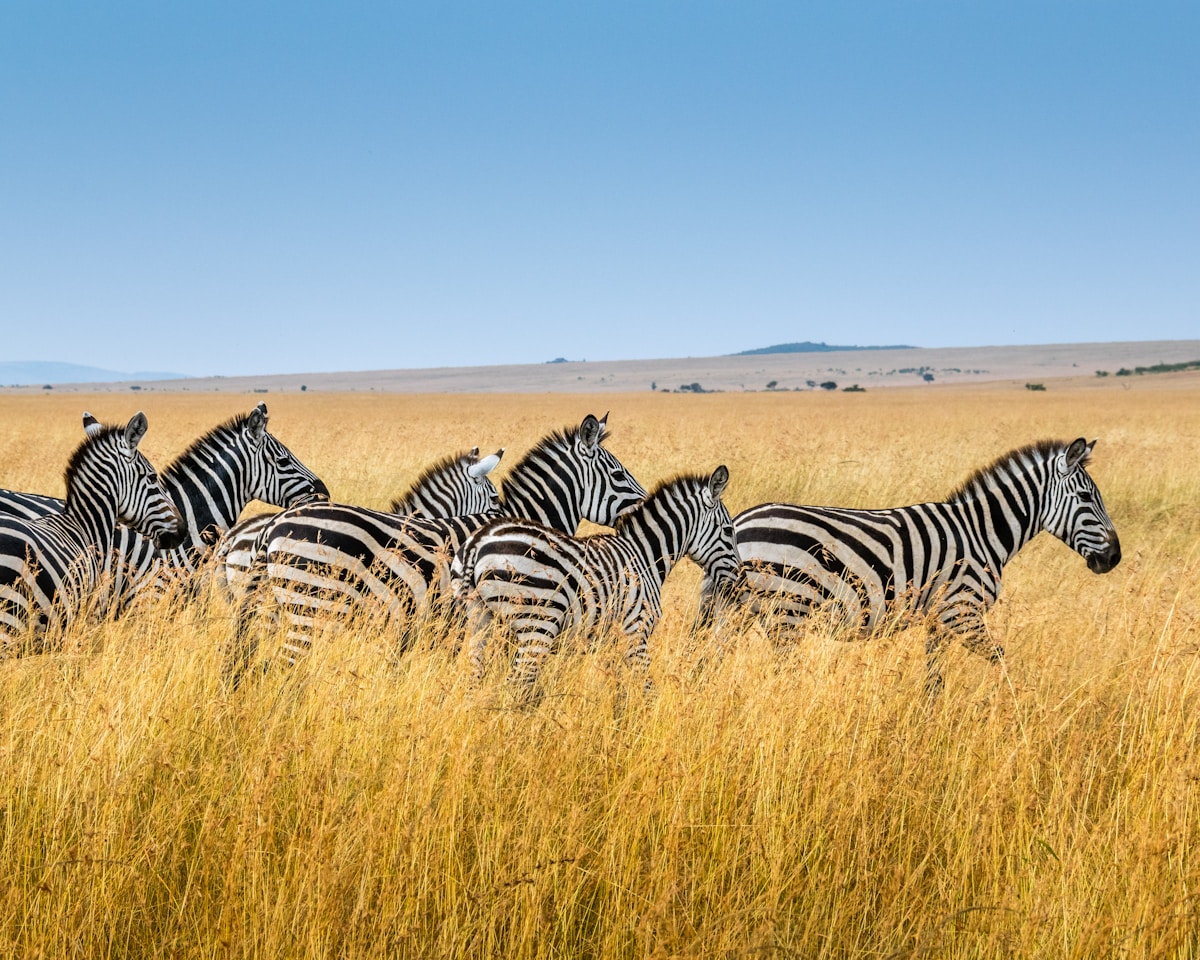
Kenya - Masai Mara: The Mara’s resident game is exceptional year-round: large lion prides, high cheetah density, and elephant families crossing the savanna daily. The real draw is the Great Migration (July–October) - approximately 1.5 million wildebeest and 200,000 zebra cross from Tanzania’s Serengeti into the Mara, fording the crocodile-heavy Mara River in crossings that are among the most dramatic wildlife spectacles on earth.
Kenya also offers distinct complementary parks: Amboseli (elephants against Kilimanjaro backdrop), Samburu (rare northern species - Grevy’s zebra, reticulated giraffe), and Tsavo.
Verdict: For guaranteed big cats and year-round game, South Africa. For the Migration, Kenya has no equal.
Cost
South Africa self-drive Kruger (per person, 7 nights):
- SANParks restcamp accommodation - from R600–R1,800/night (US$33–US$99) for a basic cottage
- Park entry - R396/day for international visitors as of 2026 (check SANParks.org for current rates)
- Car hire - from R600–R800/day (US$33–US$44)
- Total estimate: R12,000–R18,000 (US$660–US$990) excluding international flights
Kenya guided Masai Mara (per person, 7 nights):
- Budget tented camps - from US$250/night per person full board
- Mid-range camps - US$400–US$700/night per person full board
- Luxury camps (Angama Mara, Mahali Mzuri) - from US$1,500–US$2,500/night
- Park fees - US$100/person/day (Masai Mara National Reserve as of 2026)
- Total estimate: US$2,500–US$7,000 per person excluding international flights
South Africa is substantially cheaper, largely because the self-drive option eliminates guide and lodge markups.
Visa and Entry
South Africa: No visa required for citizens of UK, USA, Canada, Australia, New Zealand, EU, and most western countries for stays up to 90 days. South Africa requires children under 18 to carry an unabridged birth certificate - strictly enforced.
Kenya: The visa-on-arrival system was replaced by the eTA (Electronic Travel Authorisation) in January 2024. Cost: US$32.50 per person. Apply online at etakenya.go.ke at least 72 hours before travel. Most western passport holders are approved routinely.
Always verify current requirements via your government’s official travel advisory - visa policies change.
Health and Malaria
South Africa: Malaria risk exists in:
- Kruger National Park and surrounds (eastern Limpopo and Mpumalanga)
- Northern KwaZulu-Natal (Hluhluwe, iSimangaliso, Sodwana Bay)
- Northern Limpopo province
Malaria-free: Cape Town, Garden Route, Addo Elephant Park, Pilanesberg, Drakensberg, Johannesburg.
Kenya: Malaria is present throughout Kenya below 2,500 m, including the Masai Mara. Prophylaxis (typically atovaquone-proguanil or doxycycline) is strongly recommended. Consult your GP or travel clinic 4–6 weeks before departure.
If malaria medication is a concern (cost, side effects, logistics), South Africa’s malaria-free options - Pilanesberg, Addo, Gondwana Game Reserve - are significant advantages.
The Safari Experience
Self-drive (South Africa only): Kruger and Pilanesberg are purpose-built for private vehicles. Paved and gravel roads through both parks let you set your own pace, spend as long as you like at a sighting, and reach the park gates at 5 am without paying a guide. This is uniquely South African - no other country has scaled self-drive safari to this level.
Guided camps (Kenya standard): Kenyan safari is almost exclusively done from guided 4x4 vehicles with licensed guides and trackers. The expertise is often superb - experienced guides read animal behaviour in ways a first-time self-driver won’t. But it comes at a price.
Balloon safaris: Available in both destinations. Masai Mara balloon flights cost approximately US$500–US$600/person. Kruger balloon flights from Hazyview cost approximately R6,000/person (US$330) as of 2026.
Combining Safari with Cities
South Africa: The Cape Town + Kruger combination is one of the world’s great itineraries. Five days in Cape Town followed by 4–5 days in Kruger via Johannesburg is achievable in 10–12 days. The winelands, Garden Route, or Drakensberg extend it naturally.
Kenya: Nairobi is a functional transit hub but not a compelling city destination in itself for most travellers. The Masai Mara is typically combined with Amboseli, Samburu, or Tanzania (Serengeti/Zanzibar) rather than a city break.
Ready to plan your trip? Kruger Safari & Tours, Car Hire in South Africa, or Travel Insurance for South Africa.
Best For
Choose South Africa if:
- Budget is a serious factor
- First-time safari with no specific Migration target
- You want city + bush in one trip
- You’d prefer to self-drive
- Malaria medication is a concern - Pilanesberg is malaria-free Big Five
Choose Kenya if:
- The Great Migration (Jul–Oct) is a bucket-list must
- You want the classic luxury tented camp experience
- An expert local guide matters more than cost
- You’re combining with Tanzania (Serengeti, Ngorongoro, Zanzibar)
Read our guides to Kruger National Park and Pilanesberg for South Africa safari planning. For health and vaccination advice, see our South Africa health guide. See also the South Africa safari cost breakdown and the Kruger vs private reserves comparison.
See Also
- Kruger vs Pilanesberg - the key malaria-free safari decision within South Africa
- Kruger vs private game reserves - self-drive vs guided lodge within the Kruger ecosystem
- Self-drive vs guided safari in South Africa - how to do a South Africa safari once you’ve chosen it
- Kruger vs Addo - Kruger vs the malaria-free Eastern Cape option
- Cape Town vs Johannesburg comparison - the city gateway decision that shapes your South Africa itinerary
Plan Your Trip
✈️ Book your flights to South Africa 🛡️ Get travel insurance 📱 Stay connected with an eSIM 🚗 Rent a car