The Karoo covers roughly a third of South Africa, yet most visitors see it only as the stretch of nothing between Cape Town and Johannesburg. That is a mistake. It holds the Cango Caves, one of the best mountain passes in the country, a Victorian railway village, a national park with black rhino, the country’s oldest interior town and some of the darkest night skies we know of. This page is the hub for the whole region: how it divides, how to drive Route 62, and where to stop.
Little Karoo vs Great Karoo
The two are different places and it helps to know which one you are in.
- Little Karoo (Klein Karoo): a long, narrow valley in the Western Cape between the Langeberg and Swartberg ranges. It is semi-arid but irrigated, with vineyards, orchards, ostrich farms and a string of small towns. Route 62 runs along it. Think Montagu, Barrydale, Ladismith, Calitzdorp and Oudtshoorn.
- Great Karoo (Groot Karoo): the vast interior plateau north of the Swartberg, about 1,000 m above sea level, crossing into the Eastern and Northern Cape. It is flat-topped hills (koppies), sheep farms, windmills and very few people. The N1 cuts through it at Beaufort West, and Graaff-Reinet and Nieu-Bethesda sit on its southeastern edge.
The Little Karoo is the easy, scenic option for a long weekend from Cape Town. The Great Karoo rewards you if you are already driving the Cape Town to Johannesburg N1 road trip and are willing to slow down.
Driving Route 62: Cape Town to Oudtshoorn
Route 62 is the R62, the inland alternative to the N2 Garden Route. From Cape Town it is approximately 430 km to Oudtshoorn, about 5.5 to 6 hours of driving without stops. Plan two nights minimum; three is better.
| Leg | Approx. distance | Driving time |
|---|---|---|
| Cape Town to Montagu | 190 km | 2 to 2.5 hours |
| Montagu to Barrydale (via Tradouw Pass) | 55 km | 45 minutes |
| Barrydale to Calitzdorp | 100 km | 1.25 hours |
| Calitzdorp to Oudtshoorn | 60 km | 45 minutes |
Distances are approximate road distances; allow extra for roadside stops. The route leaves the N1 near Worcester, then passes through the Cogmans Kloof gorge to reach Montagu, where the hot springs and rock climbing make a natural first night. Beyond Barrydale the road climbs through the Tradouw Pass and runs east through Ladismith, then Calitzdorp, known for port-style fortified wines, before arriving at Oudtshoorn, the base for the Cango Caves and the ostrich farms.
Practical notes: fuel up in Montagu, Barrydale or Ladismith because stations are sparse between them. Summer midday heat regularly passes 35 C, so start early. The road is tarred and in good condition, and the pace is slow, with small-town speed limits that are enforced. Pick up a car in Cape Town through car hire in Cape Town and drop in George with car hire in George if you continue along the Garden Route. A car is the only realistic way to do Route 62, as there is no useful public transport between the towns.
Book a guided Oudtshoorn day tour if you would rather not drive the Swartberg yourself, and browse Montagu tours for hot spring and climbing options. For somewhere to sleep, compare hotels in Montagu on Booking.com for current prices.
Prince Albert and the Swartberg Pass
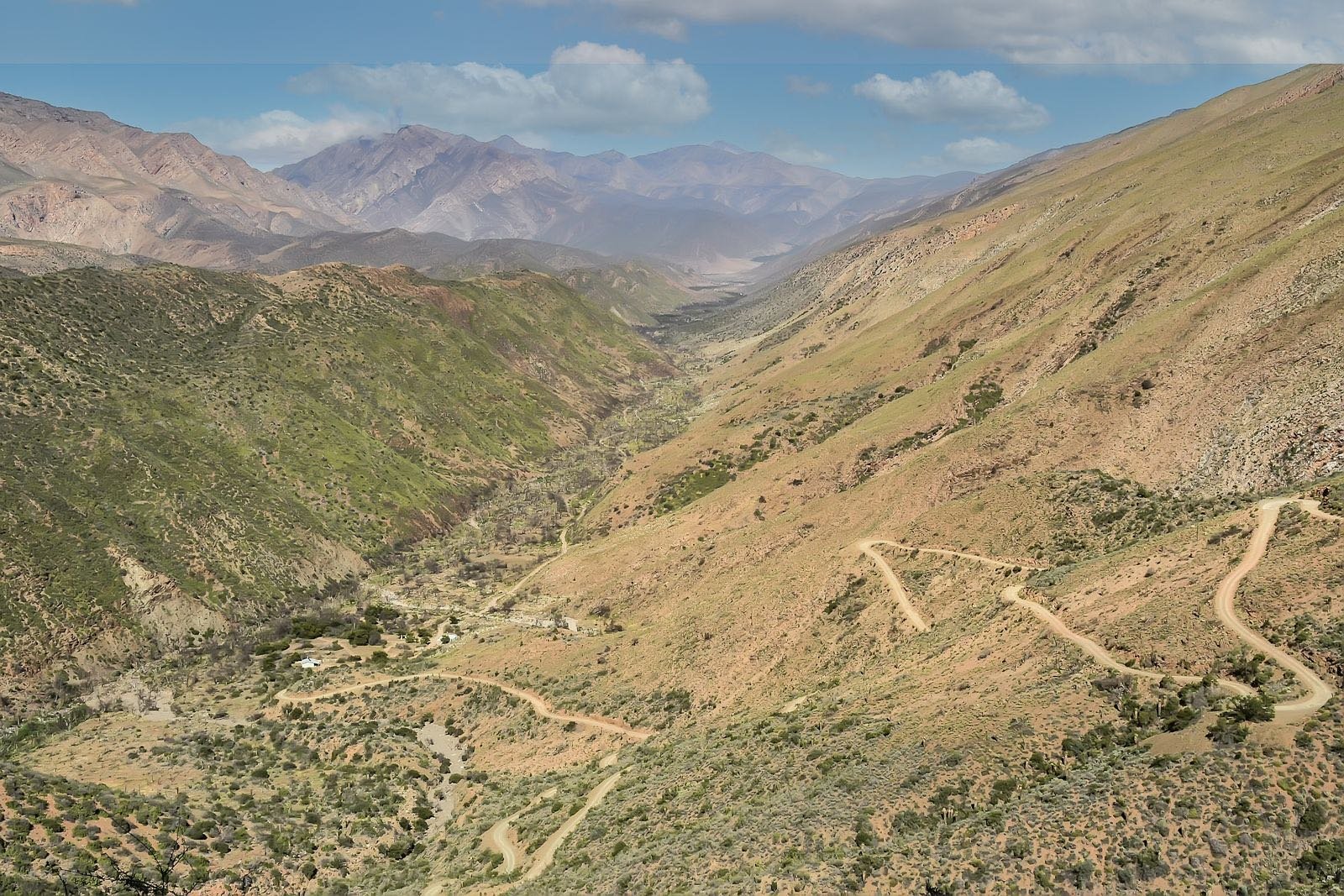
From Oudtshoorn, the Swartberg Pass is the most dramatic detour on the whole route. Built by Thomas Bain in the 1880s, it climbs to roughly 1,583 m on a gravel road with dry-stone retaining walls and hairpins, about 24 km from end to end. A normal sedan can do it in dry weather if you drive slowly; avoid it after heavy rain or snow, and never in a low-clearance car you are nervous about. Allow 1.5 to 2 hours for the crossing without stops.
On the northern side is Prince Albert, a small Karoo village of whitewashed Cape Dutch houses, olive groves and fruit farms at the foot of the pass. It makes a good lunch stop or a night in its own right, and you can return over the pass or continue north to Beaufort West (about 170 km). Fruit and olive products are sold at village stalls, and prices are modest.
Karoo National Park
Just outside Beaufort West on the N1, Karoo National Park protects a slice of the Great Karoo with Cape mountain zebra, black rhino, gemsbok, springbok and over 200 bird species. A self-drive loop and the Klipspringer Pass four-wheel-drive route show the landscape well. As of 2026, SANParks lists the standard (international) adult conservation fee at approximately R358 per day from 1 November 2026, with a child rate of about R179; fees rise every November, so confirm on the official SANParks Karoo page before you go. The park is malaria-free. Our N1 road trip itinerary covers Beaufort West as an overnight stop, and Matjiesfontein, a preserved Victorian railway village, sits about 190 km to the west on the N1 and fits a coffee stop on the way.
Graaff-Reinet and Nieu-Bethesda
About 210 km northeast of Beaufort West, Graaff-Reinet is the fourth-oldest town in South Africa and has more than 200 national monuments, mostly Cape Dutch and Victorian houses. The Valley of Desolation in Camdeboo National Park overlooks the town and is best at sunrise or sunset. Book a Graaff-Reinet tour for guided options.
Nieu-Bethesda, a 50 km drive from Graaff-Reinet (the last stretch is gravel), is a tiny village in a valley below the Sneeuberg. Its main draw is the Owl House, the home of the self-taught artist Helen Martins, whose concrete-and-glass sculptures fill the yard. Allow half a day. Entry to the Owl House is a small fee and varies by season, so check locally.
Stargazing
The Karoo is one of the best places in the country to see the Milky Way. Little light pollution, dry air and high altitude mean you can see the full arc of the galaxy from a farm stoep without equipment. The best months are May to August, when nights are long and cold: pack warm layers, as winter nights in the Great Karoo fall below freezing. A new moon gives the darkest sky, and many guesthouses and farm stays near Prince Albert, Nieu-Bethesda and Sutherland offer telescope evenings. Sutherland, in the Northern Cape roughly 110 km north of Matjiesfontein on a gravel road, is home to the Southern African Large Telescope and runs public night tours.
Karoo lamb and what to eat
Karoo lamb is a regional institution. Sheep graze natural scrub plants (the bossies) across the plateau, and the meat has a herbal flavour that locals credit to the veld. Expect it as a slow-roasted shoulder, lamb chops on the braai or a Karoo lamb pie in village cafes. Ostrich fillet is the Oudtshoorn alternative, and Calitzdorp’s port-style wines and dried fruit are worth buying. Rather than naming a restaurant that may close, ask your guesthouse host where the locals eat. Meals in small-town cafes are generally inexpensive compared with Cape Town.
When to go and how long to allow
- Spring (September to November): wildflowers and mild days; the best all-round window.
- Summer (December to February): hot; fine for Route 62 early mornings and evenings, tougher in the Great Karoo.
- Autumn (March to May): warm, clear and quiet.
- Winter (June to August): cold nights, snow on the Swartberg and Sneeuberg and the best stargazing.
A short Route 62 loop works in three days from Cape Town. Adding the Swartberg, Prince Albert and a night in Beaufort West makes five. For the full cross-country version with Graaff-Reinet, allow a week. Check road conditions on the Swartberg Pass before departure. For the national picture, see our guide to underrated places in South Africa.