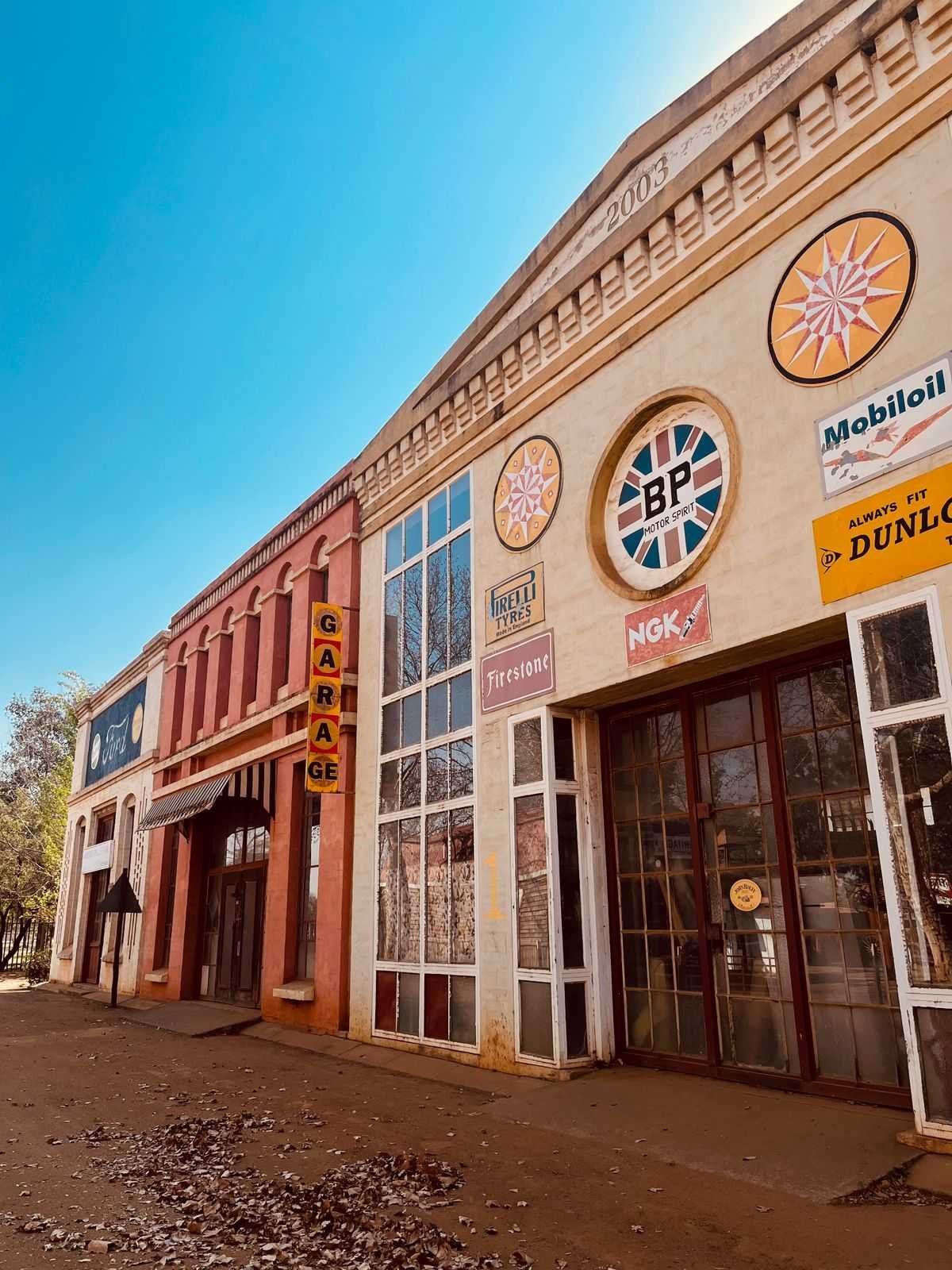
Matjiesfontein is one of the most peculiar places in South Africa - a single street of Victorian buildings preserved in near-original condition, sitting alone in the middle of the flat Karoo, 240 km east of Cape Town on the N1. The village has no modern intrusions of note. There are no chain shops, no new developments, and no signage beyond what existed a century ago. The main building, the Lord Milner Hotel, looks much as it did when it opened in 1899 and served as a military base hospital during the Anglo-Boer War. The village is a genuine time capsule, and a strange and memorable one. This is one of our 6 underrated places in South Africa.
Most visitors encounter Matjiesfontein as a stop on the N1 between Cape Town and Johannesburg or Cape Town and the Karoo. Many visit for an hour or an afternoon. Those who stay overnight find something more atmospheric and difficult to explain - the village is entirely silent after dark, the stars over the Karoo are overwhelming, and the hotel has at least one ghost with a documented habit of moving things and slamming doors.
| Planning point | Detail |
|---|---|
| Distance from Cape Town | 240 km east on the N1 |
| Nearest petrol station | Touws River, 58 km east, fill up before arriving |
| Marie Rawdon Museum | Approx. R50 per adult (as of 2026), allow 45 minutes, weekday mornings only |
| Evening bus tour | Leaves the hotel stoep at around 18:30 |
| Rooms | Three tiers: Motel/Mews, classic historic and luxury |
The Lord Milner Hotel
James Douglas Logan, a Scottish entrepreneur who ran the refreshment concession on the Cape-Kimberley railway, established Matjiesfontein in the 1880s as a railway stop and rest station. The dry Karoo air had improved his own health, and he promoted the town as a health resort - successfully enough to attract wealthy Capetonians and, eventually, the Sultan of Zanzibar as a regular visitor.
Logan built the Lord Milner Hotel in 1899, named after the Cape Colony High Commissioner Alfred Milner. Within months of opening, the Anglo-Boer War began and the hotel became the headquarters and hospital for 10,000 British troops stationed in the surrounding Karoo. Logan himself commanded a local regiment and died before the war ended.
The hotel has operated with very little interruption since 1899. The building is three storeys of Cape Victorian cast-iron lacework, a long front stoep, and interiors that retain their 19th-century fittings - pressed tin ceilings, period furniture, and a bar that has served drinks for over 125 years.
Rooms: The hotel has three tiers of accommodation: standard Motel/Mews rooms, classic historic rooms and luxury rooms. Rates include a full English breakfast and an evening bus tour of the village. Check current rates on Booking.com or with the hotel.
Book the Lord Milner Hotel on Booking.com.
The Ghost of Lucy
Lucy is the name given to the Lord Milner’s best-known non-paying resident. Various staff and guests over the decades have reported the sound of footsteps in empty corridors, doors closing without apparent cause, and small objects moved overnight. The most common sightings report a woman in Victorian dress near the upper floor rooms.
The hotel does not actively market the ghost, but the stories persist and have been reported in several travel publications. The most plausible explanation offered is that the hotel’s wartime use as a military hospital - a building in which considerable suffering and death occurred - left an impression on the structure that some visitors perceive. No more rational explanation has been established.
Whether you find this compelling or not, the hotel’s atmosphere at night is genuinely unusual. The silence of the Karoo presses in after 21:00, the Victorian décor is odd and heavy, and it is an environment in which imagination runs ahead of reason.
The Marie Rawdon Museum
The Marie Rawdon Museum occupies a building adjacent to the hotel and is named after a woman who became the de facto curator and guardian of Matjiesfontein’s heritage from the 1960s until her death. The collection includes Logan-era artefacts, Anglo-Boer War military memorabilia, Victorian domestic objects, and a particularly good set of photographs documenting the wartime military occupation of the village.
Entry is approximately R50 per adult (as of 2026). The museum is small - allow 45 minutes. It is only open on weekday mornings; confirm hours at the hotel before visiting.
The Evening Bus Ride
Every evening, guests and day visitors are taken on a short tour of the village in an old London double-decker bus. The tour is brief - the village is genuinely small, consisting of a single main street and a few outbuildings - but provides context on the buildings and their history. The tour is included in hotel room rates and available to day visitors for a small fee. It leaves from the hotel stoep at around 18:30; confirm times at the front desk.
The bus itself is a curiosity - a red London Transport Routemaster that has no obvious connection to the Karoo but fits the general spirit of Matjiesfontein, where anachronism is the organizing principle.
The Laird’s Arms and Dining
The hotel runs three eating and drinking venues:
The Laird’s Arms - The pub on the ground floor of the hotel is the social centre of the village. Dark wood panelling, a long bar, framed photographs of the Logan era, and cold beer. It opens from 11:00 and stays open until guests stop arriving. Pub meals available from approximately R120 (as of 2026).
The Hotel Dining Room - The formal restaurant, serving a set dinner menu of Karoo-influenced cooking: game pies, Karoo lamb, traditional puddings. Table d’hôte dinner approximately R280–R350 per person (as of 2026). Dinner is served from 19:00. Booking recommended.
Coffee House - Daytime coffee and light meals on the hotel stoep, open from 08:00. Suitable for the drive-through visitor who wants coffee and a sandwich without committing to a formal lunch.
What Else to See
The Blue Train stop - Matjiesfontein is one of the stops on the Blue Train route between Cape Town and Pretoria. Passengers disembark for a short tour of the village on the evening bus. If you happen to be visiting when the Blue Train is in the siding, the spectacle of the dark blue locomotive against the Karoo landscape is worth a photograph. Planning the ride yourself? Our Rovos Rail vs Blue Train guide compares routes and fares.
The Railway Station - The original single-platform station, built in the 1880s as part of Logan’s Cape Midlands Railway concession, still stands on the east side of the village. The platform, station building, and signal equipment are largely intact. It is one of the oldest surviving rural stations in the Western Cape, and worth a short walk from the hotel even if no train is due.
The Lady Anne Barnard Suite - The Lord Milner Hotel names one of its historically decorated suites after Lady Anne Barnard (1750–1825), the Scottish writer and social figure who lived at the Cape from 1797 to 1802 as wife of Colonial Secretary Andrew Barnard. Her journals and letters, published posthumously, offer some of the most vivid first-hand accounts of Cape Colony life in the late 18th century. The suite continues the hotel’s practice of honouring figures from the Cape’s Georgian and Victorian periods rather than generic hotel naming conventions. Lady Anne Barnard never visited Matjiesfontein - the village did not exist in her time - but the suite is a reminder that the hotel sees itself as part of a longer Cape story.
The Laird’s Post Office - Still operational, the original Victorian post office in the village is one of the oldest working post offices in the country. The carved wooden counter has not been replaced.
Logan’s Cottage - The original cottage in which James Logan first stayed in Matjiesfontein, before he developed the village, is preserved behind the hotel grounds. It is viewable from the outside.
Stargazing - The Karoo darkness at Matjiesfontein is among the best in the western half of South Africa. There are no streetlights beyond the hotel lanterns, and the flat terrain offers an unobstructed 360-degree horizon. Guests who stay overnight should allow time to stand outside after 22:00 and look up.
Getting There
Matjiesfontein is on the N1, 240 km from Cape Town and 58 km from Touws River. From Cape Town, take the N1 through Paarl and Worcester; the village is signposted off the highway with a dedicated turn-off.
The village is also served by the Translux and Intercape bus services (Cape Town–Johannesburg route), which stop at the N1 turn-off - but there is no scheduled local transport between the highway and the village. Self-drive is the practical option. See our driving in South Africa guide.
The nearest petrol station is at Touws River, 58 km east on the N1. Fill up before arriving.
Combining Matjiesfontein with Other Destinations
Matjiesfontein works well as a break in a longer road trip. The most natural combinations:
Cape Town → Matjiesfontein → Graaff-Reinet: Follow the N1 to Matjiesfontein, then continue east on the N1 to Beaufort West and south on the N9 to Graaff-Reinet. Total driving time approximately 5 hours (without stops). A two-night stay splits the journey well.
Cape Town → Montagu → Matjiesfontein: From Montagu (180 km east of Cape Town on Route 62), drive north through the Huguenot Tunnel or over the mountains to the N1, then west to Matjiesfontein. This is a loop that avoids retracing the N1.
Garden Route detour: Visitors driving the N2 from Cape Town to Oudtshoorn or the Garden Route sometimes detour to Matjiesfontein via the N1 as a half-day addition. Allow an extra 3 hours including the stop.
For the wider region and the full drive, see our Karoo and Route 62 guide.